
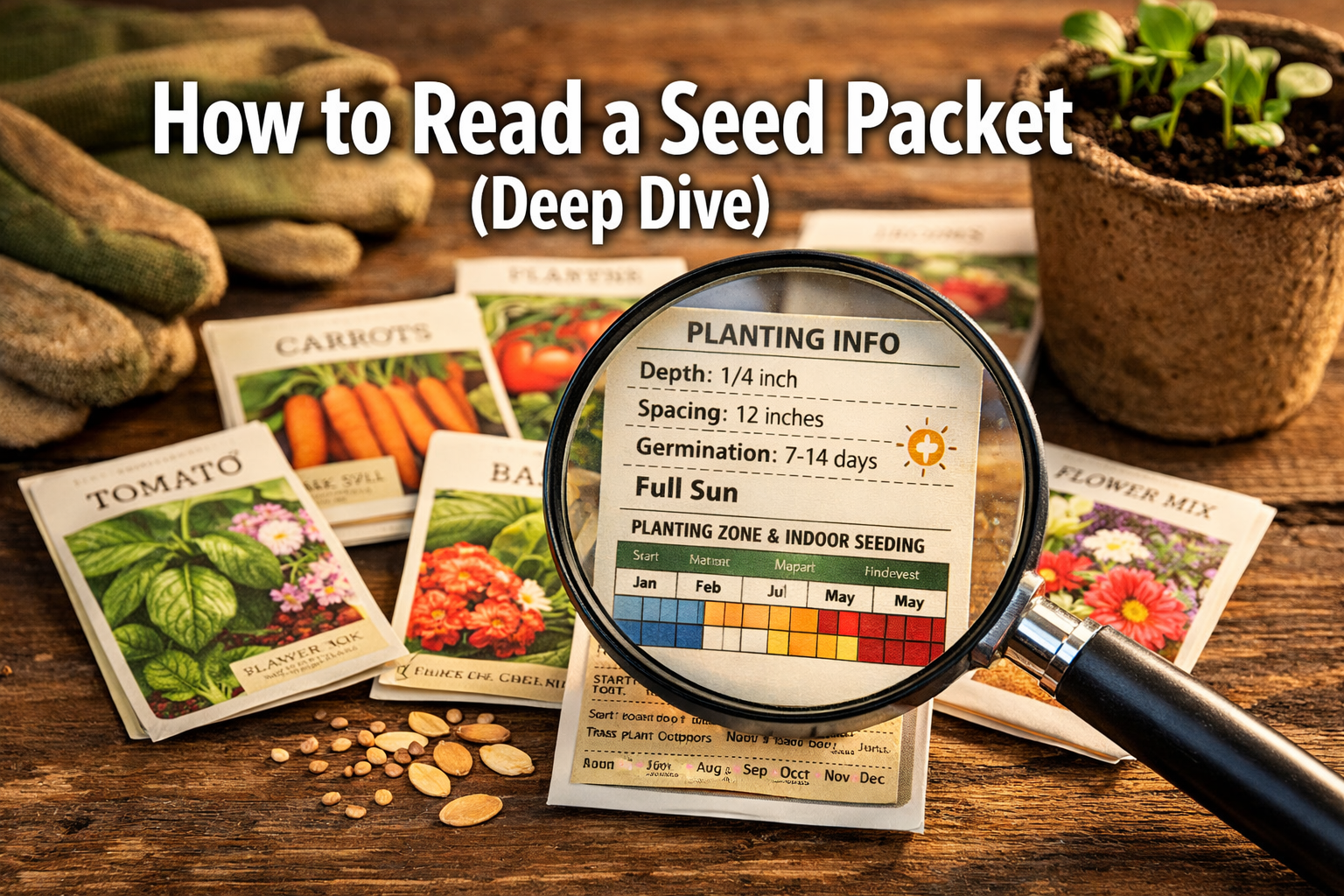
I’ll never forget the first time I stood in the garden center, overwhelmed by rows of colorful seed packets, feeling completely lost about which ones to choose and what all those numbers and symbols meant. If you’ve ever felt that same confusion while staring at a seed packet wondering what “days to maturity” actually means or why spacing matters so much, you’re definitely not alone! Learning how to read a seed packet (deep dive) is one of the most important skills for any beginner gardener, and I’m here to walk you through every single detail so you can grow with confidence.
Key Takeaways
- Plant identification and variety information appears on the front with photos, names, and Latin classifications to help you choose the right plants for your space
- Critical growing instructions like planting depth, spacing, and sunlight requirements are clearly marked and must be followed for successful germination
- Timing information including days to germination and harvest helps you plan your garden schedule and manage expectations
- Special designations like organic, heirloom, or disease-resistant varieties provide important details about seed quality and performance
- Container gardening adaptations can be determined from packet information, making most seeds suitable for balcony and patio growing
Quick Answer
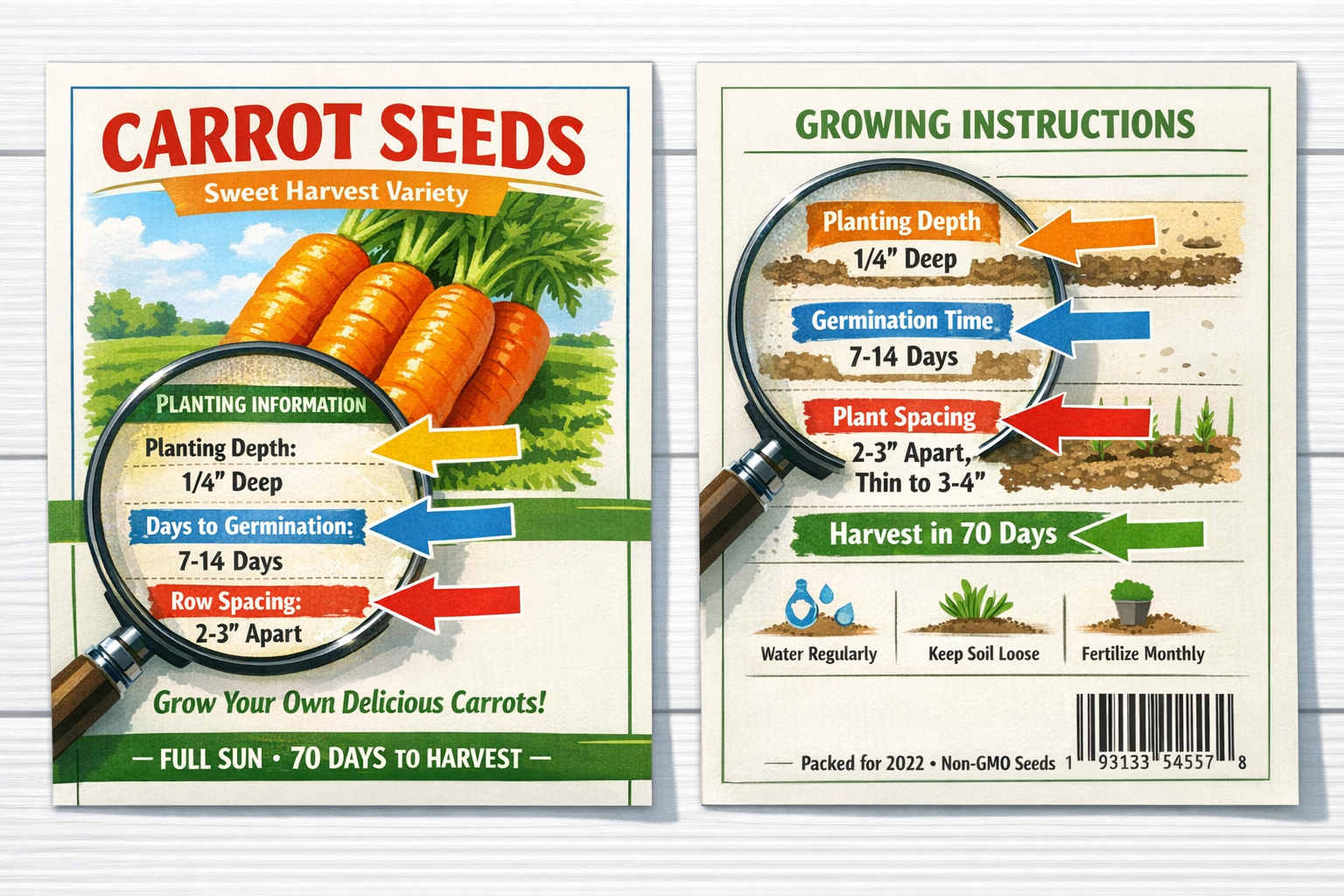
Seed packets contain essential growing information divided into front-panel basics (plant name, photo, key features) and back-panel details (planting depth, spacing, days to maturity, care instructions). The front identifies what you’re growing, while the back tells you exactly how to grow it successfully. Understanding both sections ensures proper planting, timing, and care for maximum garden success.
What Information Appears on the Front of Seed Packets?
The front panel of your seed packet serves as your first introduction to what you’re about to grow. This is where seed companies showcase the most important identifying information and selling points to help you make informed choices for your garden.
Plant Variety and Names
Every seed packet displays the common plant name prominently, often followed by the specific variety name.[1][4] For example, you might see “Sunflower: Mammoth” or “Tomato: Cherry Belle.” The Latin botanical name usually appears in smaller text below, which helps ensure you’re getting exactly the plant you want since common names can vary by region.
Visual Reference Photo
Most packets include a high-quality photograph showing what the mature plant or harvest will look like.[4] This visual guide helps you envision the final result and confirms you’ve selected the right variety for your space and aesthetic preferences.
Key Features and Benefits
Seed companies highlight special characteristics right on the front panel.[1] You’ll often see callouts like “Great for containers,” “Disease resistant,” “Long-lasting blooms,” or “Heat tolerant.” These features help you quickly identify whether a variety suits your specific growing conditions.
Organic and Non-GMO Designations
If seeds are certified organic or non-GMO, this information typically appears prominently on the front panel.[4] Look for official certification logos or clear text statements that confirm the seed’s production methods align with your gardening values.
Fill Weight or Seed Count
Most packets list either the weight of seeds inside or the approximate number of individual seeds.[1] This information helps you determine if you have enough seeds for your planned garden space or if you need multiple packets.
For those of us interested in container gardening for beginners, pay special attention to varieties marked as suitable for containers or compact spaces. These selections have been specifically chosen or bred to thrive in the confined growing environment that many urban and suburban gardeners work with.
How Do You Decode the Back Panel Growing Instructions?
The back panel is where the real gardening wisdom lives, and honestly, this is the section that makes or breaks your growing success. I’ve learned that taking time to carefully read these instructions before planting saves so much frustration later on.
Planting Depth Guidelines
One of the most critical pieces of information is the recommended planting depth.[2][4] This specification tells you exactly how deep to sow your seeds in the soil, and following this guideline is absolutely essential for proper germination. Seeds planted too shallow may dry out, while seeds planted too deep may not have enough energy to reach the surface.
Spacing Requirements
The packet provides recommended distances between seeds or seedlings to prevent overcrowding.[4] Proper spacing ensures each plant has adequate access to sunlight, water, and nutrients. For container gardeners, these measurements help determine how many plants can realistically fit in your available pots or planters.
Sunlight Needs
Clear specifications indicate whether your plants need full sun (6+ hours), partial sun (4-6 hours), or shade (less than 4 hours) for optimal growth.[4] This information is crucial for matching plants to your available growing space, whether that’s a sunny balcony or a partially shaded patio.
Soil and Water Requirements
Most packets include guidance about soil preferences (well-draining, moist, pH requirements) and watering needs. Understanding these requirements helps you prepare the right growing medium and establish proper care routines from the start.
Temperature Preferences
The back panel indicates whether plants are warm or cold-weather crops and provides ideal growing temperature ranges.[3] This information helps you time your planting correctly and choose varieties that will thrive in your local climate conditions.
When planning your garden layout, especially for organic container gardening, use the spacing information to calculate exactly how many plants will fit comfortably in each container while maintaining healthy growing conditions.
What Do Days to Germination and Maturity Mean?
Understanding timing information on seed packets has been absolutely game-changing for my gardening success, and I wish someone had explained this to me when I first started growing my own food.
Days to Germination Explained
This number represents the average timeframe for seeds to sprout after planting under ideal conditions.[2][4] However, it’s important to understand that germination typically takes longer when soil temperatures are cooler than optimal.[3] For example, if a packet says “7-14 days to germination,” your seeds might take closer to 14 days (or even longer) if you’re planting in cooler spring weather.
Days to Maturity Breakdown
The “days to harvest” or “days to maturity” indicates the average number of days from sowing until your first harvest.[3] This timing can significantly impact your garden planning, especially if you have a shorter growing season. Even a 14-day difference between varieties can affect your total yield when you’re working with limited growing time.
Factors That Affect Timing
Several conditions influence these timeframes:
- Soil temperature: Cooler soils slow both germination and growth
- Weather conditions: Consistent temperatures and moisture speed development
- Plant health: Well-fed, properly spaced plants typically mature faster
- Variety differences: Some cultivars are bred for faster or slower development
Planning Your Garden Schedule
Use this timing information to:
- Calculate planting dates based on your desired harvest time
- Plan succession plantings for continuous harvests
- Choose appropriate varieties for your growing season length
- Set realistic expectations for when you’ll see results
For container gardeners working with perfect seed starting setups, controlling soil temperature and moisture can help you achieve the faster end of the germination timeframe, giving your plants the best possible start.
How Do You Interpret Spacing and Planting Guidelines?
Getting spacing right is absolutely crucial for healthy plant development, and I’ve seen so many beginner gardeners (myself included, early on) struggle with overcrowded plants that never reach their full potential.
Understanding Spacing Measurements
Seed packets typically provide spacing in inches, showing the recommended distance between individual plants or between rows.[4] For example, “Space 6 inches apart” means each plant should have 6 inches of space on all sides from its neighbors.
Why Proper Spacing Matters
Adequate spacing ensures:
- Sufficient sunlight reaches all parts of each plant
- Air circulation prevents fungal diseases and pest problems
- Root space allows proper nutrient and water uptake
- Easier maintenance provides access for watering, harvesting, and care
Adapting Spacing for Containers
When growing in containers, you can sometimes plant slightly closer than recommended for ground gardens, but never ignore spacing completely. Container plants rely entirely on the soil and nutrients you provide, so overcrowding leads to competition and poor performance.
Thinning Guidelines
Many packets include instructions for thinning seedlings after germination.[4] This process involves removing some seedlings to achieve proper spacing, and while it feels wasteful at first, it’s essential for the health of remaining plants.
Succession Planting Considerations
Use spacing information to plan multiple plantings throughout the season. If you know each lettuce plant needs 4 inches of space, you can calculate exactly how many plants fit in your container and plan weekly sowings for continuous harvests.
For those interested in choosing the perfect seeds for container gardens, pay special attention to compact varieties that require less spacing while still producing good yields in confined spaces.
What Special Designations and Certifications Should You Look For?
Understanding the various labels and certifications on seed packets helps you make informed choices that align with your gardening goals and values, especially when you’re nurturing the love for the earth through sustainable growing practices.
Organic Certification
Certified organic seeds come from plants grown without synthetic pesticides, herbicides, or fertilizers. Look for official USDA Organic logos or certification statements that confirm the seeds meet strict organic production standards. These seeds support sustainable living practices and ensure you’re starting your garden with the cleanest possible foundation.
Heirloom and Heritage Varieties
Heirloom seeds come from open-pollinated plants that have been passed down through generations, typically for 50+ years.[3] These varieties offer unique flavors, colors, and characteristics that you often can’t find in grocery stores. Plus, you can save seeds from heirloom plants to grow again next year, creating a sustainable cycle in your garden.
Open-Pollinated vs. Hybrid Seeds
Open-pollinated varieties produce seeds that will grow into plants similar to the parent plant, making them ideal for seed saving.[3] Hybrid seeds (marked F1) are crosses between two different varieties and often offer improved disease resistance or other enhanced characteristics, but their seeds won’t reproduce true to type.
Disease Resistance Indicators
Many packets highlight disease-resistant varieties, particularly important for crops like tomatoes that are susceptible to common diseases like blight.[3] These designations help you choose varieties that will thrive in your local growing conditions with less intervention.
Non-GMO Verification
Look for clear statements or certification logos indicating that seeds are non-GMO (not genetically modified). This designation ensures the seeds come from plants developed through traditional breeding methods rather than genetic engineering.
Container-Friendly Designations
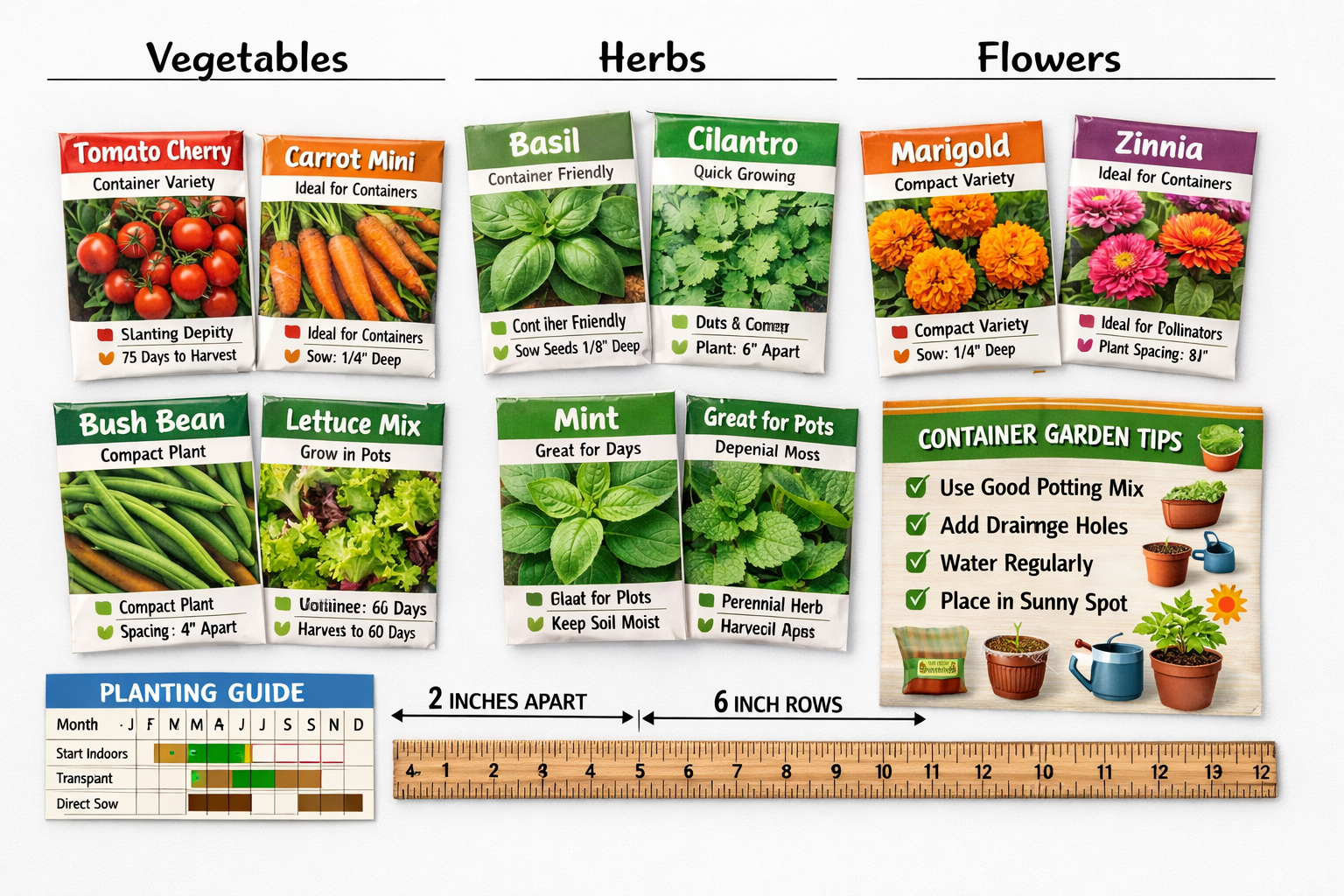
Some seed companies specifically mark varieties as suitable for container growing, which is incredibly helpful for urban and suburban gardeners working with limited space. These varieties have been selected for compact growth habits and good performance in confined root spaces.
When building your sustainable garden, choosing organic fertilizers for container plants pairs perfectly with organic seeds to create a completely natural growing system that supports both plant health and environmental stewardship.
How Can You Use Seed Packet Information for Container Garden Planning?
As someone who’s helped countless garden enthusiasts transition from traditional gardening to container growing, I can tell you that seed packet information becomes even more valuable when you’re working with the constraints and opportunities of container gardening.
Calculating Container Capacity
Use the spacing requirements on seed packets to determine exactly how many plants will fit in your containers. For example, if lettuce needs 4-inch spacing and you have a 12-inch diameter pot, you can grow approximately 3-4 plants comfortably. This math helps you buy the right amount of seeds and avoid overcrowding.
Matching Varieties to Container Sizes
Pay attention to mature plant size information to choose appropriate container depths and widths. Root vegetables like carrots need deep containers (12+ inches), while leafy greens can thrive in shallower spaces (6-8 inches). The packet information helps you match plants to your available containers.
Adapting Timing for Container Growing
Container plants often warm up faster in spring and may be protected from early frosts, potentially extending your growing season. Use the days to maturity information to plan multiple succession plantings in the same containers throughout the season.
Selecting Heat-Tolerant Varieties
Containers can get quite hot in summer sun, so look for varieties marked as heat-tolerant or suitable for container growing. These plants are more likely to thrive in the intense conditions that container growing can create.
Planning for Support Needs
Check packet information for plants that need staking or trellising, such as tomatoes, peas, or climbing beans. This helps you plan for appropriate support structures in your container setup from the beginning.
Optimizing for Continuous Harvests
Use the days to maturity information to stagger plantings every 2-3 weeks for crops like lettuce, radishes, and herbs. This approach maximizes your harvest from limited container space throughout the growing season.
For comprehensive guidance on container growing techniques, explore our essential guide to successful container gardening to complement your seed packet knowledge with practical growing wisdom.
What Common Mistakes Should You Avoid When Reading Seed Packets?
After years of gardening and helping other garden enthusiasts grow, learn, and flourish, I’ve noticed several recurring mistakes that can easily derail even the most enthusiastic beginner’s gardening efforts.
Ignoring Planting Depth Requirements
One of the most common errors is planting seeds at the wrong depth. The general rule is to plant seeds at a depth equal to 2-3 times their diameter, but always follow the specific instructions on your packet. Seeds planted too deep may never emerge, while those planted too shallow can dry out quickly.
Overlooking Spacing Guidelines
Many beginners plant seeds too close together, thinking more plants equal more harvest. In reality, overcrowded plants compete for resources and often produce smaller, weaker harvests than properly spaced plants. Trust the spacing recommendations, even if your garden looks sparse initially.
Misunderstanding Days to Maturity
Don’t assume “days to maturity” means you’ll have a full harvest on that exact day. This number represents when you can expect to begin harvesting, and many crops continue producing for weeks or months afterward. Also, remember that cooler conditions can extend these timeframes significantly.
Skipping Soil and Light Requirements
Planting sun-loving vegetables in shady spots or moisture-loving plants in dry conditions sets you up for disappointment. Match your seed choices to your actual growing conditions, or modify your environment to meet the plants’ needs.
Forgetting About Local Climate
Seed packets often provide general guidelines that may not perfectly match your specific climate zone. Research your local frost dates and growing season length to time plantings appropriately for your area.
Not Planning for Plant Support
Many gardeners forget to check whether their chosen plants need stakes, cages, or trellises until the plants are already struggling. Read the full packet information to plan for any support structures before planting.
Assuming All Seeds Are the Same
Different varieties of the same plant can have vastly different requirements and characteristics. A cherry tomato and a beefsteak tomato have different space, support, and timing needs, even though they’re both tomatoes.
To avoid these pitfalls and set yourself up for success, consider starting with easy container gardening techniques that help you practice reading and applying seed packet information in a controlled environment.
FAQ
Q: What’s the difference between days to germination and days to maturity?
Days to germination tells you when seeds will sprout (usually 5-21 days), while days to maturity indicates when you can expect your first harvest (typically 30-120+ days from planting). Germination is just the beginning of the growing process.
Q: Can I plant seeds closer together in containers than the packet recommends?
You can sometimes reduce spacing slightly in containers, but never ignore it completely. Container plants depend entirely on the soil and nutrients you provide, so overcrowding leads to poor performance and smaller harvests.
Q: Why do my seeds take longer to germinate than the packet says?
Germination times assume optimal soil temperature and moisture conditions. Cool soil, inconsistent watering, or old seeds can extend germination time significantly beyond packet estimates.
Q: What does “full sun” really mean on a seed packet?
Full sun means 6-8 hours of direct sunlight daily. Partial sun is 4-6 hours, and partial shade is 2-4 hours. Most vegetables need full sun for optimal production.
Q: Are expensive seeds worth the higher cost?
Higher-priced seeds often offer better germination rates, disease resistance, or unique varieties not available elsewhere. For beginners, investing in quality seeds from reputable companies usually provides better results.
Q: Can I save seeds from hybrid varieties?
While you can collect seeds from hybrid plants, they won’t grow true to type. The resulting plants may have different characteristics than the parent plant. Save seeds only from open-pollinated or heirloom varieties.
Q: What does “direct sow” mean on seed packets?
Direct sow means planting seeds directly in their final growing location rather than starting them indoors first. Many vegetables like beans, carrots, and radishes prefer direct sowing.
Q: How do I know if my seeds are still viable?
Check the packet date first – most seeds remain viable for 2-5 years when stored properly. You can test germination by placing 10 seeds on a damp paper towel; if fewer than 5 sprout after the recommended time, buy fresh seeds.
Q: What’s the difference between organic and non-GMO seeds?
Organic seeds come from plants grown without synthetic chemicals, while non-GMO means the seeds weren’t genetically modified. Seeds can be organic, non-GMO, both, or neither.
Q: Should I follow packet instructions exactly or can I adapt them?
Start by following instructions exactly, then adapt based on your experience and local conditions. Planting depth and spacing are critical to follow, while timing can be adjusted for your specific climate.
Q: What does “succession planting” mean and how do I plan it?
Succession planting means sowing the same crop every 2-3 weeks for continuous harvests. Use the days to maturity information to calculate when to plant your next round for uninterrupted production.
Q: How do I choose between similar varieties of the same plant?
Compare days to maturity, disease resistance, size requirements, and special characteristics. Choose faster-maturing varieties for shorter seasons, compact types for containers, and disease-resistant varieties for challenging growing conditions.
Key Takeaways
- Master the front panel basics by identifying plant names, varieties, photos, and special designations like organic or container-suitable before making seed selections
- Follow back panel instructions precisely for planting depth, spacing, and sunlight requirements, as these directly determine germination and growing success
- Use timing information strategically to plan planting dates, set realistic expectations, and schedule succession plantings for continuous harvests
- Match seed requirements to your growing conditions by considering your available space, sunlight, and container limitations before purchasing
- Choose quality designations like organic, heirloom, or disease-resistant varieties that align with your gardening goals and local growing challenges
- Calculate container capacity accurately using spacing requirements to determine how many plants will thrive in your available growing space
- Avoid common mistakes like ignoring planting depth, overcrowding plants, or misunderstanding maturity timelines that can derail your gardening success
- Plan for plant support needs by reading full packet information to prepare stakes, cages, or trellises before planting
- Adapt recommendations thoughtfully based on your local climate and growing conditions while respecting critical requirements like spacing and depth
- Start with beginner-friendly varieties marked as easy to grow or suitable for containers to build confidence and experience reading seed packet information
Conclusion
Learning how to read a seed packet (deep dive) transforms you from a confused beginner into a confident gardener who can make informed decisions about what to grow and how to grow it successfully. Every piece of information on that small packet serves a purpose in helping your plants thrive, from the variety selection on the front to the detailed growing instructions on the back.
Remember, seed packets are your roadmap to gardening success, especially when you’re nurturing the love for the earth through sustainable container growing. Take time to read them thoroughly, follow the guidelines, and don’t be afraid to start with varieties marked as beginner-friendly or suitable for containers.
Your journey with organic container gardening begins with understanding these fundamental details that seed companies have carefully provided to ensure your success. As you gain experience, you’ll develop the confidence to adapt these guidelines to your specific growing conditions while respecting the essential requirements that determine whether your plants will thrive.
Start small, read carefully, and celebrate each success as you build your gardening wisdom one seed packet at a time. Your green paradise awaits, and it all begins with understanding exactly what those colorful packets are telling you about the amazing potential hidden in each tiny seed.
Check out our full Beginner’s Guide to Starting Seeds Indoors.
References
[1] How To Read A Seed Packet – https://ferrymorse.com/blogs/the-greenhouse/how-to-read-a-seed-packet
[2] How To Read Our Seed Packets – https://sowrightseeds.com/blogs/planters-library/how-to-read-our-seed-packets
[3] Seed Packet Information How To Read Seed Packets – https://melissaknorris.com/podcast/seed-packet-information-how-to-read-seed-packets/
[4] How To Read A Seed Packet – https://dug.org/gardening-resources/how-to-read-a-seed-packet/

0 Comments