
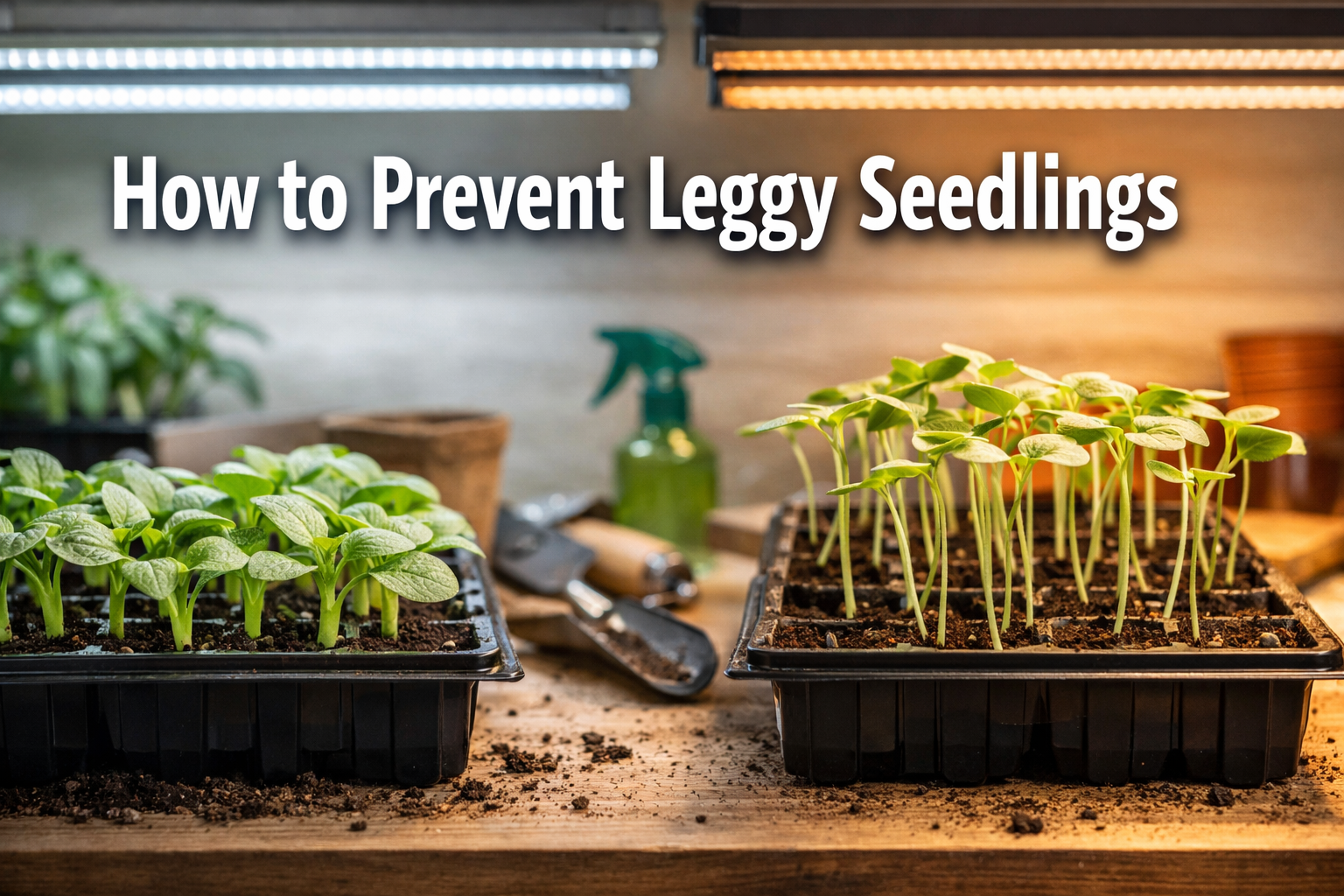
There’s nothing more heartbreaking than watching your carefully planted seeds sprout into tall, spindly seedlings that topple over at the slightest touch. I’ve been there – staring at my seed trays wondering where I went wrong. The good news? Learning how to prevent leggy seedlings is actually straightforward once you understand what causes them to stretch in the first place.
Key Takeaways
• Insufficient light is the #1 cause – seedlings need 14-16 hours of bright light daily
• Position grow lights 2-4 inches above seedling tops for optimal growth
• Proper spacing prevents competition – keep seedlings 1-2 inches apart after first true leaves appear
• Temperature control matters – remove from heat sources immediately after germination
• Air circulation strengthens stems – use fans or gentle brushing techniques
Quick Answer
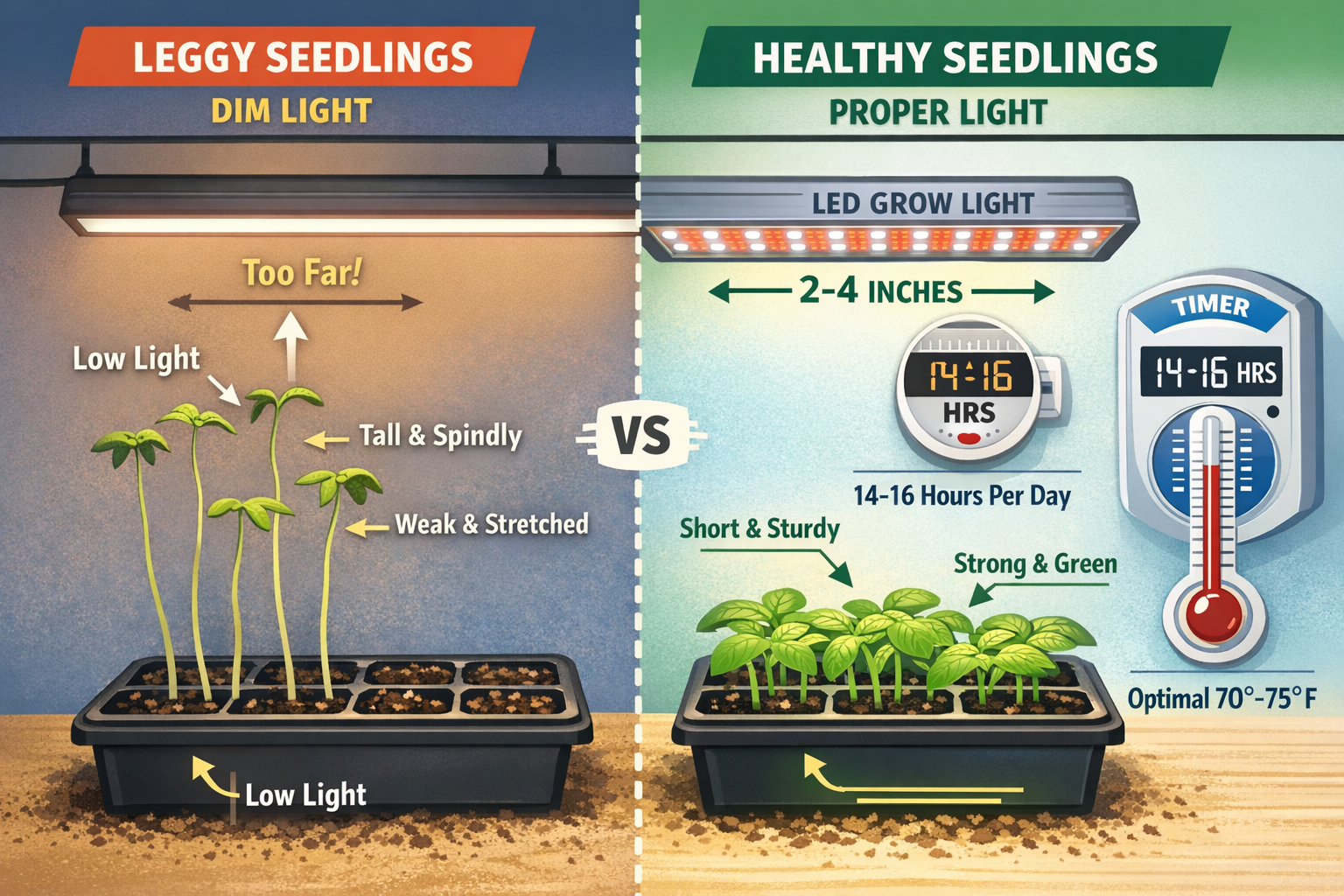
Leggy seedlings develop when plants stretch toward inadequate light sources, creating weak, elongated stems. The most effective prevention involves providing 14-16 hours of bright light daily, positioning grow lights 2-4 inches above plants, maintaining proper spacing, and ensuring good air circulation. For most home gardeners, insufficient light is almost always the primary culprit[2].
What Causes Seedlings to Become Leggy?
Seedlings become leggy when they’re desperately reaching for more light. This natural response, called etiolation, causes plants to put all their energy into growing tall rather than developing strong, thick stems.
The main culprits behind leggy seedlings include:
- Insufficient light intensity or duration – the most common cause
- Overcrowding that creates competition for available light
- Excessive heat that accelerates growth without proper light
- Poor air circulation that weakens stem development
- Inconsistent watering that stresses young plants
Even that sunny south-facing window you thought would be perfect often isn’t enough. Modern windows with UV-blocking coatings transmit even less light than you’d expect[2]. During late winter and early spring when most of us start seeds indoors, natural daylight simply doesn’t provide the intensity seedlings need to thrive.
I learned this the hard way when my first batch of tomato seedlings looked more like green spaghetti than future garden champions. That’s when I realized that understanding light requirements isn’t just helpful – it’s essential for successful seed starting.
How to Prevent Leggy Seedlings with Proper Lighting
Proper lighting is your most powerful tool for preventing leggy seedlings. Seedlings require 14-16 hours of bright light per day for optimal growth[1][4], with most vegetable seedlings thriving with 16 hours of light and 8 hours of dark[2].
Setting Up Grow Lights:
- Position lights 2-4 inches above seedling tops[1]
- Use a timer to ensure consistent 14-16 hour daily exposure
- Adjust light height as plants grow to maintain proper distance
- Choose full-spectrum LED lights for energy efficiency
Light Placement Tips:
- Keep lights close enough that you can feel warmth when you hold your hand underneath
- If seedlings still stretch toward lights, move them closer
- Watch for signs of light burn (brown, crispy leaf edges) and adjust accordingly
Budget-Friendly Options:
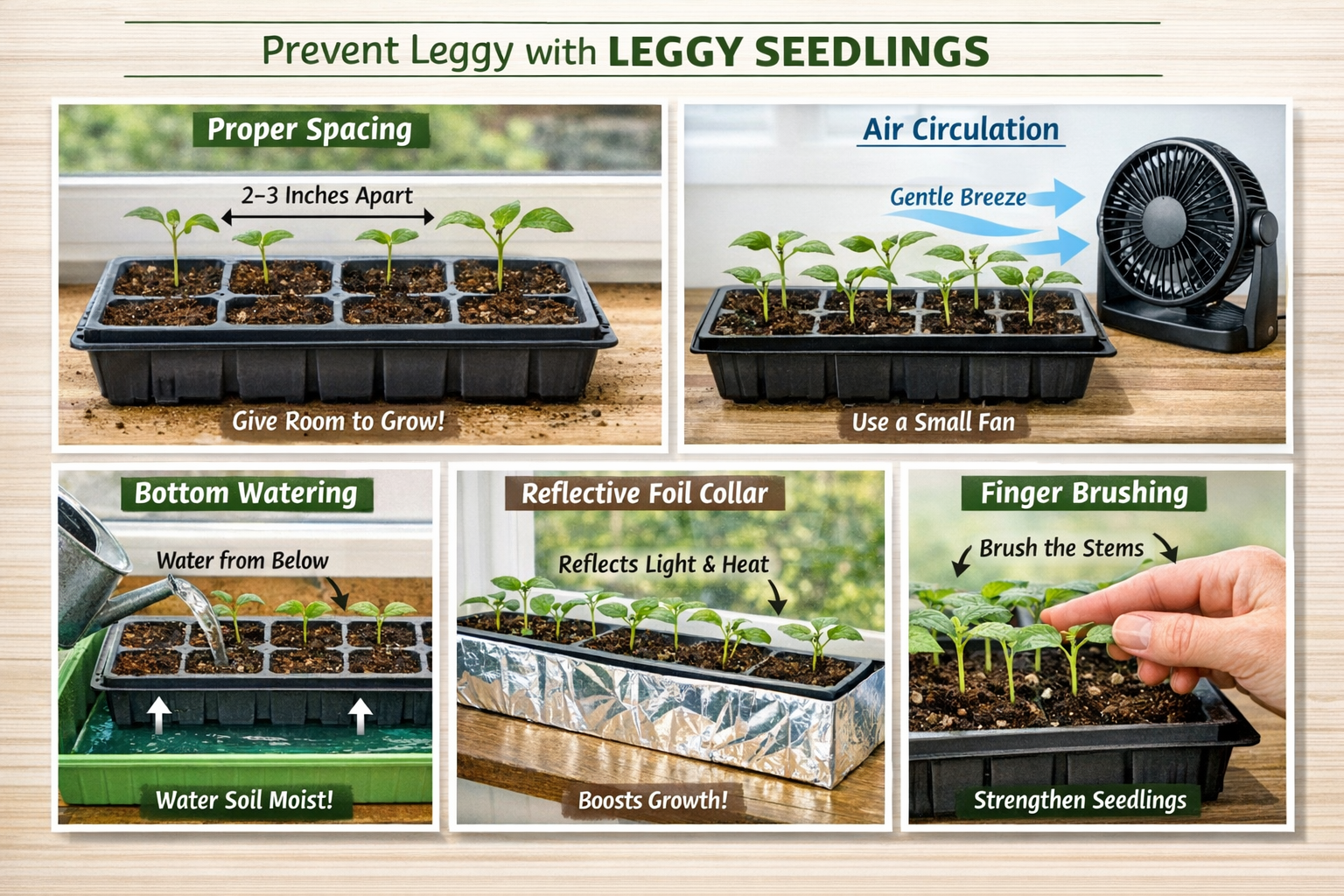
For those just starting out, you don’t need expensive equipment. A simple shop light with LED bulbs works well for small batches of seedlings. I’ve also had success using a high tinfoil collar around windowsill trays to reflect light back onto seedlings[2] – it’s not as effective as grow lights, but it helps maximize whatever natural light you have.
The key is consistency. Seedlings prefer steady, reliable light over sporadic bright periods. That’s why even a modest grow light setup often outperforms a sunny windowsill for preventing leggy growth.
For more detailed guidance on setting up your seed starting area, check out our guide to creating the perfect seed starting station.
Essential Spacing and Air Circulation Techniques
Proper spacing and air circulation work together to prevent leggy seedlings by reducing competition and strengthening stems naturally.
Spacing Guidelines:
- Space seedlings at least 1-2 inches apart once first true leaves develop[2]
- Thin overcrowded seedlings rather than letting them compete
- Transplant into larger containers when leaves start touching
- Use deeper trays to accommodate root growth
Air Circulation Benefits:
Good airflow mimics outdoor conditions and encourages stronger stem development. Use a small fan to create gentle air movement around your seedlings[1]. The slight movement forces plants to develop thicker, more resilient stems as they work to stay upright.
The Finger Brushing Technique:
Here’s a simple trick I use daily – gently brush your fingers across seedling tops to simulate outdoor breezes[2]. This physical stimulation encourages plants to develop stronger stems naturally. Just a few gentle passes each morning when you check on your seedlings makes a noticeable difference.
Preventing Disease:
Proper spacing and air circulation also reduce humidity around plants, which helps prevent damping-off disease and other fungal issues that can weaken or kill young seedlings.
Temperature Control and Watering Best Practices
Temperature and watering practices significantly impact whether seedlings develop strong, compact growth or become leggy and weak.
Temperature Management:
- Remove seedlings from heat sources immediately after germination[1]
- Lower temperatures slightly after sprouting to slow growth
- Maintain consistent temperatures between 65-75°F for most vegetables
- Avoid placing seed trays near heating vents or radiators
Smart Watering Strategies:
- Water from below to prevent soil drying between watering days[2]
- Use bottom watering trays to encourage strong root development
- Keep soil consistently moist but never waterlogged
- Water early in the day to allow excess moisture to evaporate
Why Bottom Watering Works:
Bottom watering encourages roots to grow downward seeking moisture, which creates a stronger foundation for the plant. It also prevents the soil surface from drying out and creating stress that can weaken stems.
I’ve found that consistent moisture levels are just as important as proper lighting. When seedlings experience drought stress, they often respond by putting energy into height rather than developing sturdy stems.
For those interested in sustainable growing practices, our organic container gardening guide covers eco-friendly watering and soil management techniques.
Which Plants Are Most Prone to Becoming Leggy?
Some plants are naturally more susceptible to leggy growth than others. Knowing which varieties need extra attention helps you focus your prevention efforts where they matter most.
High-Risk Plants:
- Tomatoes, peppers, and eggplants – these warm-season crops stretch quickly in low light[1]
- Brassicas (broccoli, cabbage, kale) – fast growers that compete aggressively for light
- Herbs, especially basil – tender herbs are particularly sensitive to light conditions
- Flowering annuals like petunias and impatiens
Moderate-Risk Plants:
- Lettuce and other leafy greens
- Most herb varieties except basil
- Cool-season vegetables like peas
Lower-Risk Plants:
- Root vegetables (though you rarely start these indoors)
- Sturdy herbs like rosemary and thyme
- Most perennial flowers
Timing Considerations:
Plants started too early in the season face greater risk because they spend more time under artificial growing conditions. I’ve learned to time my seed starting based on my last frost date rather than getting excited and starting too early.
If you’re planning your container garden, our guide to vegetables that grow well in containers can help you choose varieties that transition well from indoor starting to outdoor growing.
How to Fix Leggy Seedlings That Are Already Stretched
Don’t panic if your seedlings are already leggy – many can be successfully rescued with the right techniques.
Deep Transplanting Method:
Leggy seedlings, particularly tomatoes and tomatillos, can recover successfully if transplanted deeper into soil[1][2]. When transplanting:
- Bury the stem up to the first set of true leaves
- Remove any leaves that would be below soil level
- Water gently to settle soil around the buried stem
- The buried stem will develop additional roots, creating a stronger plant
Immediate Light Correction:
- Move leggy seedlings closer to light sources immediately
- Increase daily light exposure to 16 hours
- Provide support stakes if stems are too weak to stand alone
Gradual Strengthening:
- Start air circulation immediately to encourage stem thickening
- Begin daily finger brushing to stimulate stronger growth
- Reduce watering slightly to encourage root development over top growth
When to Start Over:
Sometimes it’s better to start fresh. Consider replanting if:
- Seedlings have fallen over and can’t support themselves
- Stems are extremely thin and brittle
- Plants show signs of disease or stress beyond just legginess
Recovery Timeline:
Most rescued seedlings show improvement within 1-2 weeks of proper care. You’ll notice stems beginning to thicken and new growth appearing more compact.
Common Mistakes When Preventing Leggy Seedlings
Learning from common mistakes can save you time and frustration in your seed starting journey.
Lighting Mistakes:
- Placing lights too far away – even a few extra inches can cause stretching
- Using insufficient light duration – 8-10 hours isn’t enough for most seedlings
- Forgetting to adjust light height as plants grow
- Relying solely on windowsill light during late winter/early spring
Spacing and Care Errors:
- Overcrowding seed trays to fit more plants
- Keeping seedlings on heat mats too long after germination
- Inconsistent watering that stresses young plants
- Starting seeds too early for your growing zone
Temperature Control Issues:
- Maintaining germination temperatures after sprouting
- Placing trays near heat sources like radiators
- Ignoring temperature fluctuations that stress seedlings
Recovery Mistakes:
- Trying to save severely damaged seedlings instead of starting over
- Making sudden environmental changes that shock plants
- Over-fertilizing weak seedlings thinking it will help them recover
I’ve made most of these mistakes myself, and each one taught me something valuable about nurturing healthy seedlings. The key is being observant and making adjustments as soon as you notice problems developing.
Creating the Perfect Environment for Strong Seedlings
Building a successful seed starting environment combines all the prevention strategies we’ve discussed into a cohesive system.
Essential Equipment Checklist:
- Full-spectrum LED grow lights with timer
- Adjustable light fixtures or pulleys
- Seed starting trays with drainage holes
- Bottom watering trays
- Small fan for air circulation
- Thermometer for temperature monitoring
Daily Routine for Success:
- Check light distance and adjust as needed
- Perform finger brushing technique
- Monitor soil moisture and water from bottom if needed
- Observe seedlings for early signs of stretching
- Ensure fan is providing gentle air movement
Environmental Monitoring:
- Temperature: 65-75°F for most vegetables
- Light duration: 14-16 hours daily
- Air circulation: gentle, constant movement
- Humidity: moderate, not stagnant
Space Optimization:
For those with limited space, consider vertical growing systems or tiered light setups. You can grow a surprising number of seedlings in a small area with proper planning.
Sustainable Practices:
Use energy-efficient LED lights and consider solar-powered fans for air circulation. Reuse containers for seed starting, and compost any seedlings that don’t make it to transplant stage.
For comprehensive guidance on container growing, explore our ultimate guide to container gardening for beginners.
Frequently Asked Questions
Q: How close should grow lights be to seedlings?
A: Position grow lights 2-4 inches above seedling tops[1]. If you can feel gentle warmth when holding your hand under the lights, the distance is usually correct.
Q: Can I save seedlings that are already leggy?
A: Yes, many leggy seedlings can be saved through deep transplanting, especially tomatoes and peppers. Bury the stem up to the first true leaves when transplanting[1][2].
Q: How many hours of light do seedlings need daily?
A: Most seedlings need 14-16 hours of bright light per day, with vegetable seedlings thriving on 16 hours of light and 8 hours of dark[2][4].
Q: Is a sunny windowsill enough light for seedlings?
A: Usually no. Even south-facing windows provide insufficient light during late winter and early spring when seed starting typically occurs[2].
Q: What’s the finger brushing technique?
A: Gently brush your fingers across seedling tops daily to simulate outdoor breezes and encourage thicker stem development[2]. Just a few gentle passes each morning works well.
Q: Should I keep seedlings on heat mats after germination?
A: No, remove seedlings from heat sources immediately after germination[1]. Continued heat without adequate light promotes leggy growth.
Q: How far apart should I space my seedlings?
A: Space seedlings at least 1-2 inches apart once first true leaves develop to prevent competition for light[2].
Q: Can overcrowding cause leggy seedlings?
A: Yes, overcrowded seedlings compete for available light, causing them to stretch upward seeking better light exposure.
Q: What vegetables are most prone to becoming leggy?
A: Tomatoes, peppers, eggplants, brassicas, and herbs (especially basil) are most susceptible to leggy growth[1].
Q: How do I know if my seedlings are getting too much light?
A: Signs of excessive light include brown, crispy leaf edges or bleached-looking foliage. If this occurs, move lights slightly farther away.
Q: Should I fertilize leggy seedlings to help them recover?
A: No, avoid fertilizing weak or leggy seedlings. Focus on correcting light, spacing, and environmental conditions first.
Q: When should I start over instead of trying to fix leggy seedlings?
A: Start over if seedlings have fallen over completely, stems are extremely brittle, or plants show signs of disease beyond just legginess.
Conclusion
Learning how to prevent leggy seedlings transforms your seed starting success from frustrating guesswork into predictable results. The foundation of strong, healthy seedlings rests on providing adequate light – 14-16 hours daily positioned 2-4 inches above your plants. Combined with proper spacing, good air circulation, and consistent care, these practices create the conditions seedlings need to develop thick, sturdy stems.
Remember that even experienced gardeners encounter leggy seedlings sometimes. The key is recognizing the signs early and making adjustments quickly. With proper lighting setup, spacing techniques, and environmental control, you’ll be nurturing healthy seedlings that transplant successfully into your containers or garden beds.
Your Next Steps:
- Assess your current seed starting setup and identify areas for improvement
- Invest in proper grow lights if you’re relying solely on window light
- Implement the daily finger brushing technique starting tomorrow
- Plan your seed starting timing based on your local last frost date
- Practice these prevention techniques with your next batch of seedlings
The joy of nurturing nature starts with strong seedlings, and now you have the gardening wisdom to grow them successfully. Whether you’re planning herbs for your balcony or vegetables for your patio containers, these techniques will help you grow, learn, and flourish in your sustainable living journey.
For those ready to expand their container gardening knowledge, explore our comprehensive guide to organic container gardening to continue nurturing your love for the earth through sustainable growing practices or our Complete Beginner’s Guide to Starting Seeds Indoors.
References
[1] How To Fix Leggy Seedlings – https://www.homesandgardens.com/gardens/how-to-fix-leggy-seedlings
[2] Leggy Seedlings What Causes Them And How To Correct Them – https://gardenbetty.com/leggy-seedlings-what-causes-them-and-how-to-correct-them/
[4] Watch – https://www.youtube.com/watch?v=gObxMn8j3Ws

0 Comments