
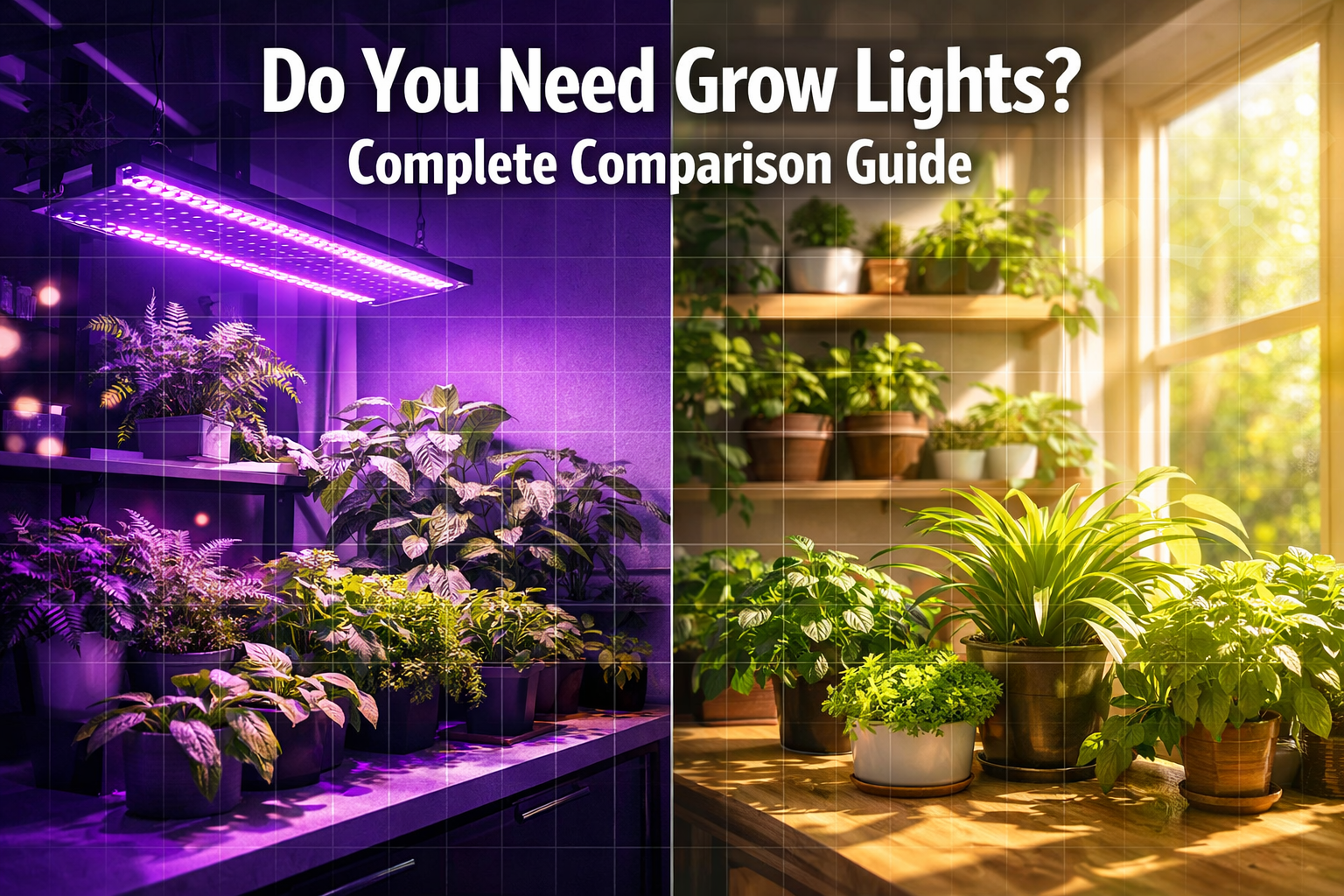
I’ll be honest with you—when I first started my container gardening journey in my tiny apartment, I was completely overwhelmed by the grow light question. Every gardening forum seemed to have conflicting advice, and I wasn’t sure if I was about to waste money on expensive equipment or miss out on thriving plants. After years of nurturing plants in various spaces and testing different lighting setups, I’ve learned that the answer to “do you need grow lights” isn’t a simple yes or no—it depends entirely on your specific situation.
Key Takeaways
• Natural light assessment is crucial—measure your space’s actual light levels before investing in grow lights
• Most herbs and leafy greens can thrive with just 4-6 hours of direct sunlight or quality grow lights
• Fruiting plants like tomatoes and peppers typically need 8+ hours of intense light, making grow lights essential for indoor growing
• LED grow lights offer the best value for container gardeners with energy efficiency and customizable light spectrums
• Seasonal supplementation may be more practical than year-round artificial lighting for many urban gardeners
Quick Answer
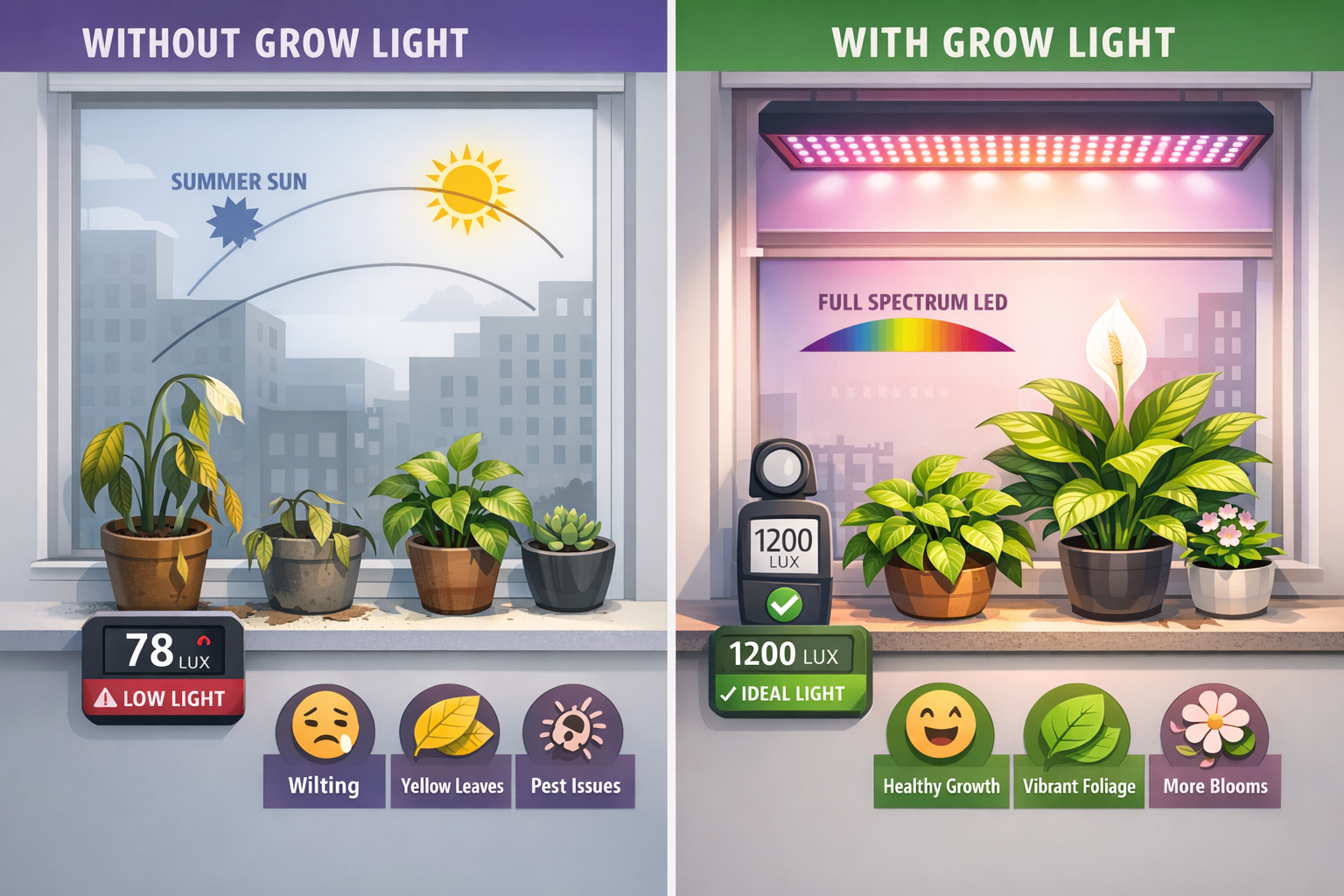
You need grow lights if your plants receive less than 6 hours of direct sunlight daily, you’re growing during winter months with limited daylight, or you want to cultivate fruiting vegetables indoors. Most container gardens on south-facing balconies or patios with good sun exposure can thrive without supplemental lighting, while north-facing windows and indoor spaces almost always benefit from quality LED grow lights.
When Do You Actually Need Grow Lights?
You need grow lights when your natural light conditions can’t support healthy plant growth—specifically when plants receive less than 4-6 hours of direct sunlight for leafy greens or 8+ hours for fruiting plants.
The joy of nurturing nature shouldn’t be limited by your living situation. I’ve seen countless garden enthusiasts transform dark apartments into thriving green paradises using strategic lighting. Here’s when grow lights become essential:
Low-Light Living Spaces:
- North-facing windows or apartments with limited window access
- Basements, interior rooms, or spaces with significant shade
- Urban environments where buildings block natural sunlight
- Rooms where you want to grow plants away from windows
Seasonal Light Limitations:
- Winter months when daylight hours drop below 10 hours
- Regions with extended cloudy periods or harsh winters
- Starting seeds indoors during late winter or early spring
- Maintaining herb gardens year-round regardless of weather
Specific Plant Requirements:
- Fruiting vegetables like tomatoes, peppers, and eggplants that need intense light
- Tropical plants that require consistent, bright light
- Seedlings and young plants that need controlled growing conditions
- High-value crops where you want to maximize yield and quality
The key insight I’ve gained is that grow lights aren’t just for serious indoor farmers—they’re tools that give you freedom to grow what you want, where you want, when you want.
What Plants Can Thrive Without Grow Lights?
Many container plants can flourish with just natural sunlight, particularly herbs, leafy greens, and certain vegetables when grown in spaces that receive 6+ hours of direct sun daily.
Through my container gardening adventures, I’ve discovered that sustainable living doesn’t always require high-tech solutions. Some of my most successful harvests have come from simple setups that work with natural light patterns.
Sun-Loving Champions for Bright Spaces:
- Herbs: Basil, rosemary, thyme, oregano, and sage thrive in sunny windows
- Leafy Greens: Lettuce, spinach, arugula, and kale grow well with morning sun
- Root Vegetables: Radishes, carrots, and beets adapt to moderate light conditions
- Compact Fruiting Plants: Cherry tomatoes and small peppers in very sunny locations
Shade-Tolerant Superstars:
- Asian Greens: Bok choy, mizuna, and tatsoi handle lower light beautifully
- Microgreens: Perfect for windowsill growing with minimal light requirements
- Culinary Herbs: Parsley, cilantro, and chives tolerate partial shade
- Houseplants: Pothos, snake plants, and peace lilies add greenery without intense light needs
For those interested in expanding their shade-tolerant options, I recommend checking out our guide to shade-loving plants for containers for more inspiration.
Light Assessment Tips:
Use your smartphone’s light meter app or simply observe how shadows move through your space throughout the day. If you can read comfortably by natural light for most of the day, many plants will be happy there too.
How Much Do Quality Grow Lights Cost?
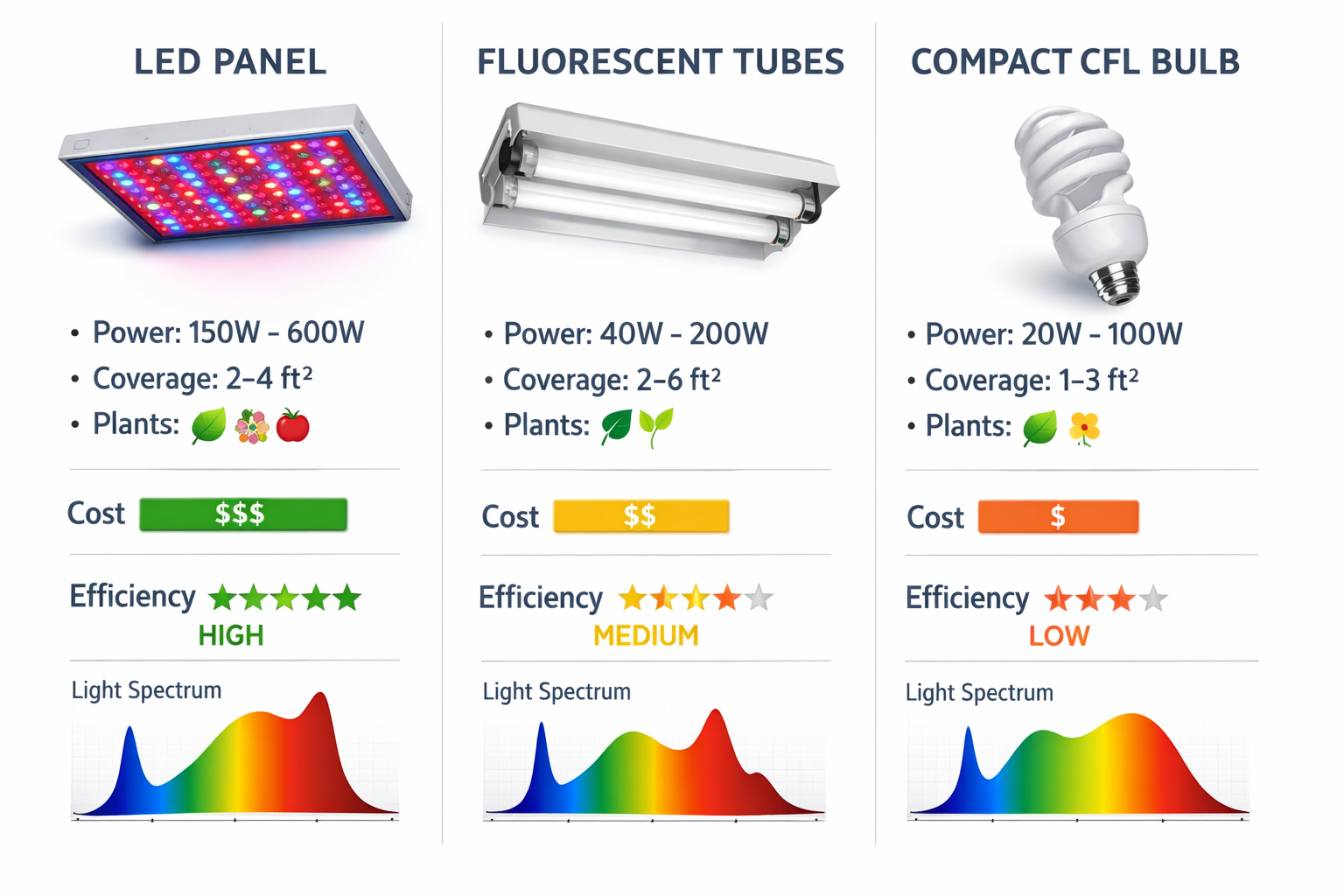
Quality LED grow lights for container gardening range from $30-150 for basic setups, with most urban gardeners finding success in the $50-80 range for lights that cover 2-4 square feet of growing space.
I remember sticker shock when I first researched grow lights, but I’ve learned that you don’t need to break the bank to get started. The key is matching your investment to your actual growing goals.
Budget-Friendly Options ($30-60):
- Basic LED panels (24-45 watts) perfect for herbs and microgreens
- Compact full-spectrum bulbs that fit standard fixtures
- Strip lights ideal for seed starting or supplemental lighting
- Entry-level options great for testing the waters
Mid-Range Solutions ($60-120):
- Full-spectrum LED panels with adjustable intensity
- Lights with timers and programmable settings
- Higher wattage options (45-100 watts) for larger container gardens
- Quality brands with 2-3 year warranties
Premium Systems ($120-300+):
- Professional-grade panels with customizable light spectrums
- Smart lights with app control and monitoring
- High-efficiency options for serious indoor growing
- Commercial-quality fixtures for dedicated growing spaces
Operating Costs to Consider:
Modern LED grow lights typically cost $5-15 per month to operate when running 12-16 hours daily. This makes them surprisingly affordable for year-round growing, especially when you factor in the value of fresh, homegrown produce.
The actionable insight here is to start small and expand as you gain experience. A $50 LED panel can transform your herb growing game and help you decide if larger investments make sense for your lifestyle.
LED vs. Fluorescent vs. HID: Which Type Wins?
LED grow lights are the clear winner for most container gardeners, offering superior energy efficiency, longer lifespan, and customizable light spectrums compared to fluorescent or HID alternatives.
After testing various lighting technologies in my own growing setups, I can share some gardening wisdom that’ll save you time and money. The grow light landscape has evolved dramatically, and the choice is clearer than ever for home gardeners.
LED Grow Lights (Recommended Choice):
- Energy Efficiency: Use 50-80% less electricity than traditional options
- Heat Output: Run cool, reducing risk of burning plants or overheating spaces
- Lifespan: Last 50,000+ hours vs. 10,000 for fluorescents
- Customization: Many offer adjustable red/blue spectrums for different growth stages
- Space-Friendly: Compact designs perfect for apartment living
Fluorescent Lights (Budget Alternative):
- Lower Upfront Cost: T5 and compact fluorescent bulbs cost less initially
- Decent for Leafy Greens: Work well for herbs, lettuce, and microgreens
- Shorter Lifespan: Need replacement every 1-2 years
- Limited Intensity: Struggle with fruiting plants or dense canopies
HID Lights (Overkill for Most):
- High Heat Output: Require ventilation and cooling systems
- Energy Intensive: Expensive to operate for small-scale growing
- Professional Focus: Better suited for commercial operations
- Complex Setup: Need ballasts and specialized fixtures
According to recent industry analysis, LED technology continues advancing rapidly, with 2026 models offering even better efficiency and spectrum control than previous generations [1].
My Recommendation: Start with a quality full-spectrum LED panel in the 30-50 watt range. It’ll handle most container gardening needs while keeping energy costs reasonable and your living space comfortable.
Do Grow Lights Actually Improve Plant Growth?
Yes, quality grow lights can significantly improve plant growth when natural light is insufficient, often producing faster germination, more robust foliage, and higher yields compared to low-light conditions.
I’ve run countless side-by-side comparisons in my own containers, and the results consistently show that proper artificial lighting can match or even exceed natural sunlight for many plants. The key word here is “proper”—not all grow lights are created equal.
Measurable Benefits I’ve Observed:
- Faster Seed Germination: Seeds under grow lights often sprout 2-3 days earlier
- Stronger Seedlings: Less stretching and leggy growth compared to window-grown plants
- Extended Growing Season: Fresh herbs and greens year-round, regardless of weather
- Higher Yields: Fruiting plants produce more tomatoes, peppers, and pods under adequate artificial light
- Consistent Quality: Less variation in plant health and harvest timing
Scientific Backing:
Research consistently shows that plants respond well to full-spectrum LED lighting that mimics natural sunlight. The ability to control light intensity and duration allows for optimized growing conditions that nature doesn’t always provide [5].
Real-World Example:
Last winter, I grew two identical basil plants—one on my south-facing windowsill and another under a 45-watt LED panel. The grow light basil produced 40% more harvestable leaves and maintained better flavor intensity throughout the dark months.
When Grow Lights Don’t Help:
- Plants already receiving adequate natural light
- Poor soil, watering, or nutrition (light won’t fix other problems)
- Wrong light spectrum or intensity for specific plant needs
- Inadequate duration (most plants need 12-16 hours of artificial light)
The bottom line: grow lights are tools that expand your possibilities, not magic solutions. When used correctly in appropriate situations, they absolutely deliver improved plant performance.
Setting Up Your First Grow Light System
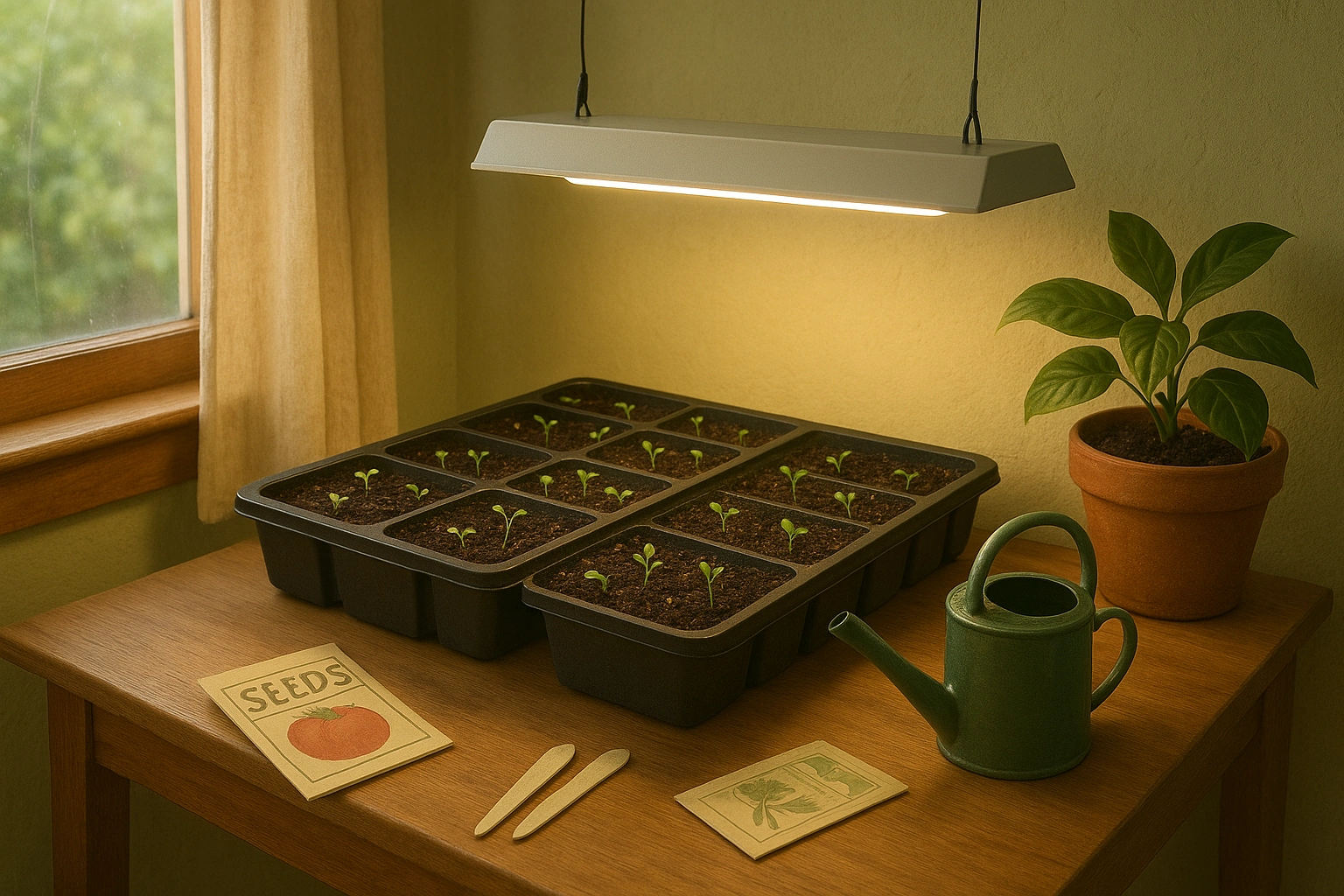
Start with a simple LED panel positioned 12-24 inches above your plants, running 14-16 hours daily for most vegetables and herbs, with a basic timer to automate the light cycle.
Setting up grow lights doesn’t have to be complicated. I’ve helped dozens of friends create their first indoor growing setups, and the most successful approaches are always the simplest ones.
Essential Setup Steps:
- Choose Your Location
- Stable surface that can support plant weight and light fixture
- Access to electrical outlet (avoid long extension cords)
- Space for plants to grow without hitting the light
- Easy access for daily care and harvesting
- Install Your Light
- Hang LED panels 12-18 inches above seedlings, 18-24 inches above mature plants
- Use adjustable chains or pulleys for easy height changes
- Ensure even light coverage across all containers
- Consider reflective surfaces to maximize light efficiency
- Set Your Timer
- 14-16 hours daily for most vegetables and herbs
- 12-14 hours for flowering or fruiting plants
- Maintain consistent on/off times to establish plant rhythms
- Use a reliable digital timer (mechanical ones can drift)
- Monitor and Adjust
- Watch for signs of too much light (leaf bleaching, curling)
- Look for stretching or pale growth indicating insufficient light
- Adjust height and duration based on plant response
- Keep a simple log of what works for different plants
Common Setup Mistakes to Avoid:
- Placing lights too close and burning plants
- Running lights 24/7 (plants need darkness too)
- Forgetting to raise lights as plants grow
- Using the wrong spectrum for your plant type
For those just starting their container gardening journey, our beginner’s guide to container gardening provides excellent foundation knowledge before adding grow lights to the mix.
Seasonal Lighting: When Natural Light Isn’t Enough
During winter months and early spring, even south-facing windows may provide insufficient light for healthy plant growth, making grow lights essential for maintaining productive container gardens year-round.
I learned this lesson the hard way during my first winter of container gardening. My thriving summer herb garden turned into a collection of leggy, pale plants by February. Now I plan for seasonal lighting changes and maintain productive gardens regardless of weather.
Critical Seasonal Periods:
Late Fall to Early Spring (November-March):
- Daylight hours drop below 10 hours in most regions
- Sun angle decreases, reducing light intensity even in south windows
- Cloudy weather further limits available natural light
- Indoor heating can create dry conditions that stress plants
Seed Starting Season (February-April):
- Starting seeds indoors requires consistent, intense light
- Natural light often insufficient for strong seedling development
- Grow lights prevent leggy, weak transplants
- Controlled environment improves germination rates
Transitional Periods:
- Gradually reduce artificial lighting as natural light increases
- Use grow lights to supplement rather than replace spring sunshine
- Monitor plants for signs of light stress during transitions
- Adjust timing to match natural photoperiods
Practical Seasonal Strategy:
I run my grow lights from November through March for year-round herbs and greens, then use them primarily for seed starting in spring. This approach keeps my energy costs reasonable while ensuring continuous harvests.
Winter Growing Success Tips:
- Focus on cool-season crops that thrive under artificial light
- Reduce watering frequency as plant growth slows
- Maintain adequate humidity in heated indoor spaces
- Choose compact varieties suited for container growing
The goal isn’t to fight the seasons but to work with them intelligently, using technology to extend your growing capabilities when it makes the most sense.
Energy Costs and Sustainability Considerations
Modern LED grow lights typically add $8-20 to monthly electricity bills while producing fresh food worth $30-60, making them both economically and environmentally sustainable for urban gardeners.
As someone passionate about sustainable living, I initially worried about the environmental impact of artificial lighting. However, my analysis of actual costs and benefits shows that efficient grow lights can be surprisingly eco-friendly when used thoughtfully.
Real Energy Usage:
- 30-watt LED panel: ~$6-8 per month running 16 hours daily
- 50-watt LED panel: ~$10-14 per month
- 100-watt LED panel: ~$18-25 per month
- Costs based on average US electricity rates of $0.12-0.15 per kWh
Environmental Benefits:
- Reduced Food Miles: Homegrown herbs and greens eliminate transportation emissions
- No Packaging Waste: Fresh harvests mean no plastic containers or bags
- Pesticide-Free Growing: Control over growing methods reduces chemical inputs
- Water Efficiency: Container growing with controlled lighting uses less water than field agriculture
Sustainability Comparison:
Growing $50 worth of organic herbs monthly under LED lights costs about $12 in electricity—a net savings of $38 plus environmental benefits. The carbon footprint is typically lower than purchasing equivalent organic produce shipped from distant farms.
Energy-Saving Tips:
- Use timers to avoid unnecessary lighting hours
- Choose energy-efficient LED models with high photon efficacy
- Optimize light placement to minimize required wattage
- Focus on high-value crops that maximize return on energy investment
Long-Term Perspective:
Quality LED grow lights last 5-7 years with normal use, spreading the initial investment across thousands of growing hours. When you factor in rising organic produce costs and the satisfaction of homegrown food, the economics strongly favor sustainable indoor growing.
For gardeners interested in maximizing their sustainable growing practices, exploring organic container gardening methods can complement efficient lighting systems perfectly.
Common Grow Light Mistakes and How to Avoid Them
The most common grow light mistakes include placing lights too close to plants, running them 24/7, and choosing the wrong spectrum for specific growth stages—all easily avoided with proper planning and observation.
Through my years of helping fellow garden enthusiasts troubleshoot their lighting setups, I’ve seen the same mistakes repeated countless times. The good news is that these errors are completely preventable with a bit of gardening wisdom.
Critical Distance Mistakes:
Too Close:
- Signs: Leaf bleaching, brown spots, curling or crispy edges
- Solution: Raise lights to 18-24 inches for most plants
- Prevention: Start high and gradually lower while monitoring plant response
Too Far:
- Signs: Stretching, pale growth, weak stems
- Solution: Lower lights gradually until plants show healthy, compact growth
- Sweet spot: Usually 12-18 inches for seedlings, 18-24 inches for mature plants
Timing and Duration Errors:
24/7 Lighting:
- Problem: Plants need darkness for proper metabolic processes
- Correct approach: 14-16 hours on, 8-10 hours off for most vegetables
- Exception: Some leafy greens can handle 18-20 hour photoperiods
Inconsistent Schedules:
- Problem: Irregular lighting confuses plant circadian rhythms
- Solution: Use reliable timers and maintain consistent daily schedules
- Pro tip: Align artificial “sunrise” with your daily routine for easy monitoring
Spectrum Selection Mistakes:
Wrong Color Temperature:
- Blue-heavy lights: Great for leafy growth, poor for flowering/fruiting
- Red-heavy lights: Good for flowering, can cause stretching in vegetative growth
- Full-spectrum solution: Balanced lights work for most container garden applications
Plant-Specific Needs:
- Herbs and greens: Prefer cooler, blue-rich spectrums
- Fruiting plants: Need more red spectrum during flowering
- Seedlings: Benefit from balanced full-spectrum lighting
Setup and Maintenance Issues:
Poor Light Distribution:
- Problem: Uneven coverage creates hot spots and shadows
- Solution: Position lights to cover entire growing area evenly
- Consider multiple smaller lights rather than one large fixture
Neglecting Adjustments:
- Problem: Fixed light height as plants grow
- Solution: Raise lights weekly or as needed to maintain proper distance
- Use adjustable hangers or pulley systems for easy changes
The key to avoiding these mistakes is starting conservatively and making gradual adjustments based on how your plants respond. Plants are excellent communicators—they’ll show you what’s working and what isn’t.
Alternatives to Traditional Grow Lights
Reflective surfaces, light movers, seasonal plant rotation, and strategic use of natural light can reduce or eliminate the need for traditional grow lights in many container gardening situations.
I’m always exploring creative solutions that align with sustainable living principles. While grow lights are fantastic tools, they’re not the only way to ensure your plants get adequate light for healthy growth.
Maximizing Natural Light:
Reflective Strategies:
- White walls or reflective panels behind plants double available light
- Mirrors positioned to redirect sunlight (avoid creating hot spots)
- Aluminum foil or mylar sheets as budget-friendly reflectors
- Light-colored surfaces under containers to bounce light upward
Strategic Plant Placement:
- Rotate containers weekly to ensure even light exposure
- Use tiered shelving to maximize window light utilization
- Move plants outdoors during favorable weather
- Group plants by light requirements for efficient space use
Seasonal Adaptation Techniques:
Plant Rotation System:
- Grow cool-season crops during low-light months
- Focus on microgreens and sprouts that need minimal light
- Time warm-season plants for spring/summer growing
- Use succession planting to maintain continuous harvests
Outdoor Integration:
- Transition containers between indoor and outdoor spaces
- Use cold frames or mini greenhouses to extend seasons
- Take advantage of protected outdoor microclimates
- Gradually acclimate plants to changing light conditions
Low-Light Plant Selections:
- Choose varieties bred for container growing and lower light
- Focus on Asian greens, herbs, and leafy vegetables
- Explore microgreen production that thrives in minimal light
- Consider decorative edibles that tolerate shade
For gardeners interested in expanding their low-light growing options, our comprehensive guide to vegetables that grow well in containers includes many shade-tolerant varieties.
Hybrid Approaches:
The most successful container gardeners I know combine natural light optimization with minimal artificial lighting. A small LED panel used for seed starting or winter supplementation, paired with good natural light management, often provides the best balance of results and sustainability.
Cost-Effective Light Enhancement:
- South-facing window placement with reflective backing
- Seasonal outdoor growing with indoor backup lighting
- Community garden plots for summer growing, indoor herbs for winter
- Shared grow light setups with neighbors or friends
These alternatives work especially well for gardeners who want to grow learn and flourish without major equipment investments or those living in rental situations where permanent lighting installations aren’t practical.
Frequently Asked Questions
Can I use regular LED bulbs instead of grow lights?
Regular LED bulbs lack the specific light spectrum plants need for photosynthesis. While they provide some benefit, dedicated grow lights with full-spectrum output will always perform better for plant growth. Standard LEDs typically emit too much green light and insufficient red/blue wavelengths.
How long do LED grow lights last?
Quality LED grow lights typically last 50,000-100,000 hours, which translates to 5-10 years of normal use running 14-16 hours daily. This longevity makes them cost-effective despite higher upfront costs compared to fluorescent options.
Do grow lights increase my electric bill significantly?
A typical 50-watt LED grow light running 16 hours daily adds approximately $10-15 to monthly electricity bills. This cost is often offset by savings on fresh herbs and vegetables, making grow lights economically viable for most households.
What’s the minimum wattage needed for herbs and leafy greens?
Most herbs and leafy greens thrive under 20-40 watts of quality LED lighting per square foot of growing space. A 30-watt full-spectrum LED panel can successfully grow 4-6 herb containers or a small salad garden.
Can grow lights replace sunlight completely?
Yes, quality full-spectrum grow lights can completely replace natural sunlight for plant growth. Many commercial growers use artificial lighting exclusively. However, combining natural and artificial light often provides the best results for home gardeners.
How far should grow lights be from seedlings?
Position LED grow lights 6-12 inches above seedlings, gradually raising to 18-24 inches as plants mature. Start closer for weak seedlings showing stretching, and raise lights if you notice leaf bleaching or heat stress.
Do plants need darkness when using grow lights?
Yes, most plants require 6-10 hours of darkness daily for proper metabolic processes. Running grow lights 24/7 can stress plants and reduce overall health. Maintain consistent light/dark cycles using automatic timers.
What’s the difference between full-spectrum and blurple grow lights?
Full-spectrum lights emit white light containing all wavelengths, while “blurple” lights combine primarily red and blue LEDs. Full-spectrum lights are generally more versatile and easier on human eyes, though both can grow plants effectively.
Can I grow tomatoes and peppers under grow lights?
Yes, but fruiting plants like tomatoes and peppers need more intense lighting—typically 40-60 watts per square foot. They also require longer daily light periods (14-16 hours) and benefit from lights with strong red spectrum for flowering and fruit development.
How do I know if my plants are getting too much light?
Signs of excessive light include leaf bleaching (white or yellow spots), brown crispy edges, curling leaves, and stunted growth. If you notice these symptoms, raise your lights higher or reduce daily lighting duration.
Are expensive grow lights worth the investment?
Higher-quality grow lights typically offer better energy efficiency, longer lifespan, and more precise spectrum control. For serious container gardeners, investing in quality lights pays off through lower operating costs and better plant performance over time.
Can I use grow lights for houseplants that aren’t edible?
Absolutely! Grow lights work excellently for decorative houseplants, especially in low-light homes. Many tropical plants, succulents, and flowering houseplants thrive under supplemental LED lighting during winter months.
Key Takeaways
• Assess your natural light first—measure actual sunlight hours in your growing space before investing in artificial lighting equipment
• Start small and expand gradually—a basic 30-50 watt LED panel can transform herb and microgreen growing while you learn the basics
• Focus on high-value crops—grow expensive organic herbs, leafy greens, and specialty vegetables that provide the best return on your lighting investment
• Combine natural and artificial light—use grow lights to supplement rather than replace natural sunlight whenever possible for optimal plant health and energy efficiency
• Choose full-spectrum LED lights—they offer the best combination of plant performance, energy efficiency, and longevity for container gardening applications
• Maintain consistent light schedules—plants thrive with regular 14-16 hour photoperiods and 8-10 hours of darkness using automatic timers
• Monitor and adjust regularly—watch for signs of too much or too little light and adjust height, duration, and intensity based on plant response
• Consider seasonal strategies—use grow lights primarily during low-light months and for seed starting rather than year-round operation when possible
• Calculate total costs realistically—factor in electricity usage, equipment lifespan, and food savings to make informed decisions about lighting investments
• Start with proven plant varieties—herbs, leafy greens, and microgreens offer the highest success rates for beginning grow light users
Conclusion
The question “do you need grow lights” ultimately comes down to your specific growing goals, available natural light, and commitment to year-round gardening. Through my journey nurturing the love for the earth in various urban spaces, I’ve learned that grow lights aren’t magic solutions—they’re tools that expand possibilities.
If you’re growing herbs on a sunny balcony during summer, you probably don’t need artificial lighting. But if you want fresh basil in January, live in a north-facing apartment, or dream of homegrown tomatoes regardless of weather, quality grow lights can transform your container gardening experience.
My advice? Start by maximizing your natural light with reflective surfaces and strategic plant placement. If you’re still not getting the results you want, invest in a modest LED panel and experiment. You can always expand your setup as you gain experience and confidence.
The joy of nurturing nature shouldn’t be limited by your living situation or the seasons. Whether you choose natural light, artificial lighting, or a combination of both, the most important step is simply starting. Your future self will thank you for those first fresh herbs grown under your own care, regardless of how you provided the light they needed to thrive.
Ready to take the next step? Consider starting with our perfect seed starting station guide to create an optimal environment for your first grow light experiments or our Complete Beginner’s Guild to Starting Seeds Indoors.
References
[1] 9 Best Led Grow Lights For 2026 Home Gardens – https://www.ledgrowlightsdepot.com/blogs/blog/9-best-led-grow-lights-for-2026-home-gardens
[5] Led Grow Lights The Ultimate 2026 Buyers Guide – https://discounthydro.com/blogs/news/led-grow-lights-the-ultimate-2026-buyers-guide

0 Comments