

Key Takeaways
• A basic DIY seed starting mix requires just three ingredients: peat moss (or coco coir), perlite, and vermiculite in equal parts
• Homemade seed starting mix costs significantly less than store-bought versions while giving you complete control over ingredients
• The ideal mix is soilless, lightweight, and fine-textured to prevent compaction in small containers
• Adding worm castings or compost provides gentle nutrients for seedling growth
• Proper storage keeps your DIY mix fresh for multiple growing seasons
Quick Answer

The best DIY seed starting mix recipe combines equal parts peat moss or coco coir, perlite, and vermiculite. This simple 1:1:1 ratio creates a lightweight, well-draining medium that retains moisture while preventing compaction—exactly what seeds need to germinate successfully.
I've been making my own seed starting mix for years, and I can tell you there's nothing quite like the satisfaction of watching seeds sprout in a growing medium you created yourself. Not only does this DIY approach save money, but it also gives you complete control over what goes into nurturing your future plants.
What Is a DIY Seed Starting Mix Recipe?
A DIY seed starting mix recipe is a homemade blend of ingredients specifically designed to provide optimal conditions for seed germination and early seedling growth. Unlike regular potting soil, seed starting mixes are soilless, lightweight, and finely textured to accommodate tiny seeds and delicate root systems[7].
The key difference between seed starting mix and regular potting soil lies in texture and drainage. Regular potting soil often contains bark chips and larger particles that can impede small seeds from making good contact with the growing medium. Seed starting mixes use finer materials that create a smooth, consistent environment where seeds can easily absorb moisture and nutrients.
Essential characteristics of quality seed starting mix:
- Soilless composition prevents soil-borne diseases
- Fine texture ensures good seed-to-medium contact
- Excellent drainage prevents waterlogging and damping-off
- Moisture retention keeps seeds consistently hydrated
- Lightweight structure won't compact in small containers
Most gardeners discover that making their own mix is not only more economical but also allows customization based on specific plant needs. When you're nurturing the love for the earth through sustainable living, creating your own growing medium feels like a natural extension of that philosophy.
Why Make Your Own Seed Starting Mix?
Creating your own seed starting mix offers significant advantages over purchasing commercial versions, especially for garden enthusiasts who want to grow, learn, and flourish in their gardening journey.
Cost savings represent the most immediate benefit. Commercial seed starting mixes can cost $8-15 per bag, while making your own costs roughly half that amount[2]. When you're starting dozens or hundreds of seeds, these savings add up quickly.
Quality control gives you complete oversight of ingredients. You know exactly what goes into your mix, avoiding unnecessary additives, synthetic fertilizers, or mystery components that some commercial blends contain. This transparency aligns perfectly with sustainable living practices.
Customization options let you adjust the recipe based on your specific needs. Growing tomatoes versus herbs? You can modify nutrient levels accordingly. Have hard water? You might choose coco coir over peat moss to avoid pH issues.
Freshness guarantee ensures your mix hasn't been sitting in a warehouse for months. Fresh ingredients mean better water absorption and more consistent results.
Environmental benefits include reducing plastic packaging waste and supporting sustainable gardening practices. Many commercial mixes come in non-recyclable bags, while bulk ingredients often have minimal packaging.
Setting up your own perfect seed starting station becomes even more rewarding when you're using a growing medium you've crafted yourself.
Basic DIY Seed Starting Mix Recipe
The foundation recipe I recommend uses three simple ingredients in equal proportions: one part peat moss or coco coir, one part perlite, and one part vermiculite[2][6][7]. This 1:1:1 ratio creates an ideal balance of drainage, aeration, and moisture retention.
Ingredients for basic mix:
- 1 part peat moss or coco coir (moisture retention and organic matter)
- 1 part perlite (drainage and aeration)
- 1 part vermiculite (moisture retention and mineral content)
Mixing instructions:
- Measure equal volumes of each ingredient using the same container
- Combine in a large mixing bowl or wheelbarrow
- Mix thoroughly with hands or a garden trowel
- Add water gradually while mixing until evenly moist but not soggy
- Test consistency—it should hold together when squeezed but crumble easily
The beauty of this recipe lies in its simplicity and effectiveness. Each ingredient serves a specific purpose: peat moss or coco coir provides organic matter and water retention, perlite ensures proper drainage and prevents compaction, while vermiculite holds moisture and adds beneficial minerals.
For those interested in container garden seeds, this basic mix works excellently for most vegetables, herbs, and flowers commonly grown in containers.
Enhanced DIY Seed Starting Mix Recipe with Nutrients
While the basic recipe works well, adding gentle nutrients creates an enhanced version that supports stronger seedling development. This upgraded recipe uses a 60-30-10 ratio that includes worm castings or compost[1].
Enhanced recipe ingredients:
- 60% peat moss or coco coir (base organic matter)
- 30% perlite (drainage and aeration)
- 10% worm castings or fine compost (gentle, slow-release nutrients)
Optional additions (use sparingly):
- 1 tablespoon lime per gallon (if using peat moss to balance pH)
- 1 teaspoon kelp meal per gallon (trace minerals and growth hormones)
- Pinch of mycorrhizal fungi (beneficial root associations)
This enhanced version provides gentle nutrition without overwhelming delicate seedlings. Worm castings are particularly excellent because they release nutrients slowly and won't burn tender roots. The organic matter also improves the mix's water-holding capacity while maintaining good drainage.
When to use enhanced vs. basic recipe:
- Enhanced recipe: Long-term seed starting, slow-growing plants, organic gardening focus
- Basic recipe: Quick germination, fast-growing plants, hydroponic-style growing
I've found the enhanced recipe particularly beneficial when starting seeds for my container herb garden, as herbs often benefit from the gentle nutrition during their early growth phases.
Ingredient Breakdown and Alternatives
Understanding each ingredient's role helps you make informed substitutions based on availability and personal preferences.
Peat moss serves as the primary organic component, offering excellent water retention and slight acidity. However, sustainability concerns about peat harvesting have led many gardeners to seek alternatives.
Coco coir provides an eco-friendly substitute for peat moss with similar water-holding properties but neutral pH. It's made from coconut husks, making it a renewable resource that aligns with sustainable gardening practices.
Perlite consists of heated volcanic glass that creates lightweight, porous particles. These white chunks improve drainage and prevent soil compaction while adding no nutritional value.
Vermiculite is expanded mica that holds water and nutrients while providing aeration. It appears as shiny, flaky particles and contributes beneficial minerals like potassium and magnesium.
Alternative ingredients you can substitute:
- Leaf mold instead of peat moss (free, sustainable, locally sourced)
- Fine bark instead of perlite (renewable, good drainage)
- Rice hulls instead of perlite (agricultural waste product, excellent drainage)
- Sand instead of perlite (heavy but effective drainage, use coarse builder's sand only)
Ingredients to avoid:
- Garden soil (too heavy, may contain diseases)
- Miracle-Gro or fertilized potting mix (too strong for seeds)
- Manure (too rich, can burn seedlings)
- Uncomposted organic matter (can heat up and harm seeds)
When selecting ingredients, prioritize quality over price. Poor-quality vermiculite might contain asbestos, while cheap perlite often includes too much dust that can clog drainage.
Step-by-Step Mixing Instructions
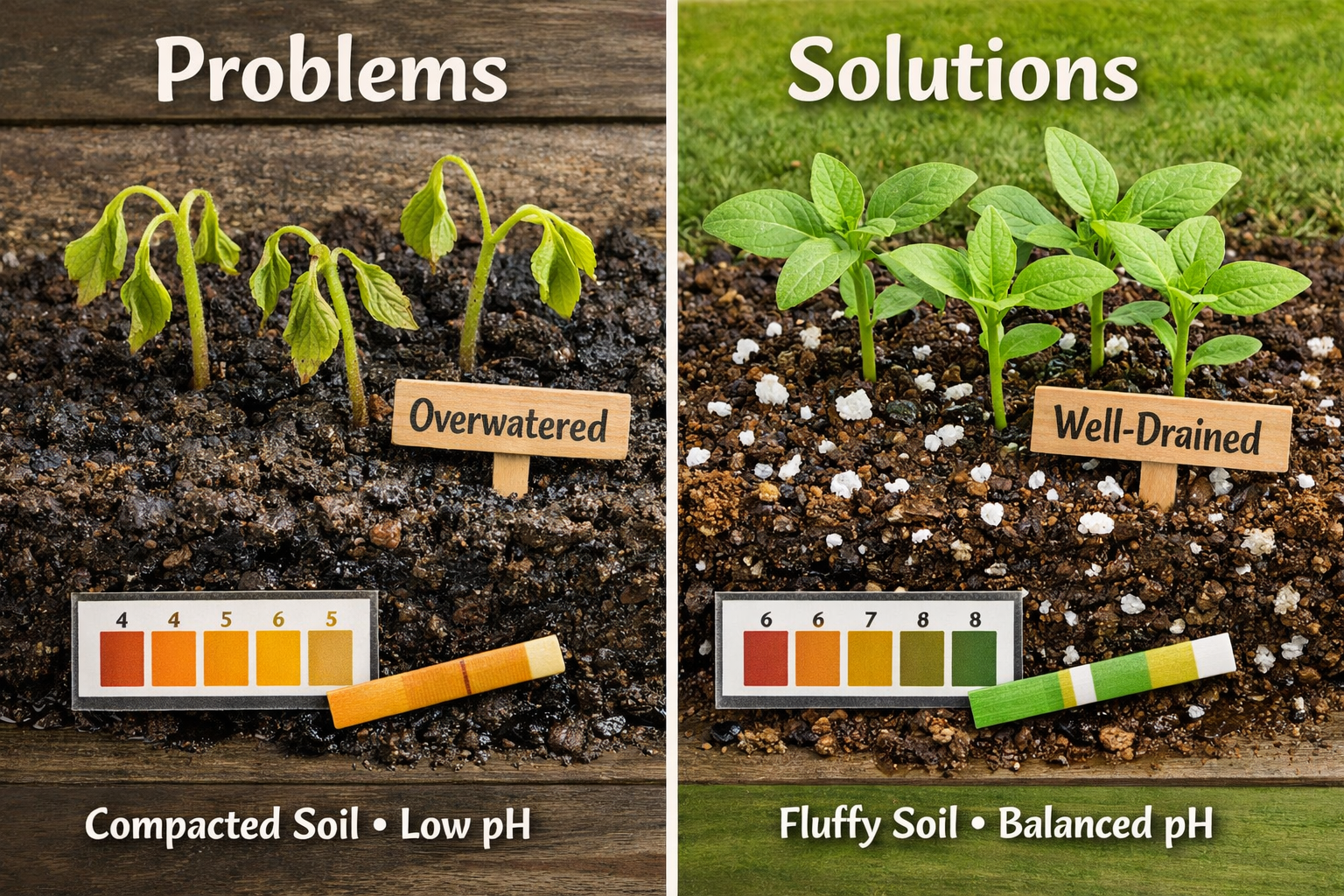
Creating your DIY seed starting mix requires attention to detail and proper technique to ensure consistent results across batches.
Equipment needed:
- Large mixing container (wheelbarrow, storage tote, or large bowl)
- Measuring container (bucket, large yogurt container, or scoop)
- Dust mask (perlite and peat moss can be dusty)
- Garden gloves
- Spray bottle or watering can with fine rose
- Storage containers with lids
Detailed mixing process:
- Prepare your workspace in a well-ventilated area, preferably outdoors or in a garage. Lay down a tarp if working indoors to contain any spills.
- Measure ingredients using the same container for each component to maintain proper ratios. I use a large yogurt container as my standard "part" measurement.
- Combine dry ingredients by adding them to your mixing container in layers. Start with the largest volume ingredient (usually peat moss or coco coir), then add perlite and vermiculite.
- Initial mixing involves gently combining the dry ingredients with your hands or a garden trowel. Work slowly to minimize dust, especially with peat moss and perlite.
- Add moisture gradually using a spray bottle or watering can. The goal is evenly moist mix that holds together when squeezed but crumbles when disturbed. This process takes patience—add water slowly and mix thoroughly between additions.
- Test consistency by grabbing a handful of mix and squeezing. It should form a loose ball that breaks apart easily when poked. If it's too wet, add more dry ingredients; if too dry, mist with more water.
- Final mixing ensures all ingredients are evenly distributed and consistently moist throughout the batch.
Pro tip: Make larger batches when possible. It's easier to achieve consistent results with bigger volumes, and you'll have mix ready for multiple sowings throughout the season.
Troubleshooting Common DIY Seed Starting Mix Problems
Even experienced gardeners encounter issues with homemade seed starting mixes. Recognizing and addressing these problems quickly can save your seedlings and improve future batches.
Problem: Mix drains too quickly, seeds dry out
- Cause: Too much perlite, not enough moisture-retaining ingredients
- Solution: Add more peat moss, coco coir, or vermiculite to increase water retention
- Prevention: Measure ingredients carefully and test small batches first
Problem: Mix stays too wet, seeds rot or don't germinate
- Cause: Insufficient drainage materials or overwatering
- Solution: Add more perlite, ensure containers have drainage holes
- Prevention: Use proper watering techniques and bottom-watering when possible
Problem: Mix compacts in containers, poor root development
- Cause: Ingredients too fine, insufficient aeration materials
- Solution: Add coarser perlite or rice hulls to improve structure
- Prevention: Avoid pressing mix down when filling containers
Problem: Seedlings show nutrient deficiency symptoms
- Cause: Basic mix lacks nutrients for extended growth
- Solution: Begin fertilizing with diluted liquid fertilizer after true leaves appear
- Prevention: Use enhanced recipe with worm castings for longer-term growing
Problem: White mold or fungus appears on soil surface
- Cause: Poor air circulation, overwatering, or contaminated ingredients
- Solution: Improve ventilation, reduce watering frequency, scrape off mold
- Prevention: Ensure ingredients are fresh and store mix properly
Problem: Uneven germination across seed trays
- Cause: Inconsistent mixing or moisture distribution
- Solution: Re-mix batch more thoroughly, ensure even watering
- Prevention: Take time during mixing process to achieve uniformity
Understanding these common issues helps you become more successful with your DIY approach. Most problems stem from ratio imbalances or moisture management, both easily corrected with experience.
Storage and Shelf Life Tips
Proper storage extends the life of your DIY seed starting mix and maintains its effectiveness across multiple growing seasons.
Immediate storage after mixing:
Store freshly made mix in clean, airtight containers to prevent contamination and moisture loss. Food-grade buckets with tight-fitting lids work excellently, as do large storage totes with secure covers.
Moisture management during storage:
Your mix should be slightly damp but not wet when stored. Overly moist mix can develop mold, while completely dry mix becomes dusty and harder to re-wet evenly. Aim for the consistency of a wrung-out sponge.
Optimal storage conditions:
- Temperature: Cool, stable temperatures between 40-70°F
- Location: Dry basement, garage, or shed away from temperature extremes
- Light: Dark storage prevents algae growth and preserves organic components
- Ventilation: Avoid completely sealed environments that trap moisture
Shelf life expectations:
- Basic mix: 12-18 months when stored properly
- Enhanced mix with organics: 6-12 months due to organic component breakdown
- Signs of deterioration: Musty smell, visible mold, or ingredients separating
Refreshing stored mix:
Before using stored mix, check for any off odors or visible problems. You may need to add fresh water and remix if the components have separated or dried out. Sometimes adding a small amount of fresh ingredients improves older mix.
Labeling for organization:
Mark containers with mixing date and recipe used. This helps you track which batches perform best and when it's time to make fresh mix. I keep a simple notebook with my recipes and results for future reference.
For gardeners focused on organic container gardening, proper storage maintains the organic integrity of your homemade mix while preventing contamination.
Cost Comparison: DIY vs Store-Bought
Understanding the financial benefits of making your own seed starting mix helps justify the initial investment in ingredients and provides actionable insights for budget-conscious gardeners.
Typical costs for DIY ingredients (2026 prices):
- Peat moss (3.8 cubic feet): $12-15
- Perlite (2 cubic feet): $15-18
- Vermiculite (2 cubic feet): $18-22
- Worm castings (1 cubic foot): $8-12
Cost per batch calculations:
A basic recipe using equal parts of each ingredient yields approximately 4-5 cubic feet of mix for roughly $15-20 in materials. This same volume would cost $35-50 in commercial seed starting mix[2].
Long-term savings analysis:
- Year 1: Initial ingredient purchase covers 3-4 batches of mix
- Subsequent years: Only need to replenish used ingredients
- Break-even point: Usually achieved after making 2-3 batches
Additional cost considerations:
- Storage containers: One-time investment of $10-20
- Time investment: 30-45 minutes per batch
- Quality benefits: Often superior to budget commercial mixes
When commercial mix makes sense:
- Starting fewer than 50 seeds annually
- Limited storage space for ingredients
- Preference for convenience over cost savings
The financial advantages become more pronounced as your gardening ambitions grow. If you're planning an extensive container vegetable garden, the savings from DIY mix can fund other garden improvements.
Frequently Asked Questions
Can I use garden soil in my seed starting mix?
No, garden soil is too heavy and may contain diseases or pests that can harm seedlings. Seed starting mixes should be soilless for best results[7].
How long does homemade seed starting mix last?
Properly stored DIY mix lasts 12-18 months for basic recipes and 6-12 months for enhanced versions with organic matter. Store in airtight containers in cool, dry conditions.
Is peat moss or coco coir better for seed starting?
Both work well, but coco coir is more sustainable and has neutral pH, while peat moss is slightly acidic and may need lime addition. Choose based on your environmental preferences and plant needs.
Can I add fertilizer to my DIY seed starting mix?
Avoid adding synthetic fertilizers as they can burn delicate seedlings. If desired, use gentle organic amendments like worm castings or compost at 10% of the total mix volume[1].
What's the difference between perlite and vermiculite?
Perlite provides drainage and aeration but doesn't hold nutrients, while vermiculite retains moisture and nutrients. Both are important for balanced seed starting mix.
Can I reuse seed starting mix from previous seasons?
Yes, but refresh it by removing old roots, adding fresh ingredients if needed, and ensuring it's not contaminated with diseases. Mix in 25-30% fresh ingredients for best results.
Why are my seeds not germinating in homemade mix?
Common causes include mix that's too wet or dry, incorrect temperature, old seeds, or mix that's too dense. Check moisture levels and ensure proper drainage in your containers.
How much water should I add when mixing?
Add water gradually until the mix feels like a wrung-out sponge—moist but not dripping. This usually requires 1-2 cups of water per gallon of dry ingredients, added slowly while mixing.
Can I make seed starting mix without vermiculite?
Yes, you can substitute additional peat moss/coco coir or use alternatives like rice hulls, but vermiculite's moisture retention and mineral content benefit seedling development.
Is it safe to make seed starting mix indoors?
Work in well-ventilated areas and wear a dust mask, especially when handling peat moss and perlite. Outdoors or in a garage is preferable to minimize dust exposure.
What size containers work best with DIY seed starting mix?
Any containers with drainage holes work well. The fine texture of homemade mix suits small cells, seed trays, or larger containers equally well.
Should I sterilize my homemade seed starting mix?
Generally unnecessary if using quality ingredients, but you can pasteurize mix by moistening and heating to 180°F for 30 minutes if concerned about pathogens.
Key Takeaways
• Basic recipe success: Equal parts peat moss/coco coir, perlite, and vermiculite creates an effective, balanced growing medium for most seeds
• Enhanced nutrition option: Adding 10% worm castings or compost provides gentle nutrients for stronger seedling development
• Significant cost savings: DIY mix costs roughly half the price of commercial alternatives while offering superior quality control
• Proper storage extends life: Airtight containers in cool, dry conditions keep mix fresh for 12-18 months
• Troubleshooting prevents problems: Most issues stem from moisture imbalance or incorrect ratios, easily fixed with experience
• Ingredient flexibility: Sustainable alternatives like coco coir and rice hulls support environmentally conscious gardening
• Quality control advantage: Knowing exactly what goes into your mix ensures optimal growing conditions for your specific needs
• Batch size efficiency: Making larger quantities improves consistency and provides mix for multiple sowings throughout the season
Creating your own seed starting mix represents more than just cost savings—it's about nurturing the love for the earth through sustainable practices while gaining gardening wisdom through hands-on experience. Whether you're just beginning your journey with container gardening or expanding into more advanced growing techniques, this DIY approach gives you the foundation for success or check out The Complete Beginner's Guide to Starting Seeds Indoors.
The joy of nurturing nature begins with the smallest details, and crafting your own growing medium connects you more deeply to the entire growing process. As you continue to grow, learn, and flourish in your gardening journey, you'll find that this simple recipe becomes the foundation for countless successful harvests in your green paradise.
References
[1] Diy Seed Starting Mix Recipe - https://homesteadandchill.com/diy-seed-starting-mix-recipe/
[2] Cut Veggie Garden Costs By Making Your Own Seed Starting Mix - https://site.extension.uga.edu/fultonag/2025/02/cut-veggie-garden-costs-by-making-your-own-seed-starting-mix/
[6] Diy Organic Seedling Mix For Cheap - https://theseedsage.com/blog/diy-organic-seedling-mix-for-cheap
[7] How To Make Your Own Seed Starting And Potting Mix - https://gardenbetty.com/how-to-make-your-own-seed-starting-and-potting-mix/

0 Comments