
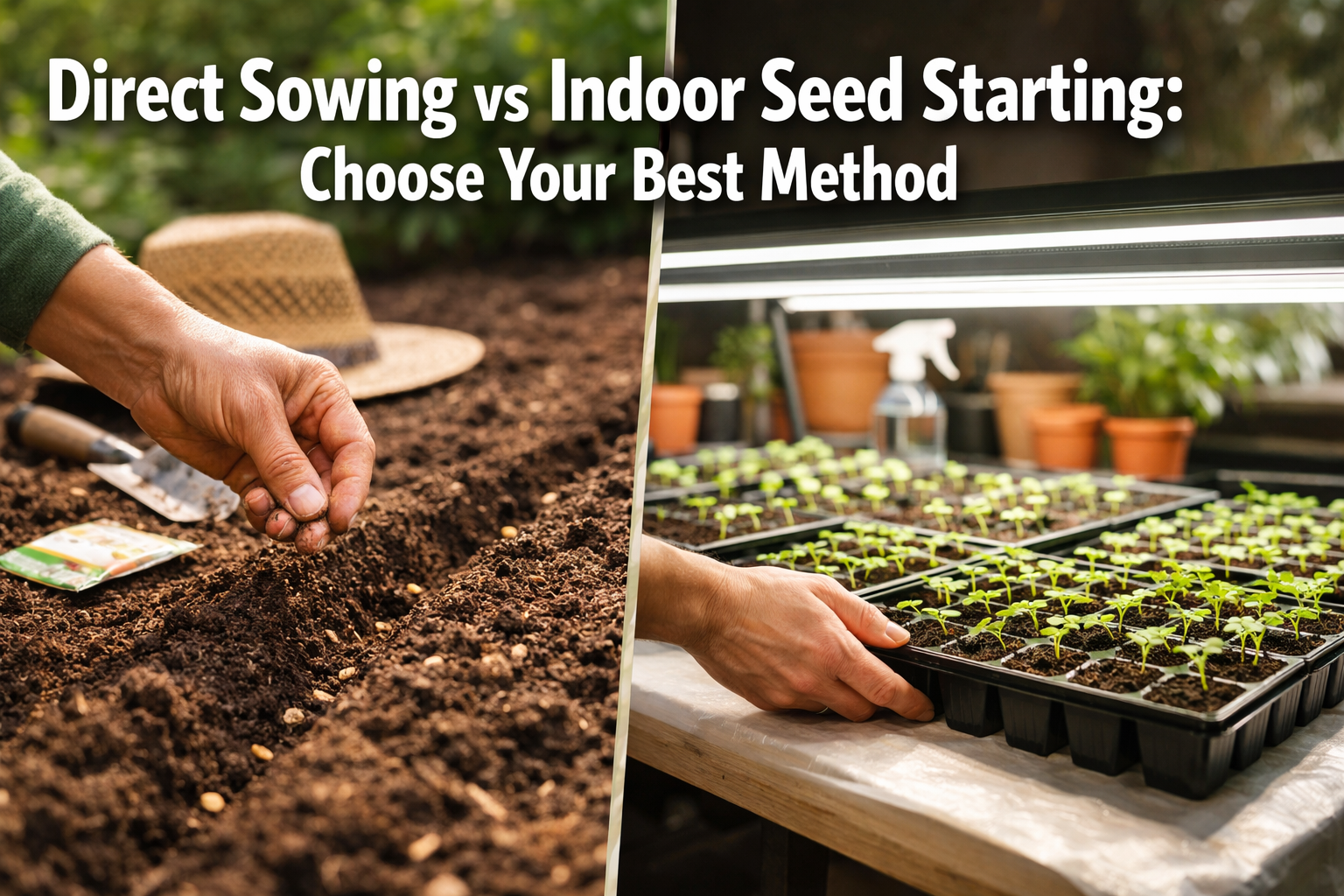
I'll be honest – when I first started gardening on my tiny apartment balcony, I was completely overwhelmed by the question of whether to start my seeds indoors or plant them directly outside. Should I invest in grow lights and seed trays, or just stick seeds straight into my containers? The choice between direct sowing vs indoor seed starting felt like it could make or break my entire gardening dreams.
After years of nurturing plants in small spaces and helping fellow garden enthusiasts grow, learn, and flourish, I've discovered that neither method is universally superior. The best choice depends on your specific crops, climate, and growing season length[3]. Let me share the gardening wisdom I've gathered to help you make the right decision for your green paradise.
Key Takeaways
• Climate determines necessity: Indoor seed starting is essential for northern climates with short growing seasons, while warmer regions offer more flexibility[1]
• Crop type matters most: Warm-season vegetables like tomatoes and peppers thrive when started indoors, while cool-season crops like peas and radishes prefer direct sowing[3]
• Time investment varies significantly: Indoor seed starting requires daily monitoring and equipment, while direct sowing needs minimal hands-on care
• Success rates differ by method: Indoor starting provides controlled conditions for higher germination rates, but direct sowing eliminates transplant shock
• Space and equipment needs: Indoor starting requires grow lights or greenhouse space, while direct sowing only needs garden beds or containers
Quick Answer
Direct sowing works best for cool-season vegetables, quick-germinating crops, and gardeners in warm climates with long growing seasons. Indoor seed starting is essential for warm-season vegetables, slow-growing crops, and anyone in northern climates with short frost-free periods. Your choice depends on what you're growing, where you live, and how much time you want to invest in daily plant care.
What is Direct Sowing vs Indoor Seed Starting?
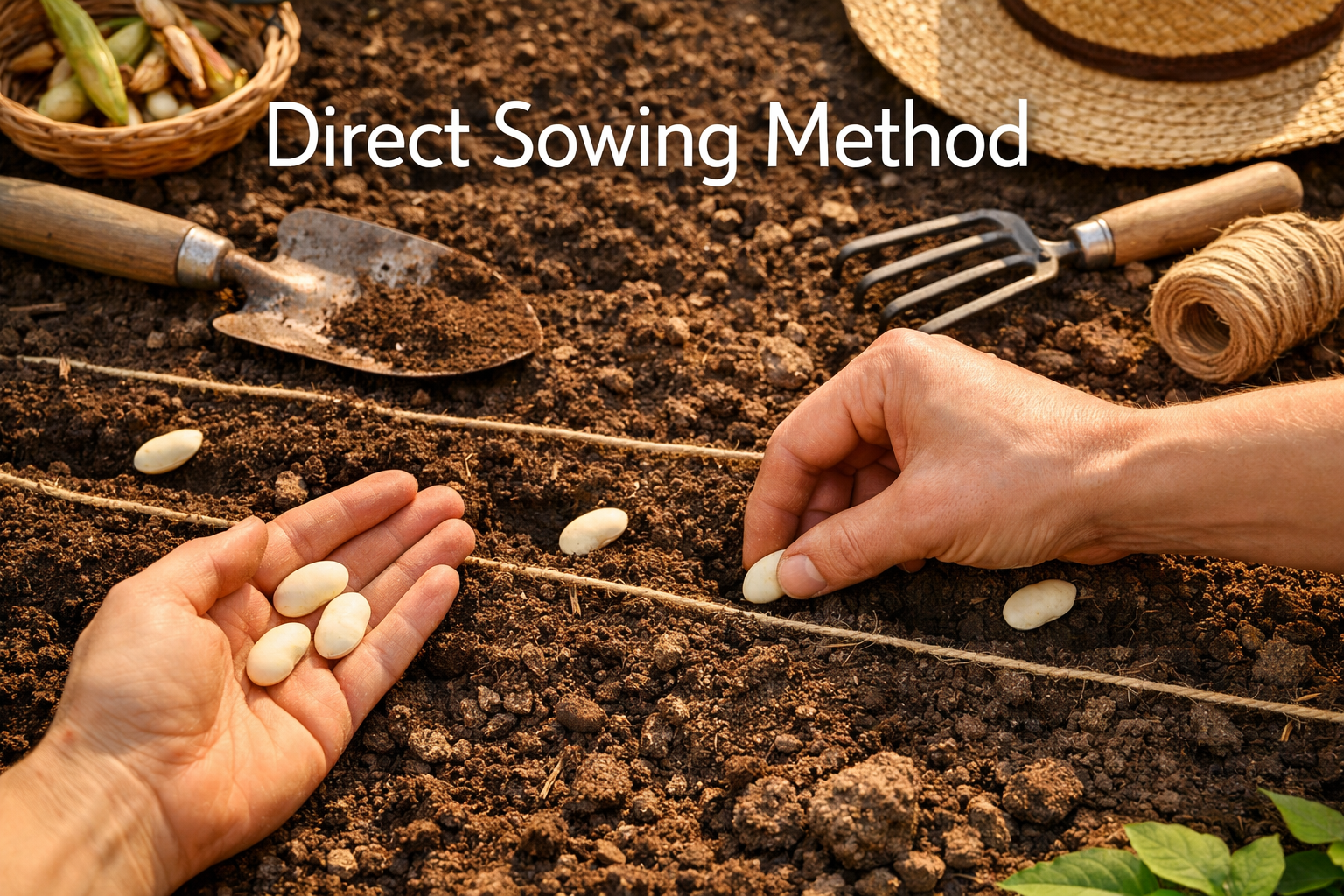
Direct sowing means planting seeds directly into their final growing location – whether that's your garden bed, raised bed, or containers on your balcony. You skip the transplanting step entirely and let nature take its course from the start.
Indoor seed starting involves planting seeds in small containers inside your home, then nurturing the seedlings under controlled conditions before transplanting them outside once the weather cooperates. This method gives you a head start on the growing season and more control over germination conditions[1].
The key difference lies in control versus simplicity. Indoor starting offers precise management of temperature, moisture, and light, while direct sowing relies on natural outdoor conditions with minimal intervention from you.
For container gardeners like many of us urban dwellers, both methods work beautifully. I've had success starting herbs indoors on my kitchen counter and direct sowing beans in my patio containers. The magic happens when you match the right method to the right plant.
When Should You Choose Direct Sowing?
Direct sowing works best when you're growing crops that either prefer it or when outdoor conditions align perfectly with their needs. Cool-season vegetables like peas, radishes, spinach, and lettuce actually thrive when direct sown because they can handle cooler soil temperatures[3].
Choose direct sowing for these situations:
• Root vegetables like carrots, radishes, and turnips that hate having their roots disturbed
• Quick-germinating crops such as beans, corn, squash, and sunflowers once soil has warmed
• Cool-season vegetables that can handle spring's unpredictable weather
• Large seeds that are easy to handle and space properly
• When you have limited indoor space or no grow lights
I've learned that some plants absolutely must be direct sown. Carrots, for example, develop long taproots that break easily during transplanting[1]. When I tried transplanting carrot seedlings in my early gardening days, I ended up with stubby, deformed roots that taught me a valuable lesson about working with nature instead of against it.
The beauty of direct sowing lies in its simplicity. You plant once, and the plants develop strong root systems adapted to their permanent home. There's no transplant shock, no hardening off period, and no daily monitoring of seedling trays.
Common mistakes to avoid: Don't direct sow warm-season crops too early when soil is still cold. Wait until soil temperature reaches at least 60°F for beans and 70°F for corn and squash.
When Should You Choose Indoor Seed Starting?
Indoor seed starting becomes essential when you're growing warm-season vegetables that need a long growing period or when you live in a climate with a short frost-free season. For northern climates with only 4-5 frost-free months, indoor starting makes outdoor gardening possible when it would otherwise be "almost impossible"[1].
Indoor seed starting works best for:
• Warm-season vegetables like tomatoes, peppers, eggplant, and basil
• Slow-growing crops such as onions, leeks, and celery
• Expensive or rare seeds where you want maximum germination success
• When you want earlier harvests and higher yields compared to direct-sown crops[1][3]
• Small seeds that need precise spacing and gentle care
I remember my first successful tomato harvest from indoor-started seedlings – the plants were already 6 inches tall when I transplanted them outside, giving me ripe tomatoes a full month earlier than my neighbor who direct sowed. That experience showed me the power of getting a head start on the season.
The controlled environment of indoor seed starting provides consistent temperatures, finer soil blends, easier water access, and more reliable germination rates than outdoor sowing[1]. When you're working with limited space like a balcony garden, every plant counts, making the higher success rate of indoor starting particularly valuable.
Important consideration: Indoor seed starting requires proper equipment like grow lights or a greenhouse. Attempting it without adequate light risks wasting seeds and doing more harm than good[2]. I learned this the hard way when my first batch of seedlings became leggy and weak on a windowsill.
Direct Sowing vs Indoor Seed Starting: Equipment and Setup Needs
The equipment requirements for these two methods differ dramatically, which often influences my recommendations for beginning gardeners who are just nurturing their love for the earth.
Direct Sowing Equipment (Minimal Investment)
• Garden beds, raised beds, or containers
• Quality potting soil or garden soil
• Seeds appropriate for direct sowing
• Watering can or hose with gentle spray
• Garden markers for plant identification
• Basic hand tools (optional)
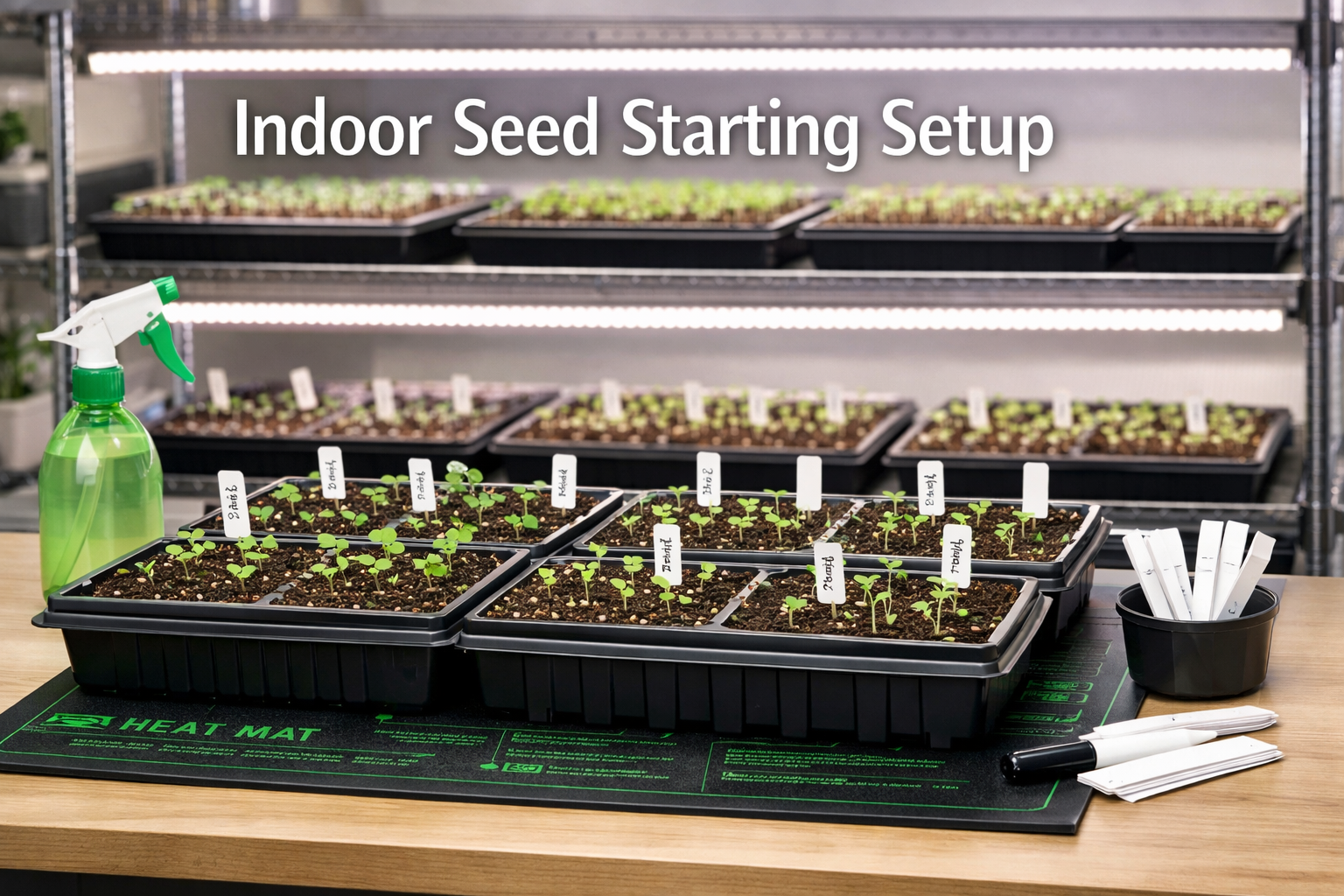
Indoor Seed Starting Equipment (Higher Investment)
• Seed starting trays and cells
• High-quality seed starting mix
• Grow lights or heated greenhouse space
• Heat mats for consistent soil temperature
• Humidity domes or plastic covers
• Small watering tools (spray bottles, bottom watering trays)
• Plant labels and markers
• Fans for air circulation
The time investment also varies significantly. Indoor seed starting requires daily monitoring, watering, managing light, airflow, heating mats, and humidity levels[1]. I spend about 15-20 minutes each morning checking my seedlings during peak season. Direct sowing, once planted, needs occasional watering and weeding but much less daily attention.
For apartment dwellers, the space requirements matter too. My indoor seed starting station takes up a corner of my dining room for about 8-10 weeks each spring. Direct sowing happens entirely in my outdoor containers, keeping my indoor space free for living.
Climate Considerations for Direct Sowing vs Indoor Seed Starting
Your local climate plays a huge role in determining which method will bring you the most success and joy in nurturing nature. I've gardened in both northern and southern climates, and the strategies that work vary dramatically.
Northern Climates (Zones 3-6)
In areas with short growing seasons, indoor seed starting becomes almost mandatory for warm-season crops. When your last frost date is in May and your first fall frost arrives in September, you simply don't have enough time for tomatoes and peppers to mature from direct-sown seeds.
Northern climate strategy:
• Start warm-season crops indoors 6-8 weeks before last frost
• Direct sow cool-season crops as soon as soil can be worked
• Use season extenders like row covers for direct-sown crops
• Plan succession plantings of quick crops like lettuce and radishes
Southern Climates (Zones 8-11)
Warmer climates offer more flexibility, allowing both methods to succeed with most crops. However, the intense summer heat creates different challenges.
Southern climate strategy:
• Direct sow warm-season crops after soil warms in spring
• Start cool-season crops indoors during summer for fall planting
• Time plantings to avoid extreme heat periods
• Use shade cloth and consistent watering for summer direct sowing
I've found that understanding your specific microclimate matters just as much as your hardiness zone. My south-facing balcony creates a warmer microclimate that extends my growing season, while a friend's shaded patio requires more indoor starting to compensate for cooler conditions.
Crop-Specific Guide: Direct Sowing vs Indoor Seed Starting
After years of trial and error, I've developed a reliable guide for which crops thrive with each method. This practical knowledge has helped countless garden enthusiasts make confident decisions about their planting approach.
Best Crops for Direct Sowing
Cool-season vegetables:
• Peas and beans (all types)
• Radishes, turnips, and rutabagas
• Carrots and parsnips
• Lettuce and spinach
• Kale and other brassicas
Warm-season crops (after soil warms):
• Corn and sunflowers
• Squash, zucchini, and cucumbers
• Beans (green beans, lima beans)
• Nasturtiums and marigolds
Best Crops for Indoor Starting
Warm-season vegetables:
• Tomatoes and tomatillos
• Peppers (sweet and hot)
• Eggplant and okra
• Basil and other tender herbs
Slow-growing crops:
• Onions and leeks
• Celery and celeriac
• Artichokes and cardoon
• Perennial herbs like oregano and thyme
Crops That Work Well Either Way
Some flexible crops succeed with both methods, giving you options based on your preference and timing:
• Lettuce and salad greens
• Brassicas like broccoli and cabbage
• Annual flowers like zinnias and cosmos
• Herbs like cilantro and dill
When working with container garden seeds, I often choose based on my available time and space rather than strict rules. If I have room under my grow lights, I might start lettuce indoors for earlier harvests, even though it direct sows beautifully.
Success Tips for Each Method
Through years of helping gardeners grow, learn, and flourish, I've gathered actionable insights that make both methods more successful and enjoyable.
Direct Sowing Success Strategies
Soil preparation is everything. I spend extra time preparing my containers and beds because seeds depend entirely on the soil environment you provide. The soil should be loose, well-draining, and rich in organic matter.
Timing beats perfection. Learning to read seed packets helps you understand optimal planting times for your area. I keep a simple calendar noting when to plant each crop based on my local frost dates.
Water gently and consistently. Large seeds like beans can handle normal watering, but tiny seeds like carrots need gentle misting to avoid washing away. I use a spray bottle for the first week after planting small seeds.
Indoor Seed Starting Success Strategies
Light is non-negotiable. Windowsills rarely provide enough light for healthy seedlings. Investing in proper grow lights prevents the heartbreak of leggy, weak plants that struggle after transplanting.
Bottom heat accelerates germination. Heat mats maintain consistent soil temperature, dramatically improving germination rates for warm-season crops. I've seen germination time cut in half with proper bottom heat.
Timing prevents problems. Starting seeds too early creates large plants that outgrow their containers before it's safe to transplant. I count backwards from my transplant date to determine the perfect starting time.
Hardening off prevents shock. Gradually exposing indoor-grown seedlings to outdoor conditions over 7-10 days prevents transplant shock. I start with just an hour outside and gradually increase exposure.
For container gardeners specifically, I recommend starting with easy container gardening approaches that match your available space and time commitment.
Cost Analysis: Direct Sowing vs Indoor Seed Starting
Understanding the financial investment helps you make sustainable choices that fit your budget while supporting your gardening goals.
Direct Sowing Costs (Lower Upfront Investment)
• Seeds: $2-5 per packet
• Quality potting soil: $15-25 per large bag
• Basic containers (if needed): $20-50 for a season's worth
• Hand tools: $20-40 for basic set
• Total first-year investment: $60-120
Indoor Seed Starting Costs (Higher Initial Investment)
• Seeds: $2-5 per packet
• Seed starting equipment: $100-300 for lights, trays, heat mats
• Seed starting mix: $10-20 per bag
• Ongoing electricity costs: $20-40 per season
• Total first-year investment: $130-365
The economics shift over time. While indoor starting requires higher upfront costs, you'll get more plants per seed packet and earlier harvests that extend your growing season. I calculated that my indoor setup paid for itself in the second year through increased harvests and reduced grocery bills.
For budget-conscious gardeners, I recommend starting with direct sowing for most crops and gradually adding indoor starting equipment as your confidence and interest grow. You can begin with just a few warm-season crops that truly benefit from indoor starting.
Common Mistakes and How to Avoid Them
I've made plenty of mistakes in my gardening journey, and helping other garden enthusiasts has shown me the most common pitfalls for both methods.
Direct Sowing Mistakes
Planting too early: Cold soil leads to poor germination and rotting seeds. I learned to check soil temperature with a simple thermometer rather than relying on calendar dates.
Poor seed spacing: Overcrowding creates weak plants that compete for resources. Following spacing guidelines on seed packets prevents this issue, even when it feels like you're wasting space.
Inadequate soil preparation: Hard, compacted soil makes it difficult for seeds to germinate and roots to establish. I always loosen soil and add compost before planting.
Indoor Seed Starting Mistakes
Starting too early: Large seedlings become root-bound and stressed before transplant time. I mark my calendar with specific start dates for each crop.
Insufficient light: Weak, leggy seedlings struggle to survive transplanting. Proper grow lights positioned 2-4 inches above seedlings prevent this problem.
Skipping hardening off: Direct transition from indoor to outdoor conditions shocks plants. I gradually acclimate seedlings over a week before transplanting.
Overwatering: Soggy soil leads to damping-off disease that kills seedlings. I water from the bottom and ensure good drainage in all containers.
The key to avoiding these mistakes is starting small and building your skills gradually. I recommend choosing 2-3 crops to focus on each season rather than trying to grow everything at once.
Making Your Decision: A Practical Framework
When gardeners ask me about direct sowing vs indoor seed starting, I guide them through a simple decision framework that considers their unique situation and goals.
Ask Yourself These Questions:
What's your climate and growing season length?
• Short season (under 5 months): Indoor starting essential for warm-season crops
• Long season (over 6 months): Both methods work well
• Very hot summers: Indoor starting helps time cool-season crops
What crops do you want to grow?
• Tomatoes, peppers, eggplant: Indoor starting recommended
• Beans, corn, squash: Direct sowing works great
• Root vegetables: Must direct sow
• Lettuce, herbs: Either method works
How much time can you dedicate daily?
• Limited time: Direct sowing requires less daily care
• Enjoy daily plant care: Indoor starting provides regular interaction
• Travel frequently: Direct sowing handles neglect better
What's your available space and budget?
• Limited indoor space: Focus on direct sowing
• Adequate indoor space: Indoor starting expands possibilities
• Tight budget: Start with direct sowing
• Room for investment: Indoor starting offers more control
What's your experience level?
• Beginner: Start with direct sowing for confidence building
• Some experience: Try both methods with different crops
• Experienced: Choose based on optimal results for each crop
For most beginning gardeners, I recommend starting with direct sowing for 70% of your crops and indoor starting for just the warm-season vegetables that truly benefit from it. This approach builds confidence while teaching both skill sets.
Frequently Asked Questions
Can I start seeds indoors without grow lights?
While possible, it's not recommended for most crops. Windowsills rarely provide adequate light intensity, leading to weak, leggy seedlings. If you must use natural light, choose a south-facing window and rotate plants daily for even growth[2].
Which method gives better germination rates?
Indoor seed starting typically provides higher germination rates due to controlled temperature, moisture, and soil conditions. However, direct sowing eliminates transplant shock, which can offset lower initial germination for some crops[1].
How do I know when soil is warm enough for direct sowing?
Use a soil thermometer to check temperature 2-3 inches deep. Cool-season crops germinate in 40-50°F soil, while warm-season crops need 60-70°F soil temperature for reliable germination[3].
Can I direct sow in containers?
Absolutely! Container direct sowing works wonderfully for appropriate crops. Use containers at least 6-8 inches deep for most vegetables, and ensure good drainage. I've had excellent success with container vegetable gardening using both methods.
What's the biggest advantage of each method?
Direct sowing's biggest advantage is simplicity – plant once and let nature take over. Indoor starting's main benefit is season extension and higher success rates for challenging crops in difficult climates[1].
How much earlier can I harvest with indoor-started plants?
Indoor starting typically provides 4-8 weeks earlier harvests compared to direct sowing, depending on the crop and your climate. This can mean the difference between a successful harvest and losing crops to early frost.
Should I use different soil for each method?
Yes. Indoor seed starting benefits from fine-textured seed starting mix that provides gentle conditions for germination. Direct sowing works well with regular potting soil or garden soil amended with compost.
Can I combine both methods in the same garden?
Definitely! Most successful gardeners use both methods strategically. I direct sow beans and carrots while starting tomatoes and peppers indoors, maximizing the advantages of each approach.
What's the most common reason for failure with each method?
For direct sowing, planting at the wrong time (usually too early) causes most failures. For indoor starting, inadequate light leads to weak seedlings that struggle after transplanting.
How do I time indoor seed starting correctly?
Count backwards from your average last frost date. Most warm-season crops need 6-8 weeks of indoor growing time, while cool-season crops need 4-6 weeks. Mark your calendar with specific start dates for each crop.
Key Takeaways
• Neither method is universally superior – success depends on matching the right technique to your specific crops, climate, and growing conditions
• Climate drives necessity – northern gardeners with short seasons need indoor starting for warm-season crops, while southern gardeners have more flexibility
• Crop selection determines method – warm-season vegetables thrive with indoor starting, while cool-season crops and root vegetables prefer direct sowing
• Time investment varies dramatically – direct sowing requires minimal daily care after planting, while indoor starting needs consistent monitoring and equipment management
• Equipment costs differ significantly – direct sowing has minimal startup costs, while indoor starting requires investment in lights, trays, and climate control
• Success rates favor controlled conditions – indoor starting provides higher germination rates, but direct sowing eliminates transplant shock
• Space requirements matter – indoor starting needs dedicated indoor space for 8-10 weeks, while direct sowing uses only outdoor growing areas
• Timing is critical for both methods – direct sowing depends on proper soil temperature, while indoor starting requires precise scheduling to avoid oversized seedlings
• Combining methods maximizes success – most experienced gardeners use both techniques strategically based on each crop's specific needs
• Start simple and build skills – beginners should focus on direct sowing with a few indoor-started warm-season crops to build confidence gradually
Conclusion
Choosing between direct sowing vs indoor seed starting doesn't have to feel overwhelming. After years of nurturing plants in small spaces and helping fellow garden enthusiasts discover the joy of growing their own food, I've learned that the best approach combines both methods strategically.
Start by assessing your unique situation: your climate, available space, time commitment, and the crops you're most excited to grow. If you're in a northern climate dreaming of homegrown tomatoes, indoor seed starting opens up possibilities that direct sowing simply can't provide. If you're blessed with a long growing season and want to keep things simple, direct sowing can supply you with abundant harvests with minimal fuss.
Remember, gardening is a journey of continuous learning and growth. I encourage you to start with the method that feels most manageable for your current situation, then gradually expand your skills as your confidence grows. Whether you're starting your first container garden or adding new techniques to your existing green paradise, both direct sowing and indoor seed starting offer unique rewards or The Complete Beginner's Guide to Starting Seeds Indoors.
The most important step is simply beginning. Choose a few crops that excite you, select the appropriate method based on the guidance in this article, and start nurturing your love for the earth. Your future self will thank you for every seed you plant, regardless of which method you choose to get them growing.
References
[1] Direct Vs Indoor Sowing - https://www.epicgardening.com/direct-vs-indoor-sowing/
[2] Direct Sow Or Start Seeds Indoors The Difference Between Indoor And Outdoor Seeds - https://seedsnsuch.com/blogs/gardeners-greenroom/direct-sow-or-start-seeds-indoors-the-difference-between-indoor-and-outdoor-seeds
[3] When To Choose Indoor Seed Starting Vs Direct Sowing - https://www.parkseed.com/blogs/park-seed-blog/when-to-choose-indoor-seed-starting-vs-direct-sowing

0 Comments