
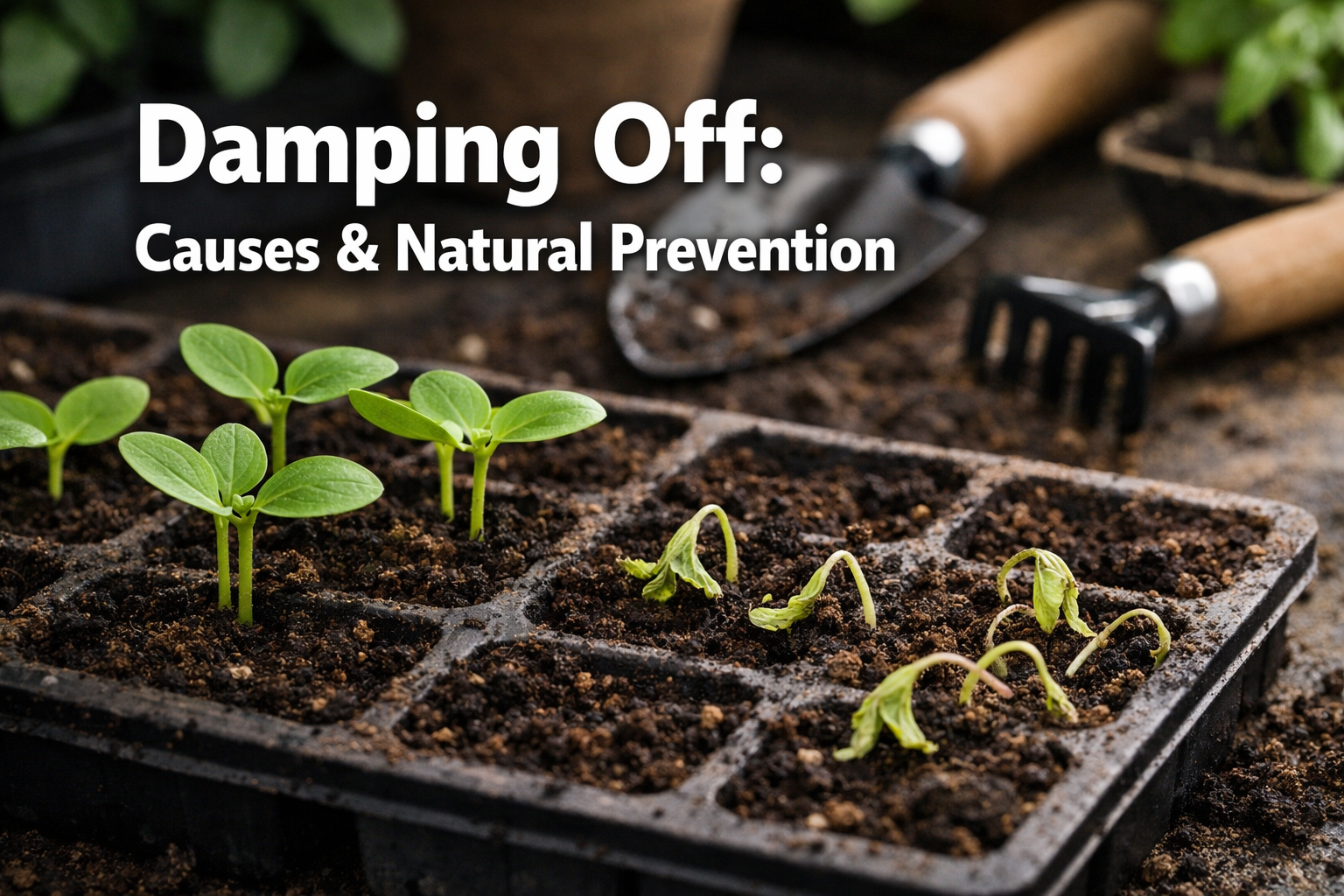
Nothing breaks a gardener’s heart quite like watching perfectly healthy seedlings suddenly collapse and die overnight. I’ve been there – excitedly checking my seed starting trays only to find my baby plants toppled over with blackened, rotted stems. That’s damping off, and it’s one of the most frustrating problems new gardeners face.
Key Takeaways:
- Damping off is caused by four main fungal pathogens that attack seedlings in different conditions
- Prevention focuses on proper sanitation, drainage, and environmental control
- Natural methods like cinnamon, chamomile tea, and proper spacing are highly effective
- Cool, wet conditions and poor air circulation create perfect conditions for these fungi
- Starting with sterile materials and maintaining good garden hygiene prevents most cases
Quick Answer
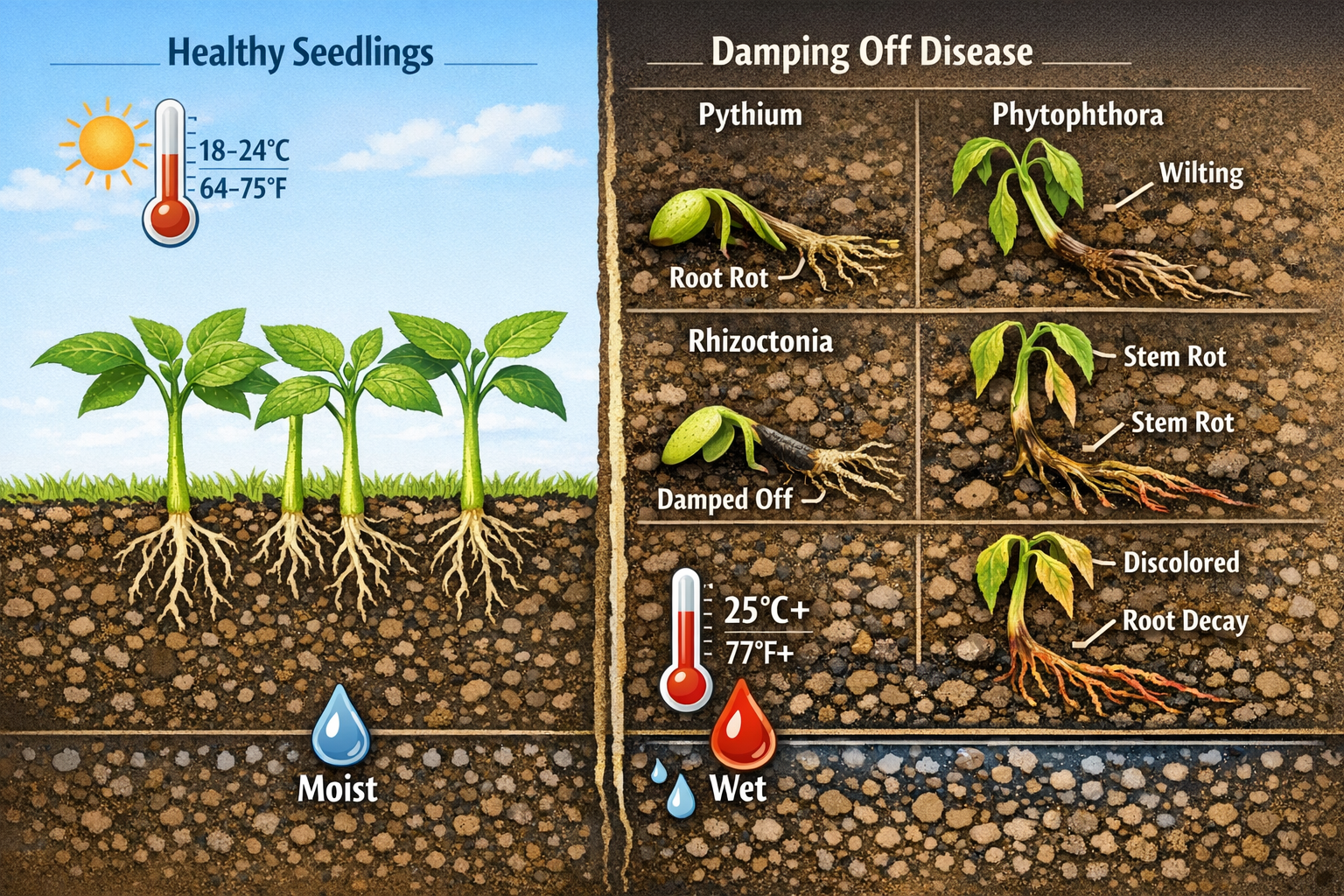
Damping off is a fungal disease that kills seedlings by rotting their stems at soil level, caused primarily by Pythium, Phytophthora, Rhizoctonia, and Fusarium fungi.[1] Prevention involves using sterile potting mix, ensuring proper drainage, maintaining good air circulation, and avoiding overwatering – all achievable through natural methods that don’t require chemical fungicides.
What Is Damping Off and Why Should You Care?
Damping off describes the sudden collapse and death of seedlings caused by soil-borne fungal pathogens.[1] For container gardeners nurturing their first seeds on a windowsill or balcony, this disease can wipe out an entire tray of seedlings in just 24-48 hours.
The disease manifests in two main ways: pre-emergence damping off kills seeds before they even sprout, while post-emergence damping off attacks seedlings after they’ve emerged, causing them to fall over as their stems rot at the soil line.[2] You’ll recognize it when you see previously healthy seedlings suddenly topple over with dark, water-soaked stems.
Four primary fungal pathogens cause most damping off cases: Pythium, Phytophthora, Rhizoctonia, and Fusarium.[1][3] Each thrives under different conditions, which is why understanding your growing environment is crucial for prevention.
Choose natural prevention if: You’re growing food crops, want to avoid chemicals, or garden in small spaces where you’ll be handling plants frequently. Most commercial fungicides aren’t necessary when you create the right growing conditions from the start.
What Causes Damping Off in Container Gardens?
The main culprits behind damping off are environmental conditions that favor fungal growth while weakening seedlings.[1] These pathogens are everywhere – in soil, on tools, and even floating in the air – but they only become problematic when conditions align perfectly.
Moisture and temperature imbalances create the biggest problems. Pythium and Phytophthora love cool, wet conditions with poor drainage, while Rhizoctonia and Fusarium prefer warm, dry surface conditions with wet soil underneath.[1][3] This means both overwatering and inconsistent watering can trigger outbreaks.
Poor air circulation around seedlings creates humid microclimates where fungi thrive. When you crowd too many seedlings together or don’t provide adequate ventilation, you’re essentially creating a fungal paradise.
Contaminated materials introduce pathogens directly to your clean growing setup. Using garden soil, dirty pots, or contaminated water can bring these fungi right to your vulnerable seedlings.[2]
Common mistake: Many gardeners think keeping soil constantly moist helps seedlings, but this actually extends the vulnerable period when pathogens can attack.[1] Seedlings need consistent moisture, not soggy conditions.
For those starting their perfect seed starting station, understanding these triggers helps you design a setup that naturally discourages fungal problems.
How to Identify Damping Off Symptoms Early
Early detection can save neighboring seedlings even after damping off strikes part of your tray. Pre-emergence damping off shows up as poor or uneven germination – seeds that should have sprouted simply don’t appear, or you notice empty spots in your seed trays.[2]
Post-emergence symptoms are more dramatic and easier to spot:
- Seedlings suddenly fall over despite looking healthy the day before
- Dark, water-soaked areas on stems at soil level
- Stems that look pinched or constricted where they meet the soil
- Roots that appear brown, mushy, or completely rotted away[1][2]
Pathogen-specific signs can help you understand what you’re dealing with:
- Pythium attacks below soil level, causing seed rot and root decay
- Rhizoctonia creates reddish-brown lesions on stems and roots
- Fusarium causes yellowing and wilting that starts from the bottom up[3]
The disease spreads quickly in ideal conditions, so immediate action matters. Remove affected seedlings immediately, improve air circulation, and reduce watering frequency for remaining plants.
Edge case: Sometimes what looks like damping off is actually transplant shock or fertilizer burn. True damping off always involves the characteristic stem rot at soil level, while other problems show different symptom patterns.
Natural Prevention Methods That Actually Work
I’ve found that prevention is infinitely easier than treatment when it comes to damping off. The good news? Natural methods work incredibly well when you understand what you’re trying to achieve – creating conditions where seedlings thrive but fungi struggle.
Start with sterile materials every single time. Use fresh, high-quality organic soil for container gardening rather than garden soil or reused potting mix. Clean your containers with a 10% bleach solution or hot, soapy water before each use.[2]
Master your watering technique by watering from below when possible. Fill trays with water and let containers absorb moisture from the bottom, which keeps soil surface drier while ensuring roots get adequate water. When you must water from above, water early in the day so excess moisture evaporates quickly.[2]
Improve air circulation around your seedlings. If you’re growing indoors, a small fan on low speed works wonders. For outdoor container gardens, avoid overcrowding and follow spacing recommendations on your seed packets.
Natural fungicide alternatives include:
- Cinnamon powder: Dust lightly on soil surface – it has natural antifungal properties
- Chamomile tea: Brew strong tea, cool completely, and use as a soil drench
- Hydrogen peroxide solution: Mix 1 part 3% hydrogen peroxide with 4 parts water for occasional soil treatment
Choose bottom watering if: You’re growing in seed starting trays, have had damping off problems before, or live in a humid climate. Choose top watering if you’re using individual larger containers with excellent drainage.
Creating the Perfect Growing Environment
Environmental control is your most powerful tool for preventing damping off naturally. Temperature management starts with understanding that different pathogens prefer different conditions, so consistency matters more than hitting exact numbers.[1]
Optimal conditions for most seedlings:
- Soil temperature: 65-75°F (18-24°C)
- Air temperature: 60-70°F (15-21°C)
- Humidity: 40-60% around seedlings
- Air movement: Gentle circulation, not direct drafts[2]
Drainage is non-negotiable in container gardening. Every pot needs drainage holes, and your potting mix should drain freely while retaining some moisture. If water pools on the surface after watering, your mix is too heavy or your drainage is inadequate.
Light exposure affects plant health and soil moisture. Seedlings in bright light grow stronger and use water more efficiently, while those in dim conditions stay weak longer and create humid conditions fungi love.[2]
Spacing strategies depend on your setup:
- Seed starting trays: Follow packet recommendations exactly
- Individual containers: Allow air space between pots
- Balcony gardens: Position containers to catch morning breezes
Common mistake: Using humidity domes too long after germination. Remove covers as soon as most seeds have sprouted to improve air circulation and reduce humidity around emerging seedlings.
Soil and Container Management for Prevention
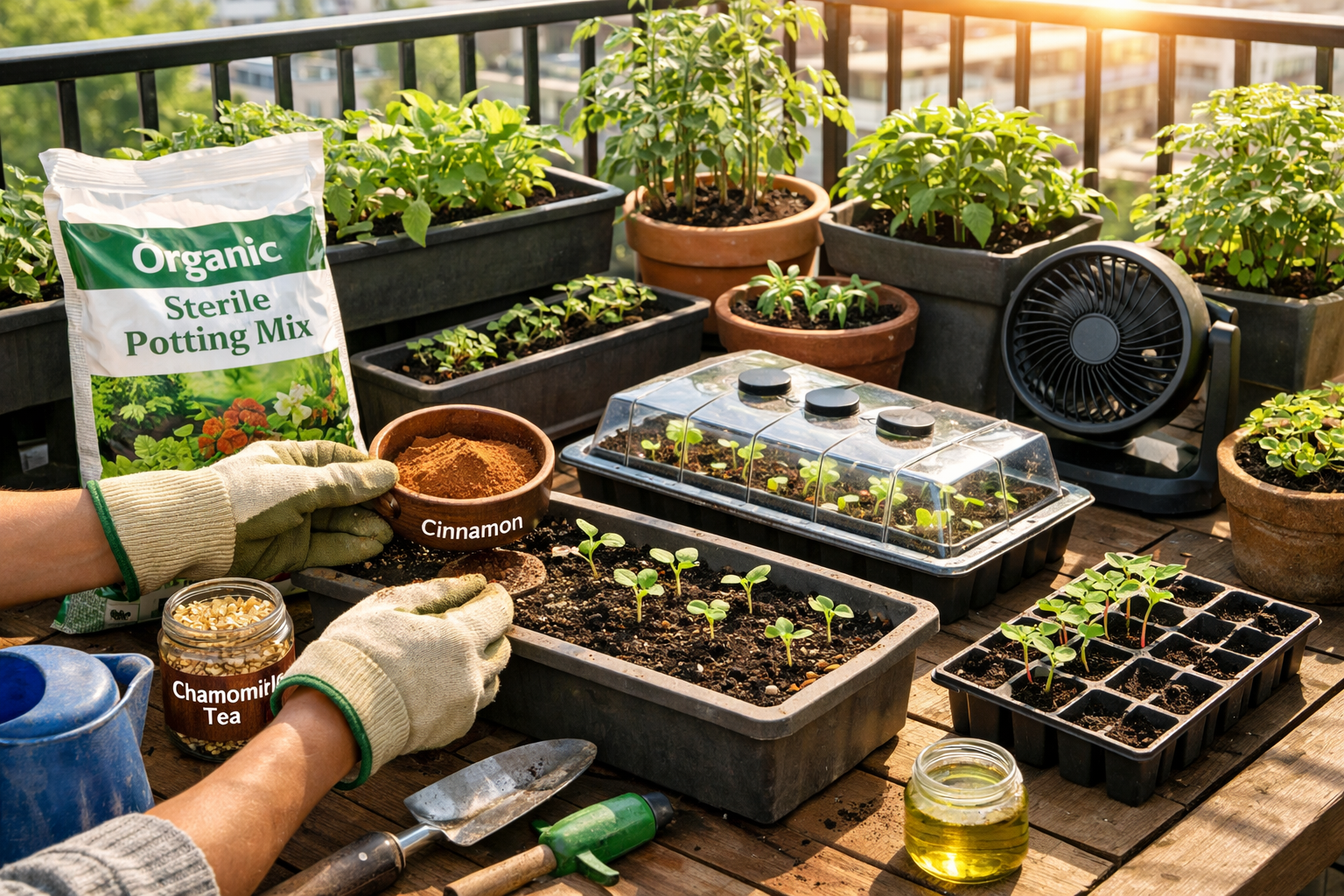
Your growing medium makes or breaks your damping off prevention strategy. Sterile potting mix designed for seed starting provides the clean slate you need, while garden soil or compost can introduce pathogens even in small containers.[2]
Key soil characteristics for prevention:
- Fast drainage: Water should move through quickly without pooling
- Good aeration: Roots need oxygen to stay healthy and resist infection
- Appropriate texture: Fine enough for seeds but not so fine it compacts
- Neutral pH: Most seedlings prefer 6.0-7.0 pH range
Container selection affects drainage and air circulation around roots. Choose containers with multiple drainage holes rather than single large holes. For container gardening beginners, starting with purpose-made seed starting trays often works better than repurposed containers.
Soil treatment options for extra protection:
- Heat treatment: Pour boiling water over potting mix and let cool (for small batches)
- Microwave sterilization: Dampen soil and microwave 2-3 minutes per quart
- Solar sterilization: Seal damp soil in clear plastic bags and leave in hot sun for several days
Reusing containers safely requires thorough cleaning between seasons. Wash with hot, soapy water, rinse with 10% bleach solution, and let dry completely before storing.[2]
Choose heat treatment if: You’ve had damping off problems before or want maximum protection. Choose fresh sterile mix if you’re just starting out or growing food crops where you want to avoid any treatment.
Water Management and Timing Strategies
Water management might be the single most important factor in preventing damping off naturally. The goal isn’t to keep soil constantly moist – it’s to provide consistent moisture while allowing the soil surface to dry slightly between waterings.[2]
Timing your watering makes a huge difference. Water early in the morning so excess moisture evaporates during the day, rather than sitting around roots all night when temperatures drop and fungi become more active.[4]
Bottom watering technique for seed trays:
- Fill a shallow tray with about 1/2 inch of water
- Set seed containers in the water tray
- Let containers absorb water for 15-30 minutes
- Remove containers when soil surface feels barely moist
- Empty excess water from the tray
Top watering best practices:
- Use a gentle spray or watering can with fine holes
- Water slowly to avoid disturbing seeds or small roots
- Stop when water just begins to drain from holes
- Avoid getting water on leaves and stems when possible
Water quality matters more than many gardeners realize. Tap water is often cleaner than collected rainwater, which can harbor fungal spores. If you must use rainwater, consider boiling and cooling it first for seed starting.[2]
Signs you’re overwatering:
- Soil surface stays dark and wet for more than a day
- Fungus gnats appear around containers
- Soil smells sour or musty
- Seedlings look pale or grow slowly despite good light
Natural Fungicides and Organic Solutions
While prevention is always better than treatment, natural fungicides can provide extra protection when you’re dealing with challenging conditions or have experienced problems before. These organic solutions work by creating unfavorable conditions for fungi rather than killing them outright.
Cinnamon powder acts as a natural fungicide and can be dusted lightly on soil surfaces or mixed into potting mix at planting.[7] Use about 1/4 teaspoon per 4-inch pot – a little goes a long way, and too much can actually inhibit germination.
Chamomile tea treatment:
- Brew 2 tablespoons dried chamomile in 1 cup boiling water
- Steep for 15-20 minutes, then strain and cool completely
- Use as a soil drench once per week during germination period
- Store unused tea in refrigerator for up to one week
Hydrogen peroxide soil drench provides extra oxygen to roots while creating conditions fungi dislike. Mix 1 tablespoon of 3% hydrogen peroxide per cup of water and use sparingly – no more than once per week and only if you see early signs of problems.
Baking soda spray can help with surface fungi, though it’s more useful for older plants than tiny seedlings. Mix 1/2 teaspoon per cup of water and spray soil surface lightly.
When to apply natural treatments:
- Preventively: If you’ve had damping off before in the same location
- At first signs: When you notice the first affected seedling
- Environmental stress: During particularly humid or cool weather
Avoid overuse: Even natural fungicides can stress seedlings if used too frequently or in too high concentrations. Start with the lowest recommended amounts and increase only if needed.
For gardeners interested in organic container gardening, these natural solutions align perfectly with sustainable growing practices.
Troubleshooting Common Prevention Failures
Even with the best prevention strategies, sometimes damping off still occurs. Understanding why prevention failed helps you adjust your approach and prevent future outbreaks.
Most common failure points:
- Contaminated tools or containers: Even one dirty tool can introduce pathogens to a clean setup
- Hidden moisture problems: Drainage that seems adequate but isn’t, or containers sitting in water-filled saucers
- Temperature fluctuations: Dramatic day/night temperature swings stress seedlings and favor fungi
- Overcrowding: Following spacing guidelines for mature plants rather than seedling stage requirements
Diagnostic questions when prevention fails:
- Did you use completely fresh, sterile materials?
- Is air moving freely around all seedlings?
- Are containers draining completely within an hour of watering?
- Have you been consistent with watering timing and amounts?
Salvage strategies when you catch problems early:
- Immediately remove affected seedlings and surrounding soil
- Increase air circulation with a fan or by moving containers
- Reduce watering frequency and switch to bottom watering only
- Apply natural fungicide like chamomile tea to remaining healthy seedlings
- Monitor closely for 48-72 hours for signs of spread
When to start over: If more than 50% of seedlings are affected, or if the problem keeps spreading despite interventions, it’s often better to start fresh with completely sterile materials.
Edge case handling: Sometimes environmental conditions beyond your control (like extended cloudy, humid weather) make prevention extremely challenging. In these cases, consider starting seeds in smaller batches so losses aren’t devastating, or delay seeding until conditions improve.
FAQ
Q: Can I save seedlings that are already showing damping off symptoms?
A: Unfortunately, seedlings with visible damping off symptoms (fallen over, rotted stems) cannot be saved. Remove them immediately to prevent spread to healthy seedlings nearby.
Q: Is it safe to reuse potting soil where damping off occurred?
A: No, don’t reuse soil where damping off occurred. The fungal pathogens persist in the soil and will likely cause problems again. Start fresh with sterile potting mix.
Q: How long do I need to wait before replanting in the same containers?
A: Clean containers thoroughly with 10% bleach solution, rinse well, and let dry completely. You can replant immediately after proper cleaning and using fresh, sterile potting mix.
Q: Do humidity domes increase damping off risk?
A: Yes, humidity domes can increase risk if left on too long after germination. Remove domes as soon as most seeds have sprouted to improve air circulation and reduce humidity around seedlings.
Q: Can I prevent damping off without any treatments, just through environmental control?
A: Absolutely! Proper sanitation, drainage, air circulation, and watering practices prevent most damping off cases without any fungicide treatments, natural or otherwise.
Q: Why do my seedlings keep getting damping off even with good drainage?
A: Check for hidden moisture problems like water collecting in saucers, poor air circulation, contaminated tools, or temperature fluctuations that stress seedlings and favor fungal growth.
Q: Is damping off more common in certain types of seeds?
A: Some seeds are more susceptible, particularly those that germinate slowly or prefer cool conditions. Fast-germinating seeds in warm conditions typically have lower damping off rates.
Q: Can I use garden soil if I sterilize it first?
A: While sterilization helps, garden soil often has drainage and texture issues for seed starting. Purpose-made seed starting mix usually gives better results even without sterilization.
Q: How do I know if my potting mix drainage is adequate?
A: Water should drain freely from containers within 30-60 minutes, and the soil surface should start to dry within 24 hours. Standing water or constantly soggy surfaces indicate drainage problems.
Q: Can overfeeding seedlings make damping off worse?
A: Yes, overfertilizing can stress seedlings and create conditions that favor fungal growth. Most seed starting mixes contain enough nutrients for the first few weeks of growth.
Key Takeaways
- Four main fungi cause damping off (Pythium, Phytophthora, Rhizoctonia, Fusarium), each thriving under different moisture and temperature conditions
- Prevention beats treatment – focus on sterile materials, proper drainage, and good air circulation from the start
- Water management is crucial – use bottom watering when possible, water early in the day, and allow soil surfaces to dry slightly between waterings
- Natural methods work excellently – cinnamon, chamomile tea, and hydrogen peroxide provide effective organic protection without harsh chemicals
- Environmental control prevents most cases – proper spacing, air circulation, and temperature consistency create conditions where seedlings thrive but fungi struggle
- Quick action saves neighboring plants – remove affected seedlings immediately and adjust growing conditions to prevent spread
- Container hygiene matters – clean all pots and tools between uses, and always start with fresh, sterile potting mix
- Timing affects success – morning watering, proper seed depth, and removing humidity domes promptly all reduce disease risk
The joy of nurturing nature starts with healthy seedlings, and preventing damping off naturally ensures your container garden gets the strong start it deserves. By understanding these fungal enemies and creating conditions that favor your plants over pathogens, you’re building the foundation for a thriving green paradise that will grow, learn, and flourish throughout the season.
Remember, every experienced gardener has lost seedlings to damping off – it’s part of the learning process. What matters is understanding why it happened and adjusting your approach. With these natural prevention strategies, you’ll be well-equipped to give your seeds the best possible start in their container garden journey.
Whether you’re just beginning your adventure with container gardening or expanding your skills with organic growing methods, mastering damping off prevention is an essential skill that will serve you well. Here’s to healthy seedlings and the sustainable living practices that make gardening both successful and environmentally conscious!
References
[1] Damping Vegetables – https://extension.msstate.edu/publications/damping-vegetables
[2] Damping Off In Flower And Vegetable Seedlings – https://content.ces.ncsu.edu/damping-off-in-flower-and-vegetable-seedlings
[3] Damping Off Identifying And Controlling Early Season Pathogens 2 2 2 2 3 2 2 – https://plant-pest-advisory.rutgers.edu/damping-off-identifying-and-controlling-early-season-pathogens-2-2-2-2-3-2-2/
[4] Damping Off – https://www.rhs.org.uk/disease/damping-off
[7] Damping – https://ucanr.edu/site/uc-marin-master-gardeners/document/damping

0 Comments