
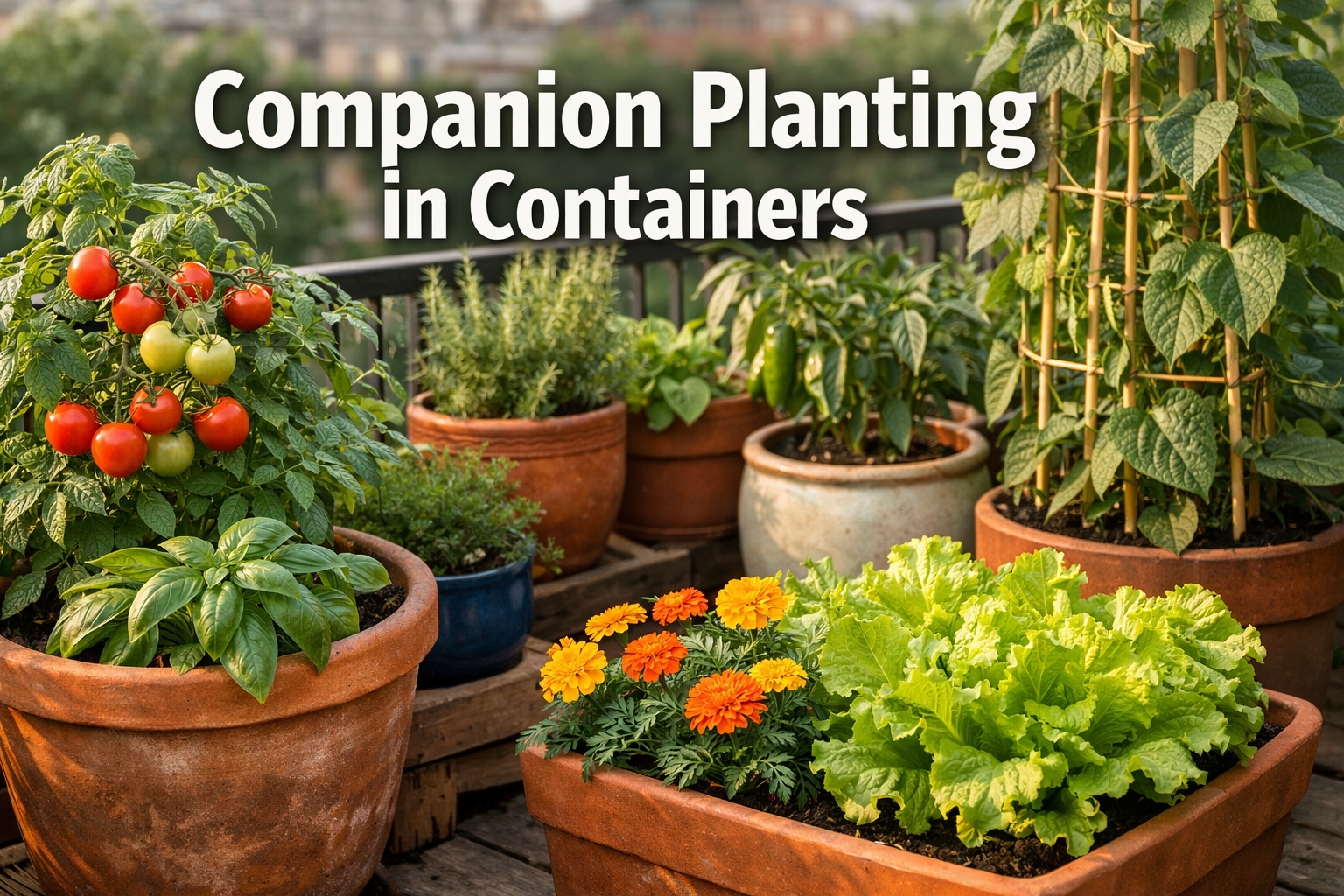
Key Takeaways
• Companion planting in containers maximizes small growing spaces by pairing plants that benefit each other
• Match growth requirements first — combine plants with similar sun, water, and soil needs for success
• Use larger containers (minimum 20 gallons) when growing multiple plants together to prevent overcrowding
• Plant half the recommended amounts of each species when combining crops in shared containers [1]
• Choose determinate tomato varieties over indeterminate types for better container companion success
• Include nitrogen-fixing legumes like beans to naturally feed heavy-feeding companion plants
• Add flowering plants to attract beneficial pollinators and improve vegetable yields
• Avoid aggressive spreaders like mint or sprawling varieties that will dominate container space
Quick Answer
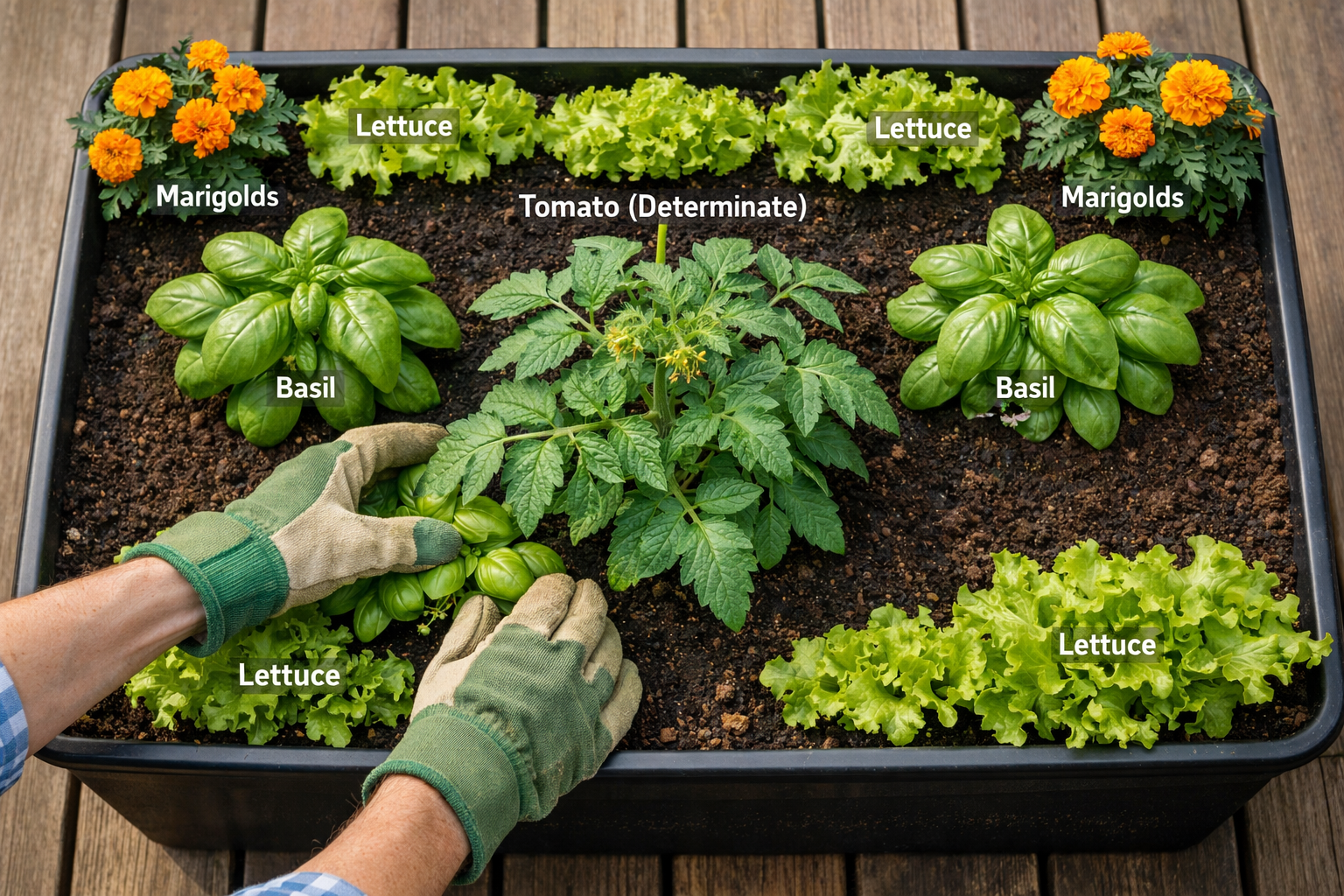
Companion planting in containers involves growing two or more beneficial plant species together in the same pot or grouped containers to maximize space, improve plant health, and increase yields. Success depends on matching plants with similar growing requirements and using appropriately sized containers — typically 20+ gallons for multiple plants with proper spacing adjustments.
What Is Companion Planting in Containers?
Companion planting in containers combines the ancient practice of growing beneficial plant partnerships with the modern convenience of container gardening. This technique allows urban gardeners to maximize their limited growing space while nurturing the love for the earth, even on small balconies or patios.
The core principle is simple: pair plants that naturally support each other's growth, pest resistance, or soil health within the confined space of containers. Unlike traditional companion planting in garden beds, container companion planting requires careful attention to space limitations and root competition.
Key benefits include:
- Space efficiency — grow more variety in fewer containers
- Natural pest control — aromatic herbs deter insects from vegetables
- Improved soil health — nitrogen-fixing plants feed heavy feeders
- Enhanced pollination — flowering companions attract beneficial insects [3]
- Extended harvest seasons — fast-growing crops fill space as others mature
Choose companion planting in containers if you have limited outdoor space, want to reduce pest problems naturally, or enjoy experimenting with plant combinations. Avoid this approach if you prefer simple, single-plant containers or are just starting your gardening journey.
How to Choose the Right Plants for Companion Planting in Containers
The foundation of successful companion planting in containers starts with selecting plants that share similar growing requirements. This matching process determines whether your container garden will thrive or struggle.
Match these essential requirements first [1]:
- Sunlight needs — full sun plants with full sun companions
- Watering schedules — drought-tolerant herbs with similar low-water vegetables
- Growth rates — fast-growing lettuce with quick-maturing radishes
- Root system depth — shallow-rooted herbs with deep-rooted tomatoes
- Mature plant size — compact varieties with other space-appropriate plants
Proven container companion combinations:
| Primary Plant | Best Companions | Container Size |
|---|---|---|
| Determinate Tomatoes | Basil, parsley, marigolds | 20+ gallons |
| Peppers | Oregano, thyme, nasturtiums | 15+ gallons |
| Lettuce | Chives, radishes, spinach | 10+ gallons |
| Bush beans | Carrots, rosemary, sage | 15+ gallons |
| Eggplant | Peppers, basil, petunias | 20+ gallons |
Common mistake: Pairing indeterminate tomatoes with other plants. These vigorous climbers need their own containers to avoid overwhelming companions.
For plant selection guidance, check out our comprehensive guide to vegetables that grow well in containers for more specific variety recommendations.
What Container Sizes Work Best for Companion Planting?
Container size becomes critical when practicing companion planting in containers because multiple plants compete for the same soil volume, nutrients, and root space.
Minimum container requirements:
- Small combinations (herbs + lettuce): 10-15 gallons
- Medium combinations (peppers + herbs): 15-20 gallons
- Large combinations (tomatoes + basil + marigolds): 20-30 gallons
- Deep-rooted pairs (carrots + beans): 18+ inches deep
The half-planting rule: When combining two different crops in one container, plant half the recommended amount for each species [1]. For example, instead of planting 2 eggplants or 6 peppers, plant 1 eggplant and 3 peppers together.
Container shape considerations:
- Wide, shallow containers work for lettuce and herb combinations
- Deep containers accommodate root vegetables with leafy companions
- Rectangular planters provide better spacing for multiple plant types
Choose larger containers if you're unsure — plants rarely suffer from too much root space, but they quickly struggle in cramped conditions. Remember that container gardening wisdom suggests it's better to have fewer, larger containers than many small ones.
Best Companion Plant Combinations for Small Spaces
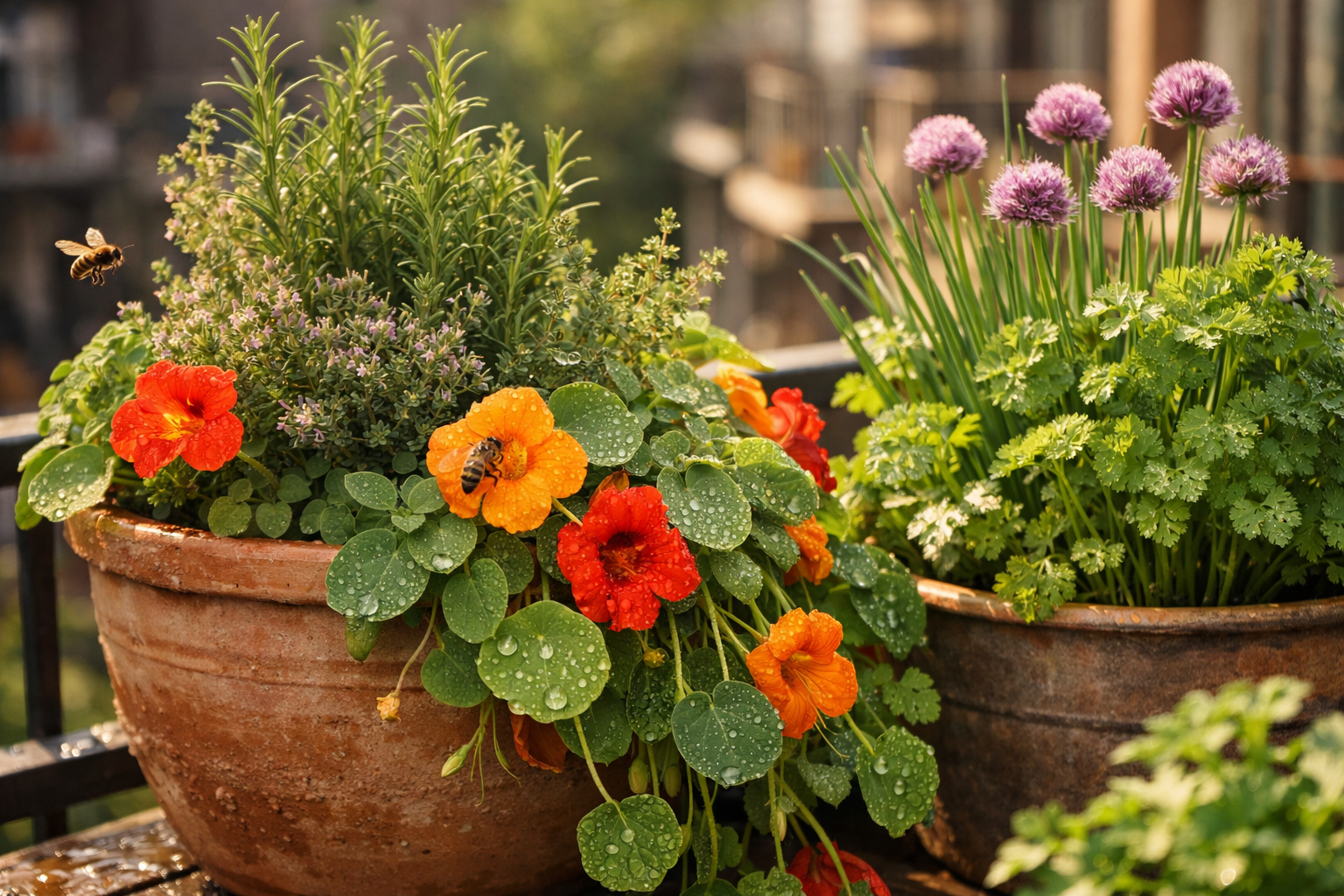
These tested combinations maximize productivity while creating beautiful, functional container gardens perfect for balconies, patios, and small outdoor spaces.
The "Three Sisters" Container Adaptation:
- Corn (dwarf variety) in center
- Bush beans around the base for nitrogen fixing [2]
- Compact winter squash trailing over container edges
- Requires 30+ gallon container
Mediterranean Herb Haven:
- Rosemary as the anchor plant
- Thyme and oregano for mid-level coverage
- Trailing nasturtiums for color and pest control
- Works in 15-gallon containers
Salad Bowl Container:
- Lettuce varieties in center
- Chives and parsley around edges
- Radishes for quick harvest between lettuce
- Perfect for 10-gallon containers
Tomato Power Trio:
- One determinate tomato as centerpiece [1]
- Basil plants for pest control and flavor enhancement
- Marigolds around the base for nematode control
- Needs 25+ gallon container
Pizza Garden Container:
- Compact pepper varieties
- Italian herbs (basil, oregano, thyme)
- Cherry tomatoes if space allows
- Great for 20-gallon rectangular planters
These combinations work because they follow the principle of layering plants with different heights, root depths, and growth habits. Start with these proven partnerships before experimenting with your own creative combinations.
For more container gardening basics, explore our ultimate guide to container gardening for beginners to build your foundation knowledge.
How to Manage Spacing and Growth in Container Companions
Proper spacing management separates thriving container companion gardens from overcrowded, struggling plants. The confined space requires strategic planning and ongoing adjustments.
Initial spacing guidelines:
- Leave 25% more space than single-plant recommendations suggest
- Position tall plants on the north side to prevent shading shorter companions
- Place spreading plants near container edges where they can cascade
- Keep root vegetables away from heavy-feeding plants like tomatoes
Growth management techniques:
Succession planting: Replace quick-growing crops like lettuce and radishes every 2-3 weeks to maintain continuous harvests without overcrowding.
Strategic pruning: Remove lower leaves from tomatoes and peppers to improve air circulation and reduce disease risk in mixed plantings [2].
Support systems: Use cages, stakes, or trellises to train vertical growth and prevent plants from sprawling over companions.
Harvest timing: Pick herbs and leafy greens regularly to prevent them from bolting and competing with slower-growing vegetables.
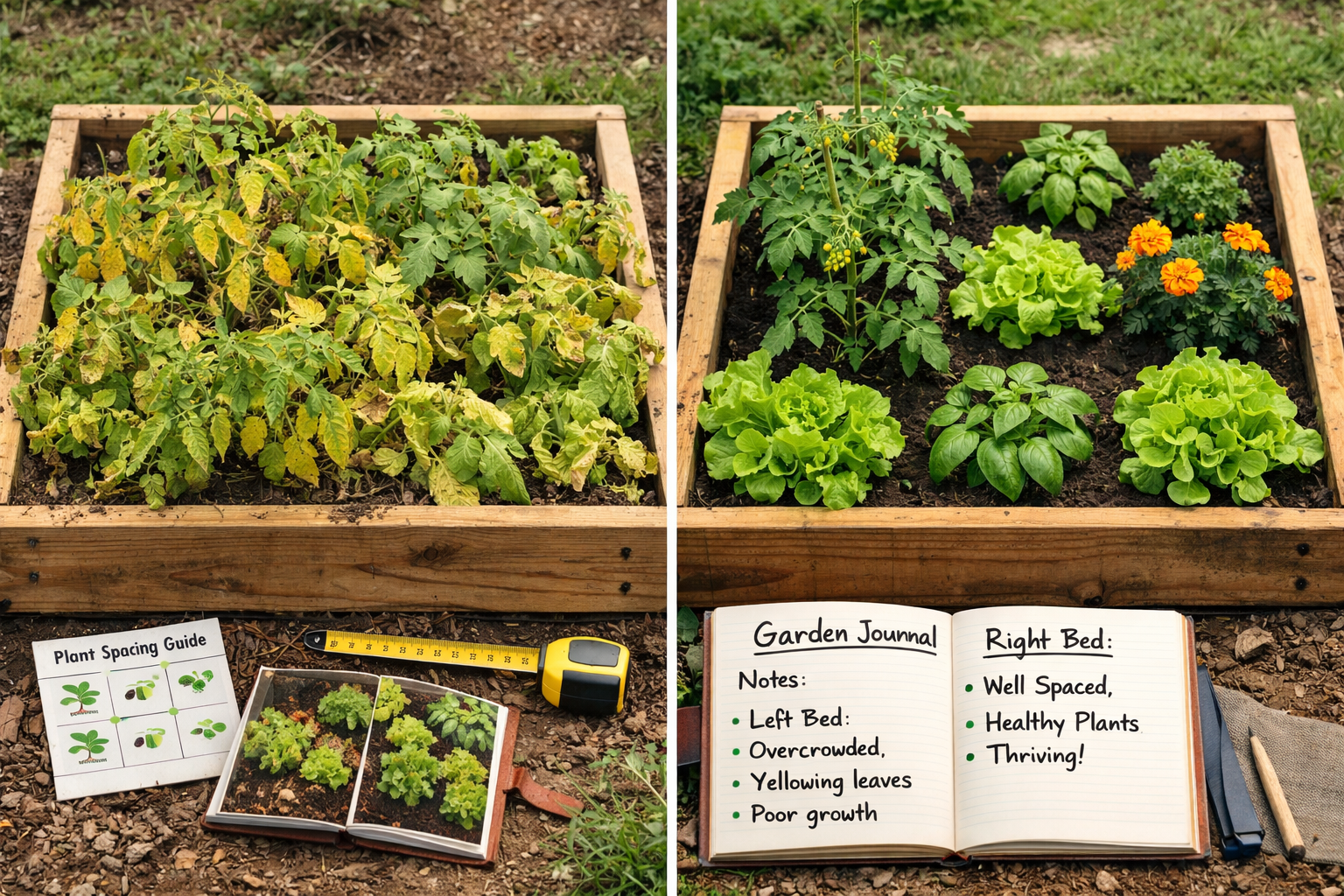
Warning signs of overcrowding:
- Yellowing lower leaves
- Reduced flowering or fruit production
- Increased pest problems
- Plants leaning away from each other
Quick fix: If overcrowding occurs, carefully remove the least productive plant or transplant it to its own container. It's better to sacrifice one plant than lose the entire combination.
Monitor your containers weekly during peak growing season, and don't hesitate to thin plants that are outcompeting their companions.
Common Mistakes in Companion Planting in Containers
Learning from these frequent errors saves time, money, and frustration while building your gardening wisdom for future container success.
Mistake #1: Ignoring mature plant sizes
Many gardeners plant based on seedling size rather than mature dimensions. A small basil plant can grow 18 inches wide and overwhelm nearby lettuce. Always research mature sizes before planting.
Mistake #2: Mixing incompatible water needs
Pairing drought-loving Mediterranean herbs with water-hungry vegetables like lettuce creates an impossible watering situation. One group will always suffer.
Mistake #3: Using containers that are too small
The most common error is cramming multiple plants into inadequate containers. A 5-gallon bucket cannot successfully support tomatoes, peppers, and herbs together, despite what some sources suggest.
Mistake #4: Planting aggressive spreaders
Mint, oregano, and other vigorous spreaders will quickly dominate container space and crowd out companions. Keep these plants in their own containers.
Mistake #5: Forgetting about root competition
Plants with similar root depths compete intensely for nutrients. Pair shallow-rooted herbs with deep-rooted vegetables instead of combining multiple deep-rooted plants.
Mistake #6: Poor timing of plantings
Starting all plants simultaneously often leads to overcrowding as they mature together. Stagger plantings so fast-growing crops finish before slow growers need the space.
How to avoid these mistakes:
- Research mature plant sizes before purchasing
- Group plants by water and sun requirements
- Invest in larger containers than you think you need
- Start with proven combinations before experimenting
- Plan harvest timing when selecting companions
Remember, container gardening is a learning process. Even experienced gardeners make mistakes, but each error teaches valuable lessons for future growing seasons.
Seasonal Care Tips for Container Companion Gardens
Container companion gardens require adjusted care throughout the growing season as plant relationships and needs evolve.
Spring Setup (March-May):
- Start with soil preparation using quality potting mix, never garden soil
- Plant cold-hardy companions first (lettuce, peas, herbs)
- Add warm-season plants after last frost date
- Install support structures early to avoid root damage later
Summer Management (June-August):
- Water daily during hot weather — containers dry faster than ground beds
- Fertilize every 2-3 weeks with balanced organic fertilizer [2]
- Harvest regularly to prevent overcrowding and encourage production
- Monitor for pests weekly, as stressed container plants attract problems
Fall Transition (September-November):
- Remove spent summer crops and replace with cool-season vegetables
- Reduce watering frequency as temperatures drop and growth slows
- Add cold-hardy herbs like sage and thyme for winter interest
- Protect containers from freeze damage with mulch or wrapping
Winter Care (December-February):
- Move containers to protected locations in harsh climates
- Reduce watering significantly — overwatering kills more plants than cold
- Plan next season combinations based on this year's successes and failures
- Order seeds early for popular varieties that sell out
Year-round maintenance:
- Check soil moisture by inserting finger 2 inches deep
- Remove dead or diseased plant material immediately
- Rotate container positions monthly for even sun exposure
- Document what works for future reference
For specific soil recommendations, visit our guide to the best organic soil for container gardening to ensure your companions have the nutrition they need.
FAQ
Q: Can I grow tomatoes and peppers together in one container?
A: Yes, but only with determinate (bush) tomato varieties in containers of 25+ gallons. Plant one tomato with 2-3 pepper plants, using half the normal planting density for each crop [1].
Q: What's the minimum container size for companion planting?
A: 10 gallons for simple herb and lettuce combinations, 15+ gallons for vegetable pairs, and 20+ gallons for tomato-based combinations. Larger containers always perform better than smaller ones.
Q: Do companion plants really reduce pest problems?
A: Yes, aromatic herbs like basil and marigolds can deter certain pests, while diverse plantings create less humid conditions that reduce some plant diseases [2]. However, companion planting isn't a complete pest control solution.
Q: Can I use regular potting soil for companion containers?
A: Use high-quality potting mix designed for containers, never garden soil. Companion plantings need excellent drainage and aeration that only proper container mixes provide.
Q: How often should I fertilize container companion gardens?
A: Every 2-3 weeks during active growing season with balanced organic fertilizer. Multiple plants in one container compete for nutrients more intensely than single plantings.
Q: What herbs work best with vegetables in containers?
A: Basil with tomatoes, oregano with peppers, chives with lettuce, and rosemary with root vegetables. These combinations offer pest control benefits while sharing similar growing requirements.
Q: Should I start companion plants from seeds or transplants?
A: Use transplants for easier spacing control and timing coordination. Starting from seed requires more precise planning to ensure plants mature at compatible rates.
Q: Can I grow three or more different plants in one container?
A: Yes, in very large containers (30+ gallons) with careful plant selection. Start with two-plant combinations to master spacing and care before attempting more complex groupings.
Q: What's the biggest mistake beginners make with container companions?
A: Using containers that are too small for the plant combination. Most failures result from inadequate root space rather than incompatible plant pairings.
Q: Do I need special drainage for companion containers?
A: Ensure containers have multiple drainage holes and use potting mix that drains well. Good drainage becomes even more critical with multiple plants sharing the same soil volume.
Q: Can I move companion containers during the growing season?
A: Yes, but do so gradually over several days to prevent shock. Container mobility is one advantage of this growing method, allowing you to optimize sun exposure.
Q: How do I know if my container companions are overcrowded?
A: Watch for yellowing lower leaves, reduced flowering, stunted growth, or plants leaning away from each other. These signs indicate competition for space, light, or nutrients.
Conclusion
Companion planting in containers opens up exciting possibilities for urban gardeners who want to grow learn and flourish in small spaces. By matching plants with similar growing requirements, using appropriately sized containers, and following proven combinations, you can create productive mini-ecosystems on your balcony, patio, or deck.
Start with simple two-plant combinations like tomatoes with basil or lettuce with chives before attempting more complex groupings. Remember the golden rule: when in doubt, choose a larger container and plant fewer specimens than you think the space can handle.
Your next steps:
- Assess your space and available container sizes
- Choose one proven combination from this guide to try first
- Gather quality potting mix and appropriately sized containers
- Start small and expand your companion gardening skills gradually
- Document what works for your specific conditions and preferences
Container companion gardening embodies the joy of nurturing nature while making the most of limited space. Each successful combination brings you closer to creating your own green paradise, no matter how small your growing area.
For garden enthusiasts ready to dive deeper into container growing, explore our container herb gardening guide to master the herbs that make the best companions for your vegetable containers.
References
[1] Combining Crops In The Earthbox - https://earthbox.com/blog/combining-crops-in-the-earthbox
[2] Companion Planting Resources - https://attra.ncat.org/publication/companion-planting-resources/
[3] Companion Planting Is Not A Myth - https://www.finegardening.com/article/companion-planting-is-not-a-myth

0 Comments