
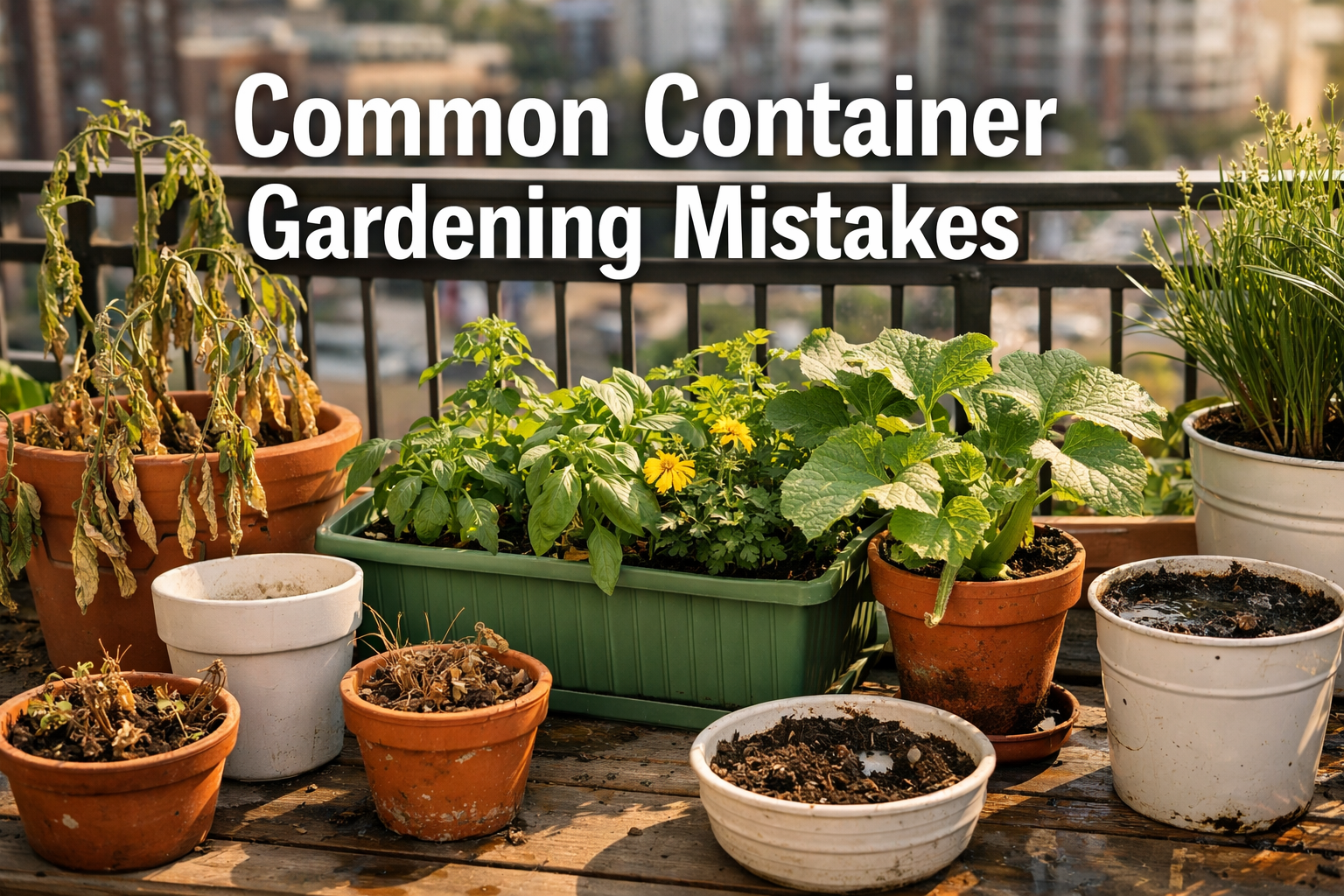
Picture this: you're excited about your new balcony garden, but three weeks later, your plants are wilted, your herbs are dying, and you're wondering what went wrong. You're not alone! Most container gardening failures stem from just a few common container gardening mistakes that are completely preventable once you know what to look for.
Key Takeaways
• Container size matters most – use pots at least 12 inches wide and deep for healthy root development
• Drainage holes are non-negotiable – containers without proper drainage cause root rot and plant death
• Garden soil kills container plants – always use quality potting mix designed for containers
• Inconsistent watering is the #1 plant killer – check soil moisture regularly and water when the top inch feels dry
• Container plants need more frequent feeding – fertilize every 2-4 weeks since nutrients wash away with watering
• Overcrowding reduces yields – give plants adequate space to prevent competition and disease
• Soil needs annual refreshing – old potting mix becomes compacted and nutrient-depleted over time
Quick Answer
The most common container gardening mistakes include using containers that are too small, lacking proper drainage, choosing the wrong soil type, inconsistent watering practices, and overcrowding plants. These mistakes account for about 80% of container gardening failures, but they're easily preventable with the right knowledge and preparation.
What Are the Most Critical Container Selection Mistakes?
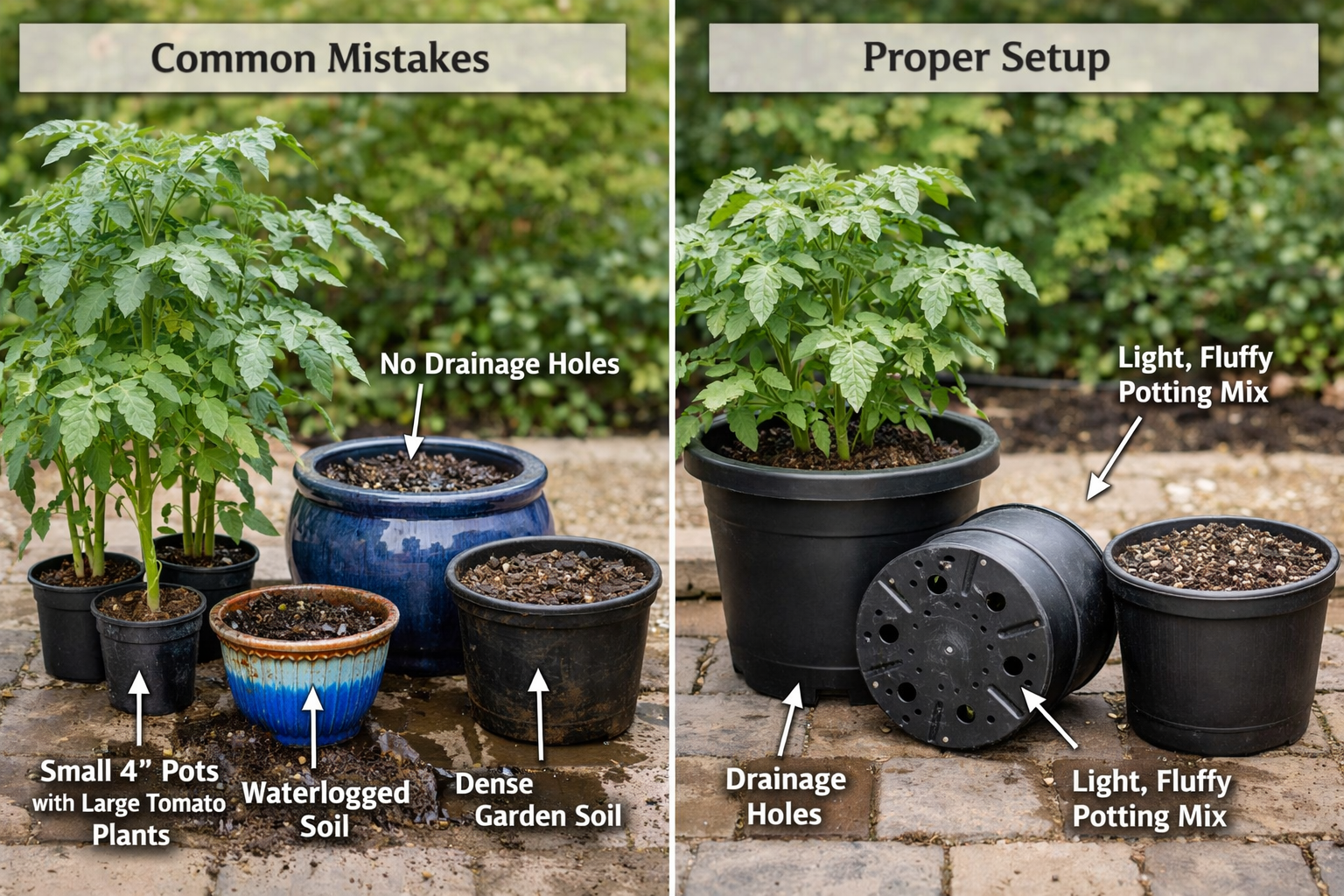
Container size is the foundation of successful container gardening, and choosing pots that are too small is the most devastating mistake beginners make. Plants in undersized containers become rootbound, dry out quickly, and never reach their full potential.
Size Requirements That Actually Work
Your containers need to be at least 12 inches wide and 12 inches deep for most plants to thrive. Here's what different plants actually need:
• Shallow-rooted crops (lettuce, spinach, radishes): 6-8 inches deep
• Medium-rooted vegetables (peppers, bush beans, herbs): 8-12 inches deep
• Deep-rooted plants (tomatoes, carrots, potatoes): 12+ inches deep
• Large fruiting plants (eggplant, squash): 18+ inches wide and deep
Choose larger containers if you're unsure – plants rarely suffer from having too much root space, but they'll definitely struggle in cramped quarters.
The Drainage Disaster
Containers without drainage holes are plant death traps. Root rot from waterlogged soil kills more container plants than drought, pests, and disease combined.
If you've fallen in love with a decorative pot that lacks drainage, use the cachepot method: place a properly draining container inside the decorative one. This gives you the aesthetics you want while keeping your plants healthy.
For more detailed guidance on container selection, check out our ultimate guide to container gardening for beginners.
Why Does Soil Choice Make or Break Container Gardens?
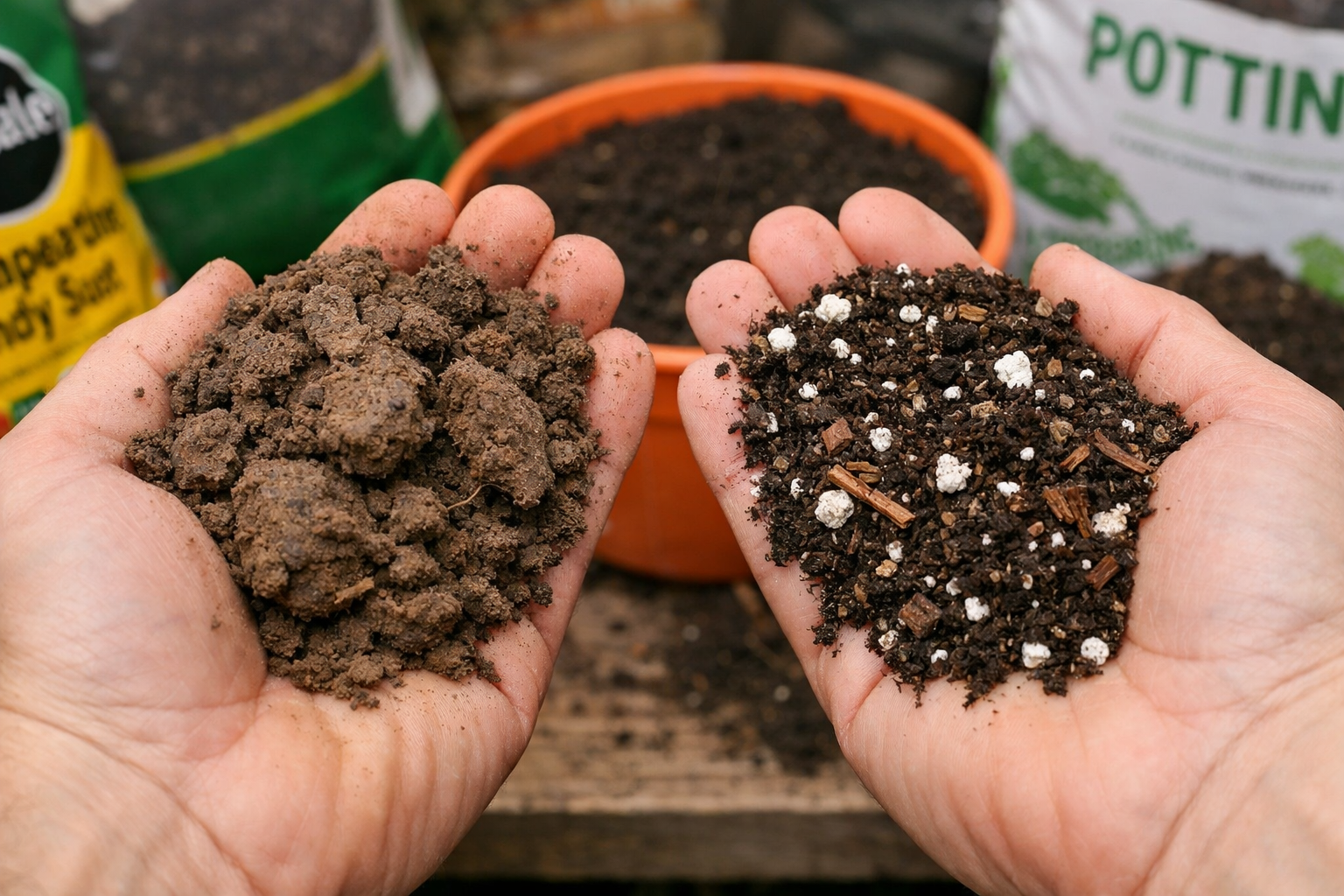
Garden soil is the kiss of death for container plants, yet it's one of the most common container gardening mistakes beginners make. Garden soil becomes concrete-hard in containers, suffocating roots and preventing proper drainage.
What Makes Container Soil Different
Container plants need soil that:
• Drains quickly but retains some moisture
• Stays loose and doesn't compact over time
• Provides nutrients in a concentrated space
• Allows air flow to plant roots
Quality potting mix is specifically engineered for containers and contains ingredients like perlite, vermiculite, and coconut coir that maintain proper texture and drainage.
DIY Soil Mix That Works
If you prefer making your own mix, try this proven formula:
• ⅓ high-quality compost
• ⅓ topsoil (not garden soil)
• ⅓ coarse sand or coconut coir
This blend provides drainage, nutrients, and structure that plants love. Our organic container gardening supplies guide offers more specific soil recommendations.
Annual Soil Refresh
Old potting soil becomes compacted, nutrient-depleted, and salt-laden after one growing season. Many gardeners try to reuse the same soil year after year, wondering why their plants perform poorly.
Refresh your containers each spring by:
• Removing the top 2-3 inches of old soil
• Adding fresh compost and potting mix
• Mixing in slow-release fertilizer
What Watering Mistakes Kill Container Plants?
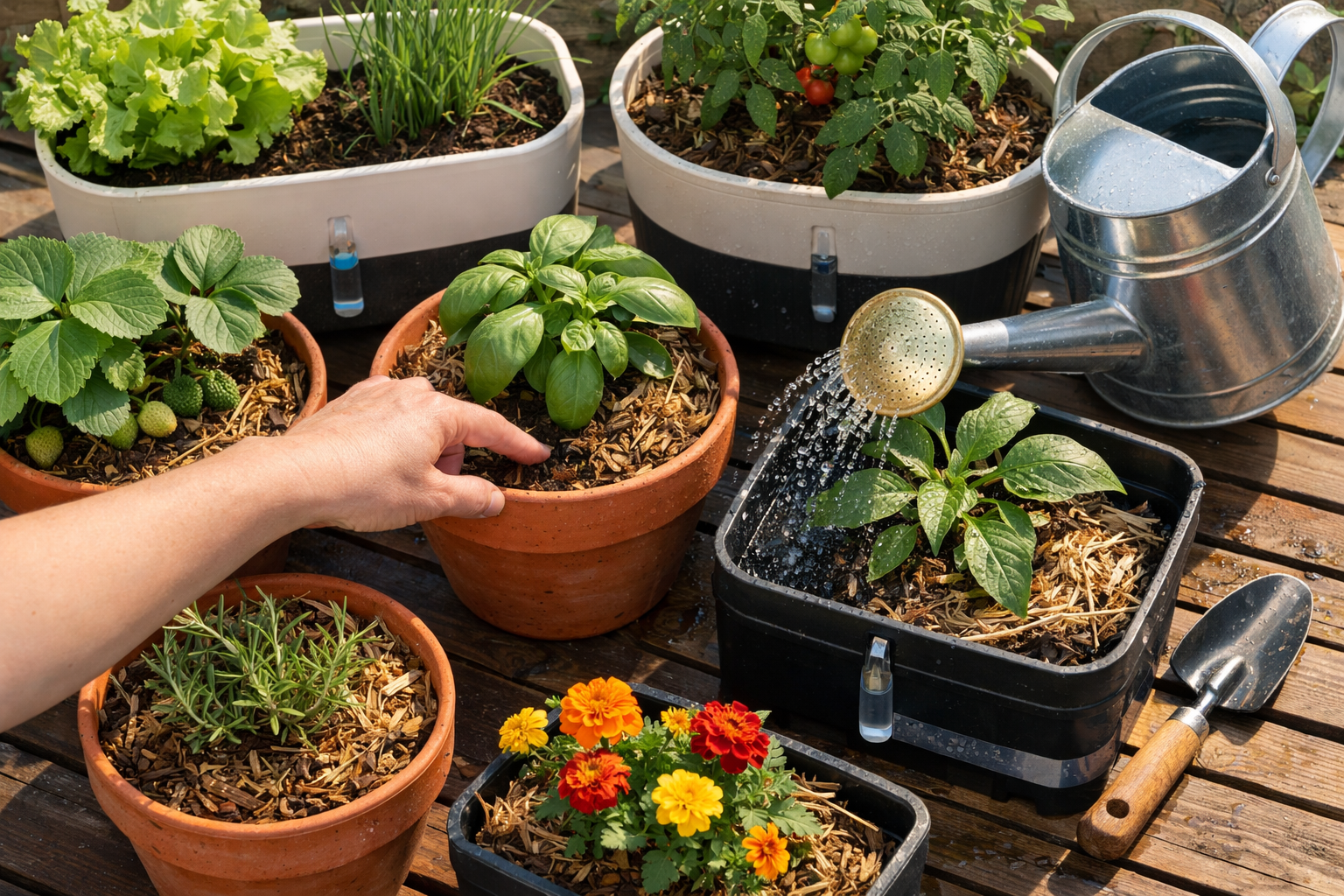
Inconsistent watering is the number one killer of container plants, causing more failures than all other common container gardening mistakes combined. Both overwatering and underwatering create stress that weakens plants and makes them susceptible to pests and diseases.
The Finger Test Method
Check soil moisture by inserting your finger about one inch deep into the soil. If it feels dry, it's time to water. If it's still moist, wait another day and check again.
This simple test prevents both overwatering and underwatering because you're responding to what the plant actually needs rather than following a rigid schedule.
Watering Frequency Reality Check
Container plants typically need water:
• Daily during hot summer weather
• Every 2-3 days during moderate temperatures
• Weekly during cool or rainy periods
Terracotta and clay pots dry out faster than plastic or glazed containers because they're porous. Factor this into your watering schedule.
Smart Watering Solutions
Consider these watering aids for consistent moisture:
• Self-watering containers with built-in reservoirs
• Drip irrigation systems for multiple containers
• Water-retaining crystals mixed into potting soil
• Mulch or gravel on soil surface to reduce evaporation
For specific watering guidance for different plants, our container herb gardening guide provides detailed care instructions.
How Does Poor Nutrition Sabotage Container Gardens?
Container plants need regular feeding because nutrients wash away with each watering, yet many beginners forget to fertilize until plants show obvious signs of deficiency. Unlike ground-planted gardens where roots can search for nutrients, container plants depend entirely on what you provide.
Fertilizing Schedule That Works
Feed your container plants:
• Every 2-4 weeks during the growing season for most plants
• Weekly for heavy feeders like tomatoes, peppers, and squash
• Monthly during fall and winter for slower-growing plants
Liquid fertilizers work best for containers because they're immediately available to plants and won't burn roots when properly diluted.
Signs Your Plants Need More Food
Watch for these nutrient deficiency signals:
• Pale or yellowing leaves (nitrogen deficiency)
• Poor flowering or fruiting (phosphorus deficiency)
• Brown leaf edges (potassium deficiency)
• Slow growth despite adequate water and light
Choose a balanced fertilizer (like 10-10-10) for most container plants, or select specialized formulas for specific crops like tomatoes or herbs.
What Plant Spacing Mistakes Reduce Yields?
Overcrowding containers is one of the most common container gardening mistakes that reduces both plant health and harvest yields. The temptation to squeeze "just one more plant" into a container creates competition for water, nutrients, and airflow.
Proper Spacing Guidelines
Follow these spacing rules for healthy plants:
• Lettuce and greens: 4-6 inches apart
• Herbs: 6-8 inches apart
• Peppers: One plant per 12-inch container
• Tomatoes: One plant per 18+ inch container
• Bush beans: 4-6 inches apart
When in doubt, give plants more space rather than less. Crowded plants become stressed, produce smaller yields, and are more susceptible to fungal diseases due to poor air circulation.
Succession Planting Strategy
Instead of cramming multiple plants together, try succession planting:
• Plant new crops every 2-3 weeks
• Harvest mature plants to make room for new ones
• Extend your growing season with continuous harvests
This approach gives you more total yield than overcrowded containers while keeping plants healthy.
How Do Environmental Factors Create Problems?
Most vegetables need at least 6 hours of direct sunlight daily, but container plants can't handle as much heat stress as ground-planted gardens because their limited soil volume dries out faster.
Light vs. Heat Balance
Container gardening requires balancing adequate light with manageable heat:
• Morning sun with afternoon shade works well in hot climates
• Full sun is ideal in cooler regions
• Reflective surfaces like concrete can intensify heat and dry out containers faster
Move containers to shadier spots during heat waves to prevent heat stress and excessive water loss.
Wind Protection
Strong winds dry out containers quickly and can damage plants. Position containers near walls or use windbreaks to create a more stable microclimate.
For plant-specific environmental needs, explore our guides on shade-loving container plants and drought-tolerant options.
When Should You Replace Containers and Soil?
Container soil breaks down over time, becoming compacted and accumulating fertilizer salts that can harm plant roots. Many gardeners try to reuse the same soil for years, not realizing this creates increasingly poor growing conditions.
Annual Maintenance Schedule
Refresh your container gardens each spring by:
• Replacing 30-50% of old potting mix with fresh soil
• Adding compost to improve nutrition and structure
• Checking containers for cracks or damage
• Cleaning containers with diluted bleach solution to prevent disease
Completely replace soil every 2-3 years to maintain optimal growing conditions and prevent salt buildup from fertilizers.
Container Lifespan
Different container materials have varying lifespans:
• Plastic containers: 5-10 years with proper care
• Terracotta pots: 3-5 years in freeze-thaw climates
• Wood planters: 3-7 years depending on wood type and treatment
• Metal containers: 10+ years with rust prevention
Frequently Asked Questions
Q: How often should I water my container plants?
Check soil moisture daily by inserting your finger one inch deep. Water when the top inch feels dry, which typically means daily in hot weather and every 2-3 days in moderate temperatures.
Q: Can I use garden soil in containers?
No, garden soil becomes compacted in containers and doesn't drain properly. Always use quality potting mix specifically designed for container gardening.
Q: What size container do I need for tomatoes?
Tomato plants need containers at least 18 inches wide and 18 inches deep, with one plant per container. Larger containers (20+ inches) produce better yields.
Q: Why are my container plants turning yellow?
Yellow leaves usually indicate either overwatering, underwatering, or nitrogen deficiency. Check soil moisture first, then consider fertilizing if watering isn't the issue.
Q: How do I know if my container has proper drainage?
Water should flow freely from drainage holes within a few minutes of watering. If water pools on top or drains very slowly, you need better drainage or different soil.
Q: Can I grow vegetables in containers without drainage holes?
No, vegetables need proper drainage to prevent root rot. Use containers with holes or employ the cachepot method with a draining liner inside decorative pots.
Q: How much fertilizer do container plants need?
Feed most container plants every 2-4 weeks during growing season with balanced liquid fertilizer. Heavy feeders like tomatoes benefit from weekly feeding.
Q: What's the biggest mistake new container gardeners make?
Using containers that are too small is the most common mistake. Plants in undersized pots become rootbound, dry out quickly, and never reach their potential.
Q: Should I add rocks to the bottom of containers for drainage?
No, rocks actually impede drainage by creating a perched water table. Use quality potting mix and ensure your container has adequate drainage holes instead.
Q: How do I prevent my containers from drying out so quickly?
Use larger containers, add mulch to soil surface, group containers together, and consider self-watering containers or drip irrigation for consistent moisture.
Q: Can I reuse potting soil from last year?
You can refresh old soil by mixing it 50/50 with fresh potting mix and adding compost, but completely replace soil every 2-3 years for best results.
Q: What vegetables are easiest to grow in containers for beginners?
Start with lettuce, radishes, herbs, cherry tomatoes, and peppers. These crops are forgiving and well-suited to container growing conditions.
Conclusion
Avoiding these common container gardening mistakes transforms your balcony or patio into a thriving green paradise that provides fresh food and sustainable living satisfaction. The key is starting with properly sized containers, using quality potting mix, maintaining consistent watering, and giving plants adequate space to flourish.
Your next steps are simple: assess your current setup against these guidelines, invest in appropriately sized containers with drainage holes, and establish a regular watering and feeding routine. Remember that container gardening is a journey of nurturing the love for the earth, and each mistake becomes gardening wisdom that helps you grow, learn, and flourish.
Start small, be consistent, and don't be afraid to experiment. Your future self will thank you for taking the time to build a solid foundation for your container gardening success. For comprehensive guidance on getting started, explore our complete container gardening resource and begin your journey toward sustainable, homegrown abundance.
Related Reading
- Container Vegetable Gardening Made Simple: Tips for Beginners
- Best Vegetables That Grow in Containers for Beginners
- Soil Mix Calculator for Container Gardening

0 Comments