
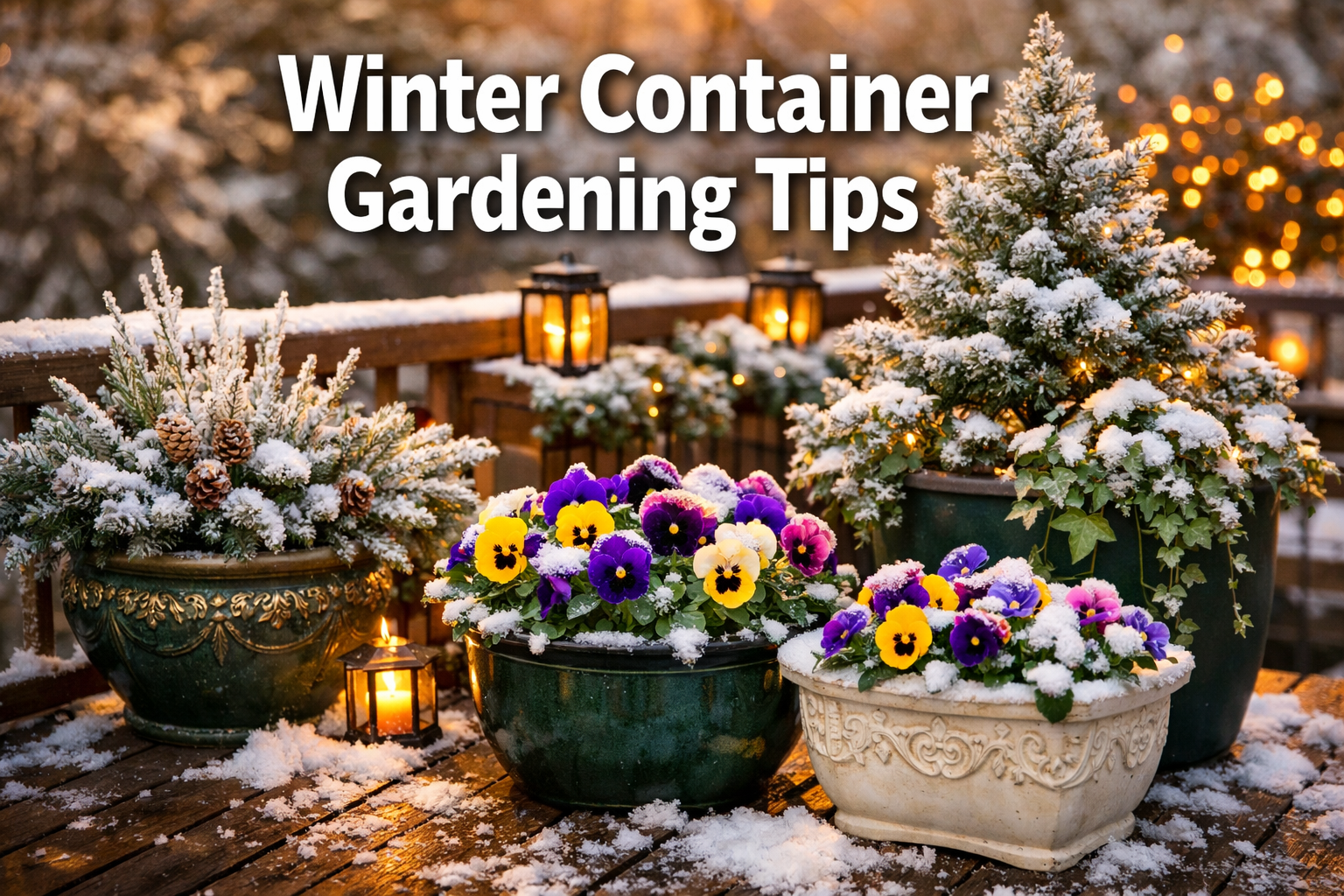
Key Takeaways
• Choose hardy plants rated two zones higher than your area for container growing
• Replace or refresh potting soil before winter planting for better moisture retention
• Water weekly instead of daily — containers need about half as much water in winter
• Group containers together and wrap in burlap for shared warmth and wind protection
• Avoid terra cotta and ceramic pots that crack in freezing temperatures
• Mulch to the rim of containers to insulate roots from temperature swings
• Water thoroughly before freeze events — moist soil protects roots better than dry soil
• Skip fertilizing until spring when new growth begins
Quick Answer
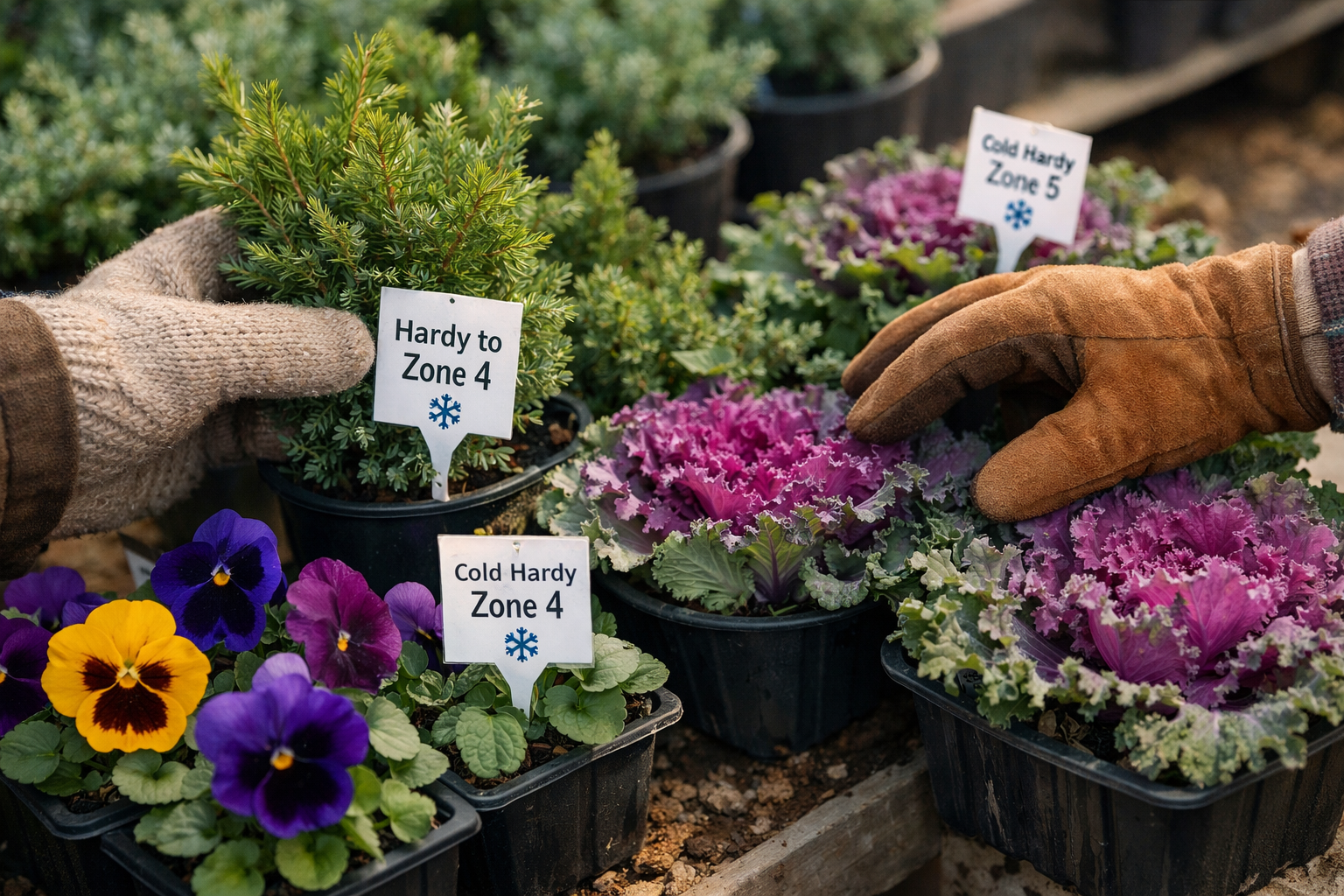
Winter container gardening succeeds when you select cold-hardy plants rated for zones colder than yours, refresh your potting soil, reduce watering to weekly schedules, and protect containers from freezing winds through grouping and wrapping. Focus on evergreen foundation plants supplemented with winter bloomers like pansies, and always water thoroughly before hard freezes arrive.
What Plants Work Best for Winter Container Gardens?
Choose evergreen foundation plants and cold-hardy annuals rated two zones higher than your growing zone. Container plants face more extreme temperature swings than ground-planted varieties, so extra hardiness is essential.
Evergreen Foundation Plants:
• Dwarf conifers (juniper, spruce, pine)
• Boxwood and holly varieties
• Ornamental grasses like fountain grass
• Small rhododendrons and azaleas
Winter Color Additions:
• Pansies and violas (bloom in cool weather)
• Ornamental kale and cabbage
• Winter-blooming heather
• Cyclamen for sheltered spots
Decorative Elements:
• Cut evergreen branches from your yard
• Colorful stems from twig dogwood
• Winterberry branches with red berries
• Ornamental grasses left from fall
Follow the "thriller, filler, spiller" container recipe even in winter. Use an upright evergreen as your thriller, surround it with colorful winter annuals as fillers, and add trailing ivy or small evergreen groundcovers as spillers.
Pro tip: If you're new to container gardening, start with our ultimate guide to container gardening for beginners to master the basics before tackling winter challenges.
How Do You Prepare Soil for Winter Container Gardening?
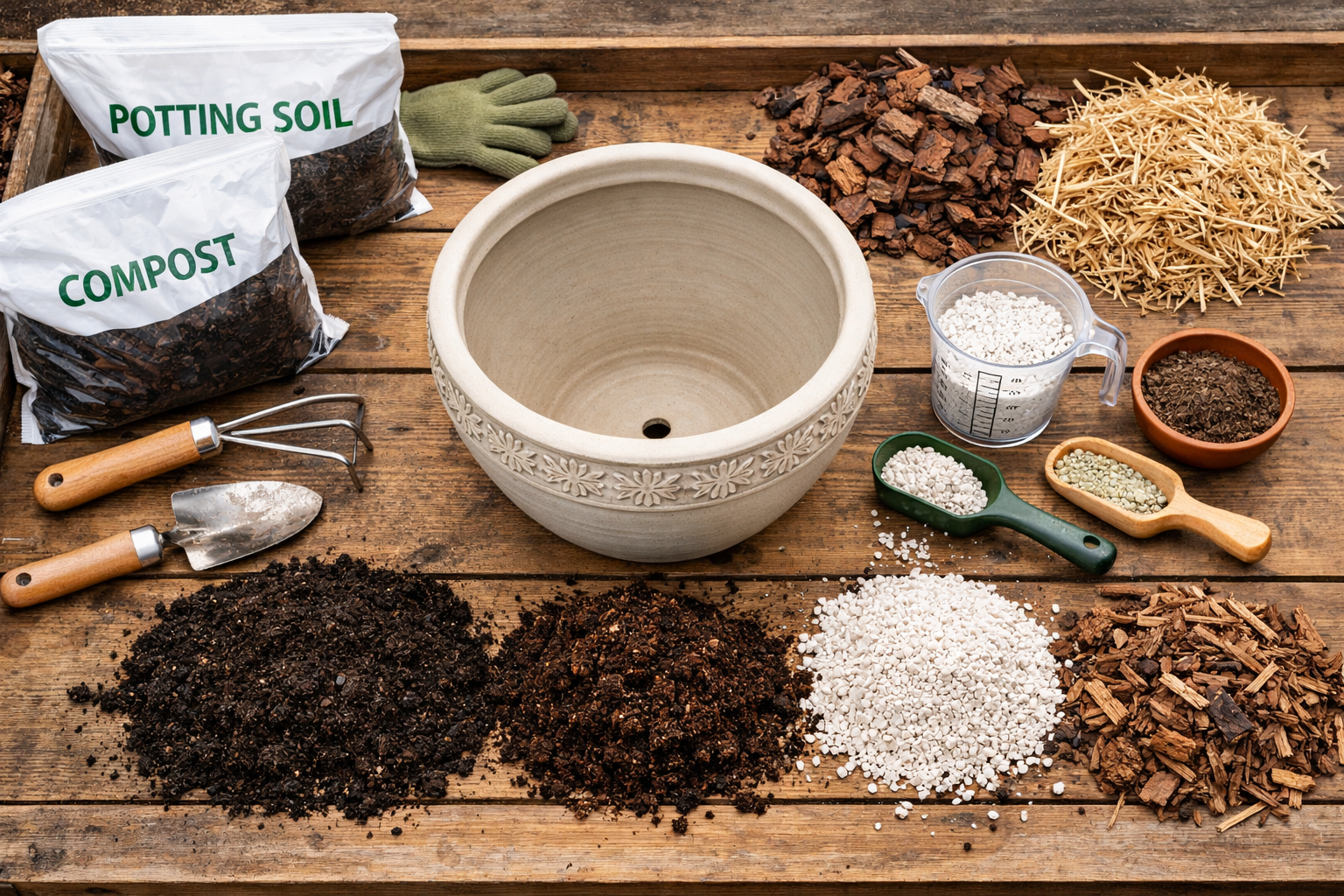
Replace all potting soil if it hasn't been changed since summer, or refresh the top third with fresh soil and compost. Old soil becomes "tired" and loses its ability to retain moisture and nutrients effectively.
Complete Soil Replacement (Best Option):
• Dump old soil into garden beds or compost
• Clean containers thoroughly
• Fill with fresh, high-quality potting mix
• Add slow-release organic fertilizer if planting immediately
Soil Refreshing Method:
• Remove top 4-6 inches of existing soil
• Mix remaining soil with equal parts fresh potting mix
• Add compost or worm castings for nutrients
• Top with fresh soil to original level
Winter Soil Requirements:
• Well-draining potting mix (never garden soil)
• Contains perlite or vermiculite for drainage
• Includes organic matter like compost
• pH between 6.0-7.0 for most plants
Fresh soil matters more in winter because containers freeze and thaw repeatedly. Good soil structure prevents waterlogging during thaws and provides insulation for roots during freezes.
Avoid these soil mistakes: Don't use garden soil in containers — it becomes waterlogged and heavy. Skip miracle-gro type soils with time-release fertilizers, since plants don't need feeding in winter.
For specific soil mixing ratios, check out our soil mix calculator for container gardening to get the perfect blend for your winter plants.
What's the Right Watering Schedule for Winter Containers?
Water container plants about half as much as summer — typically once weekly instead of daily. Winter plants grow slowly and cold temperatures reduce evaporation, so they need much less moisture.
Winter Watering Guidelines:
• Check soil moisture by inserting finger 2 inches deep
• Water when top inch feels dry but soil below is still slightly moist
• Water thoroughly until it drains from bottom holes
• Water in morning so excess evaporates before evening freeze
Special Watering Situations:
• Covered areas: Containers under eaves or overhangs need hand watering since they don't receive natural rainfall
• Before freezes: Always water thoroughly 24 hours before predicted hard freezes — moist soil insulates roots better than dry soil
• Evergreens: Continue watering until soil freezes, as evergreens produce new roots even in winter dormancy
Signs of Overwatering in Winter:
• Black, moldy leaves on pansies or hellebores
• Fungal growth on soil surface
• Yellowing leaves that drop easily
• Soil that stays soggy for days
Signs of Underwatering:
• Wilted plants that don't recover overnight
• Soil pulling away from container edges
• Evergreen needles turning brown
• Pansies with crispy leaf edges
Common mistake: Many gardeners either completely stop watering or continue summer schedules. Winter plants still need consistent moisture, just less frequently.
For more detailed watering guidance, explore our container vegetable gardening tips which covers moisture management techniques.
How Do You Protect Containers from Freezing Damage?
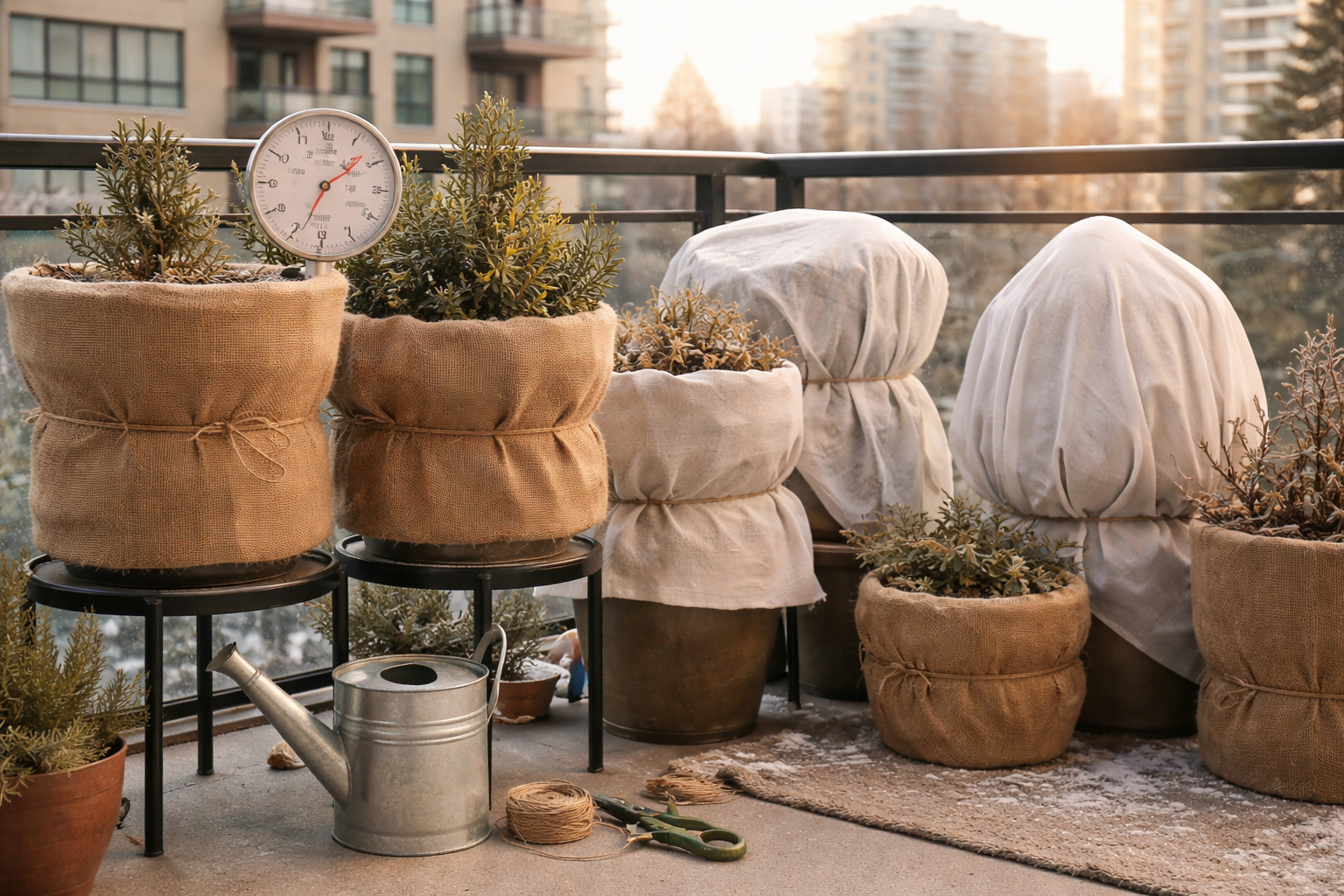
Group small containers together and wrap them in burlap or frost blankets to create shared warmth and wind protection. Physical protection prevents both plant damage and container cracking.
Container Protection Methods:
• Grouping: Cluster pots together against south-facing walls
• Wrapping: Use burlap, frost blankets, or bubble wrap around container sides
• Elevation: Place containers on plant stands or bricks for air circulation
• Mulching: Apply mulch up to container rims for soil insulation
Container Material Considerations:
• Avoid: Terra cotta, ceramic, and glazed pottery crack when frozen
• Best choices: Fiberglass, resin, wood, or thick plastic containers
• Protection needed: Wrap vulnerable containers in bubble wrap and insulation
Wind Protection Strategies:
• Move containers to sheltered locations (against buildings, under overhangs)
• Create windbreaks with temporary screens or tarps
• Group tall containers to shield shorter ones
• Avoid exposed balcony corners and open areas
Extreme Weather Protection:
• Cover entire plant and container with frost blankets during severe cold snaps
• Remove covers during warmer days to prevent overheating
• Add extra mulch layers during extended freezing periods
• Move most tender plants indoors temporarily
Pro tip: Create a microclimate by grouping containers in a corner with reflective surfaces (light-colored walls) that absorb and radiate heat during the day.
If you're growing herbs through winter, our container herb gardening guide offers specific protection strategies for culinary plants.
When Should You Stop Fertilizing Winter Container Plants?
Stop fertilizing in late fall and don't resume until early spring when new growth appears. Fertilizing dormant plants wastes nutrients and can actually harm plants by encouraging tender growth vulnerable to frost damage.
Winter Fertilizing Timeline:
• Last feeding: 6-8 weeks before first expected frost
• Winter pause: No fertilizer from first frost through late winter
• Resume feeding: When temperatures consistently stay above 50°F and new growth begins
Why Skip Winter Fertilizing:
• Plants enter dormancy and can't process nutrients effectively
• Excess nitrogen encourages soft growth that freezes easily
• Unused fertilizer salts can build up and damage roots
• Natural dormancy helps plants survive cold temperatures
Exceptions to the Rule:
• Winter-blooming plants like pansies benefit from light feeding monthly with diluted liquid fertilizer
• Indoor containers brought inside can receive minimal feeding
• Slow-release fertilizers applied in fall continue working gradually
Preparing Plants for Spring:
• Remove dead or damaged foliage throughout winter
• Plan spring fertilizing schedule based on plant types
• Consider soil amendments like compost for spring refresh
• Research specific needs for your winter plant varieties
Spring restart strategy: Begin with half-strength liquid fertilizer when you see new growth, then gradually return to full-strength feeding as temperatures warm and growth accelerates.
For organic feeding options when spring arrives, check out our guide to organic fertilizer for container plants to support healthy growth naturally.
What Are the Most Common Winter Container Gardening Mistakes?
The biggest mistakes are using tender plants, continuing summer watering schedules, and choosing containers that crack in freezing temperatures. These errors lead to dead plants and broken pots that could easily be prevented.
Plant Selection Mistakes:
• Choosing plants rated for your zone instead of two zones colder
• Mixing tender annuals with hardy perennials
• Ignoring mature plant size in containers
• Selecting plants with different water and light needs
Watering Errors:
• Continuing daily summer watering schedules
• Letting soil completely dry out between waterings
• Watering late in the day before freezing nights
• Ignoring containers in covered areas that don't receive rain
Container and Soil Problems:
• Using terra cotta or ceramic pots that crack when frozen
• Reusing old, tired potting soil from summer
• Choosing containers without adequate drainage holes
• Placing containers in the most exposed, windy locations
Protection Oversights:
• Failing to group containers for shared warmth
• Not providing wind protection in exposed areas
• Forgetting to water thoroughly before hard freezes
• Continuing to fertilize dormant plants
Quick prevention checklist:
• Choose hardy plants and freeze-proof containers
• Reduce watering frequency but maintain consistency
• Group and protect containers from wind and extreme cold
• Stop fertilizing and focus on plant protection instead
Recovery tips: If you notice these mistakes early, you can often save plants by adjusting care, moving containers to better locations, or providing additional protection during the remainder of winter.
Learn from common beginner mistakes by exploring our container gardening for beginners guide that covers troubleshooting and problem-solving techniques.
FAQ
Q: Can I leave my summer containers outside all winter?
A: Only if you replace plants with winter-hardy varieties and use freeze-proof containers. Terra cotta and ceramic pots will crack, and tender plants like tomatoes and basil won't survive freezing temperatures.
Q: How often should I water winter containers?
A: About once weekly, or when the top inch of soil feels dry. This is roughly half as often as summer watering. Always check soil moisture rather than following a strict schedule.
Q: Do winter container plants need fertilizer?
A: No, stop fertilizing 6-8 weeks before your first frost and don't resume until spring growth begins. Winter-blooming plants like pansies can receive light monthly feeding with diluted fertilizer.
Q: What's the best mulch for winter containers?
A: Shredded leaves, straw, or small bark chips work well. Apply mulch up to the container rim to insulate soil and roots from temperature swings.
Q: Should I bring containers indoors during winter?
A: Only if you're growing tender plants or using containers that crack in freezing weather. Hardy winter plants actually need cold temperatures and do better outdoors with proper protection.
Q: Can I grow vegetables in winter containers?
A: Yes, cold-hardy vegetables like kale, spinach, carrots, and winter radishes thrive in containers. Choose varieties bred for cold tolerance and provide wind protection.
Q: How do I know if my container plants are too cold?
A: Look for wilted leaves that don't recover, brown or black foliage, and stems that feel mushy. Healthy cold plants may look dormant but remain firm and show no signs of rot.
Q: What size containers work best for winter gardening?
A: Larger containers (at least 12-16 inches wide) insulate roots better than small pots. Group smaller containers together for shared protection and easier care.
Q: When should I start planning winter containers?
A: Begin planning in early fall, about 8-10 weeks before your first expected frost. This gives you time to select plants, refresh soil, and establish root systems before cold weather arrives.
Q: Can I use the same soil next spring?
A: Yes, winter container soil can be refreshed for spring by mixing in fresh compost and slow-release fertilizer. The cold temperatures actually help break down organic matter and improve soil structure.
Conclusion
Winter container gardening transforms cold months into opportunities for nurturing beautiful, sustainable outdoor spaces. Success comes down to choosing hardy plants rated for zones colder than yours, refreshing your soil for better moisture retention, and protecting both plants and containers from harsh weather conditions.
Remember to reduce watering to weekly schedules, group containers for shared warmth, and skip fertilizing until spring growth returns. These actionable insights help garden enthusiasts grow, learn, and flourish even during the coldest months while nurturing their love for the earth.
Your next steps:
- Assess your current containers — replace any terra cotta or ceramic pots with freeze-proof alternatives
- Select winter-hardy plants appropriate for your climate zone plus two zones colder
- Refresh or replace potting soil to ensure proper drainage and nutrition
- Create a protection plan for grouping containers and providing wind barriers
- Establish a winter watering routine based on weekly soil moisture checks
Winter gardening wisdom shows us that with proper preparation and care, container gardens can bring joy and beauty throughout the year. Start small, focus on hardy plant varieties, and gradually expand your winter container collection as you gain confidence.
The joy of nurturing nature doesn't pause for winter — it simply requires different techniques and a bit more protection. Your green paradise awaits, even in the coldest months.

0 Comments