
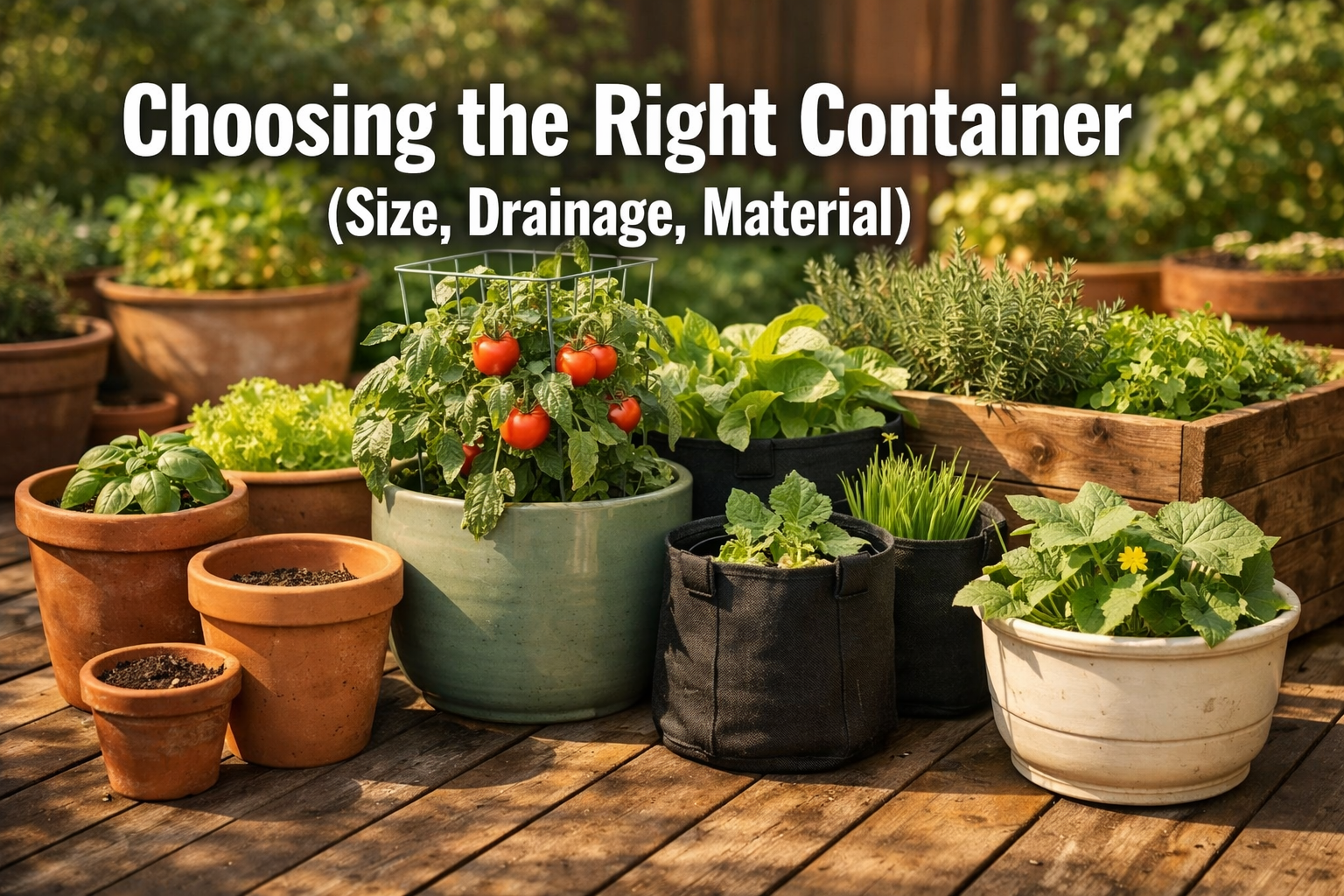
Success in container gardening starts with choosing the right container for your plants. The size, drainage, and material of your container directly impact plant health, growth, and harvest quality. Get these three factors right, and you'll set yourself up for a thriving container garden that brings joy and fresh food to your space.
Key Takeaways
• Size matters more than you think - tomatoes need at least 5 gallons, but 10 gallons produces better harvests
• Drainage holes are non-negotiable - containers must have bottom holes and shouldn't sit in standing water
• Material affects both plants and maintenance - terracotta breathes but dries quickly, plastic retains moisture but can overheat
• Food safety is essential for edibles - only use containers rated as food-safe when growing vegetables and herbs
• Bigger is usually better - most gardening guides underestimate the space plants need to thrive
• Neutral colors offer more flexibility - muted tones allow you to use larger containers without overwhelming your space
• Elevation prevents problems - raise containers off the ground to ensure proper drainage and air circulation
Quick Answer
Choosing the right container involves three key decisions: size (go bigger than recommended - 5+ gallons for most vegetables), drainage (must have bottom holes and good elevation), and material (terracotta for breathability, plastic for moisture retention, ceramic for aesthetics). Food-safe containers are essential for edibles, and neutral colors offer the most design flexibility.
How Big Should Your Container Be?
Most container gardening guides underestimate the space plants need to truly thrive. For healthy, productive plants, choose containers that are larger than the minimum recommendations you'll find elsewhere.
Here's what actually works for common plants:
Vegetables:
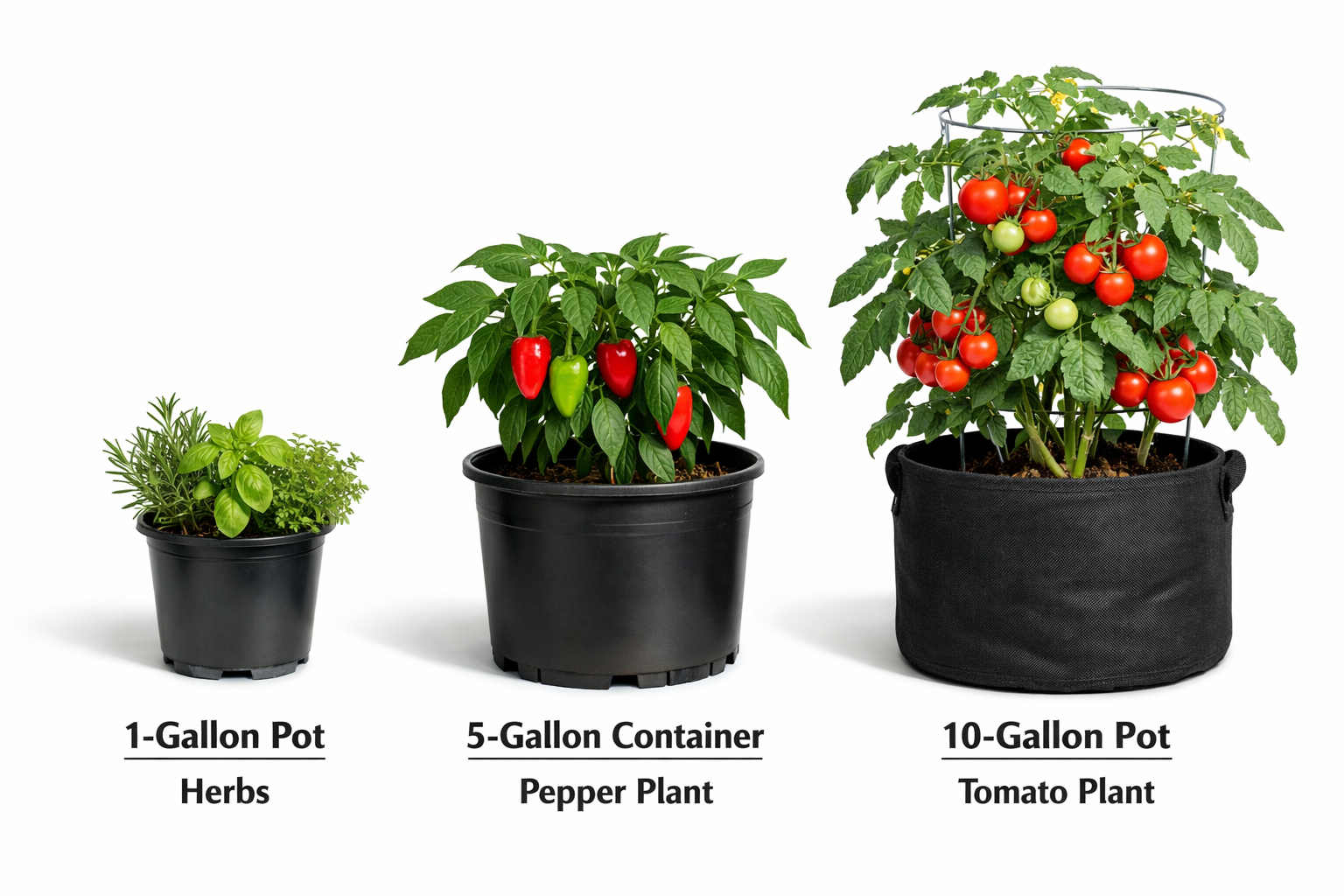
- Tomatoes: 5 gallons minimum, but 10 gallons for indeterminate varieties [1]
- Peppers and eggplants: 5 gallons works well
- Leafy greens: 1-2 gallons per plant
- Root vegetables: 2-3 gallons, depending on variety
Herbs:
- Large herbs (basil, parsley): 2-3 gallons
- Small herbs (thyme, oregano): 1-2 gallons
- Perennial herbs (rosemary, sage): 5+ gallons
Why bigger containers win:
- More soil means better moisture retention
- Root systems can develop fully
- Plants produce larger harvests
- Less frequent watering needed
- Better temperature stability
Common sizing mistake: Buying containers that look "right" for the plant size at purchase. Remember, that small tomato seedling will grow into a 4-6 foot plant that needs substantial root space.
For container vegetable gardening, always err on the side of larger containers. Your plants will thank you with healthier growth and better yields.
What Drainage Features Do You Need?
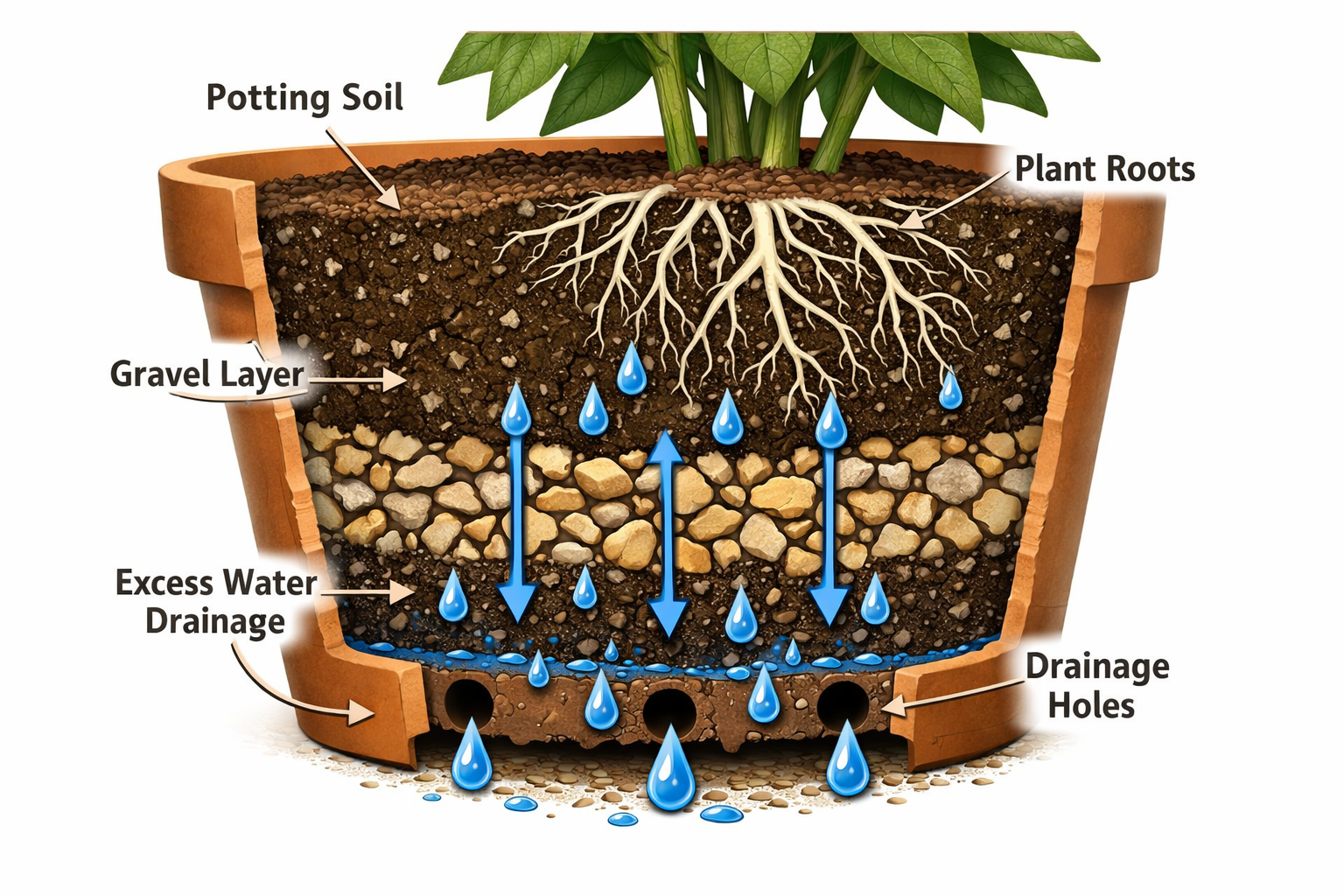
Every container must have drainage holes in the bottom - this is non-negotiable for plant health. Poor drainage kills more container plants than any other factor.
Essential drainage requirements:
- Multiple holes: At least 3-4 holes for containers under 12 inches, more for larger pots
- Proper hole size: 1/4 to 1/2 inch diameter - big enough for water flow, small enough to retain soil
- Bottom-only placement: Side holes don't provide adequate drainage
Elevation is crucial:
Never place containers directly on the ground or in saucers that collect water [1]. This creates waterlogged conditions that damage roots. Instead:
- Use pot feet, bricks, or wooden blocks
- Ensure 1-2 inches of clearance underneath
- If using saucers, empty them regularly after watering
Testing your drainage:
Pour water into your container before planting. Water should flow freely from the bottom holes within seconds. If it pools or drains slowly, you need larger or additional holes.
Quick drainage fixes:
- Drill additional holes with a masonry bit (for ceramic) or regular drill bit (for plastic)
- Add a layer of small stones or broken pottery at the bottom
- Use quality potting mix that drains well
Remember, you can always improve drainage, but you can't easily fix a container that holds too much water. When in doubt, add more holes.
Which Container Material Works Best for Your Plants?
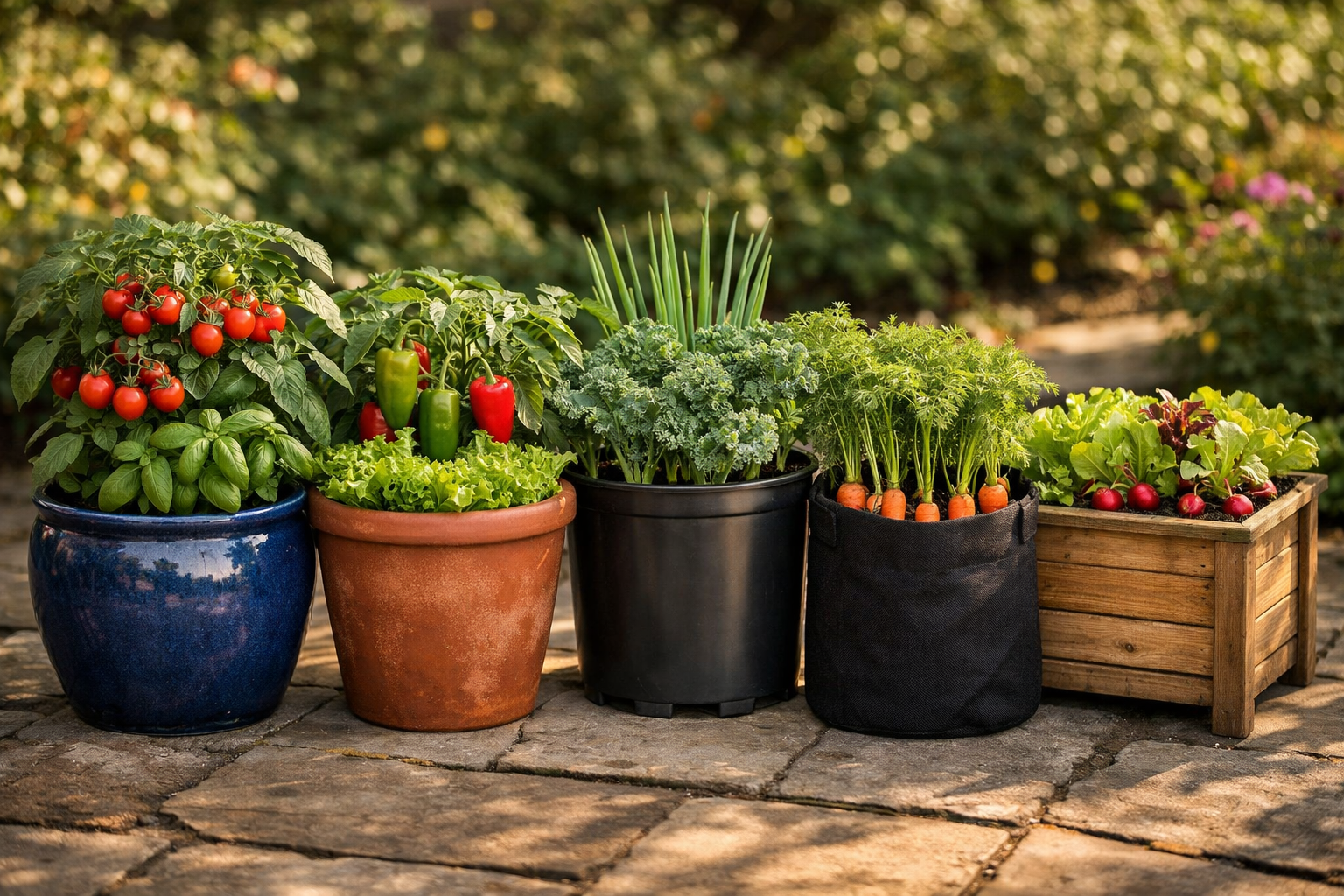
Different materials offer distinct advantages for plant health and garden maintenance. Choose based on your climate, watering habits, and aesthetic preferences.
Terracotta and Unglazed Clay
Best for: Mediterranean herbs, succulents, plants that prefer drier conditions
Pros:
- Excellent breathability prevents root rot
- Natural temperature regulation
- Classic, timeless appearance
- Works well for specimen plants [2]
Cons:
- Dries out quickly in hot weather
- Heavy when large
- Can crack in freeze-thaw cycles
- Requires more frequent watering
Plastic Containers
Best for: Vegetables, moisture-loving plants, beginners
Pros:
- Lightweight and affordable
- Excellent moisture retention
- Won't break if dropped
- Available in many sizes and colors
Cons:
- Can overheat in direct sun
- Less breathable than clay
- May degrade over time with UV exposure
- Ensure food-safe plastic for edibles [1]
Glazed Ceramic
Best for: Decorative plantings, protected locations
Pros:
- Beautiful aesthetic options
- Good moisture retention
- Doesn't dry out as fast as terracotta
- Easy to clean
Cons:
- Heavy and breakable
- More expensive
- Limited drainage unless pre-drilled
- Can crack in freezing weather
Fabric Grow Bags
Best for: Root vegetables, temporary plantings, small spaces
Pros:
- Excellent drainage and aeration
- Lightweight and foldable
- Prevents root binding
- Affordable option
Cons:
- Dry out very quickly
- Less attractive appearance
- Shorter lifespan than rigid containers
- Can be difficult to move when planted
Wood Planters
Best for: Larger plantings, permanent installations
Pros:
- Natural insulation properties
- Can build custom sizes
- Attractive, natural appearance
- Good for larger vegetable gardens
Cons:
- Eventually decomposes
- Can harbor pests if not maintained
- Heavy when large
- May need liner for longevity
Material selection tip: Neutral-colored containers in muted tones carry less visual weight than bold or dark colors, allowing you to use larger sizes without overwhelming your space [2].
What About Food Safety for Edible Plants?
When growing vegetables and herbs, container material must be food-safe. This means avoiding containers that may leach harmful chemicals into the soil and your food.
Safe options for edibles:
- Food-grade plastic containers (look for recycling codes 1, 2, 4, or 5)
- Unglazed terracotta and clay
- Untreated wood planters
- Fabric grow bags made from food-safe materials
- Glazed ceramic marked as food-safe
Avoid for food plants:
- Containers that held non-food items (chemicals, paint, etc.)
- Treated lumber or wood stained with unknown products
- Glazed pottery not marked as food-safe
- Metal containers that may rust or leach
Quick safety check: When in doubt, contact the manufacturer or choose containers specifically marketed for growing edibles. Your health is worth the extra cost of proper containers.
For comprehensive guidance on growing edibles in containers, check out our ultimate guide to container gardening for beginners.
How Do You Match Container Choice to Your Climate?
Your local weather patterns should influence container material and size decisions. Different climates create different challenges for container gardening success.
Hot, dry climates:
- Choose larger containers for better moisture retention
- Avoid dark-colored containers that absorb heat
- Consider double-potting (container inside larger decorative pot)
- Plastic or glazed ceramic work better than terracotta
Cold winter areas:
- Select freeze-resistant materials
- Avoid containers that crack when water freezes
- Consider moving containers to protected areas
- Plastic and quality ceramic usually survive better than cheap terracotta
Humid regions:
- Prioritize excellent drainage to prevent fungal issues
- Terracotta's breathability becomes a major advantage
- Ensure good air circulation around containers
- Monitor for pest issues more carefully
Windy locations:
- Choose heavier materials or secure lightweight containers
- Lower, wider containers resist tipping better than tall, narrow ones
- Consider the wind load when placing containers
What Are the Most Common Container Selection Mistakes?
Avoiding these frequent errors will save you money, time, and plant disappointment.
Mistake #1: Choosing containers that are too small
Plants become root-bound quickly, leading to stunted growth and poor harvests. Always size up from your first instinct.
Mistake #2: Forgetting about drainage
Beautiful containers without holes kill plants fast. Always check drainage before purchasing, and be prepared to add holes if needed.
Mistake #3: Prioritizing appearance over function
That gorgeous pot may look perfect, but if it doesn't meet your plants' needs, both the plant and your investment will suffer.
Mistake #4: Ignoring weight considerations
Large containers filled with soil become extremely heavy. Consider where you'll place them and whether you'll need to move them seasonally.
Mistake #5: Buying containers one at a time
Planning your entire container garden layout helps ensure consistent sizing and aesthetic flow. Plus, buying multiple containers often saves money.
Mistake #6: Not considering long-term plant size
That small herb seedling may eventually need a much larger container. Plan for mature plant size, not current size.
How Much Should You Expect to Spend?
Container costs vary widely based on size, material, and quality. Budget planning helps you make smart choices without overspending.
Budget-friendly options ($5-25):
- Plastic containers in standard sizes
- Basic terracotta pots
- Fabric grow bags
- DIY options using food-safe buckets
Mid-range choices ($25-75):
- Quality ceramic planters
- Large plastic containers with decorative finishes
- Cedar or other attractive wood planters
- Professional-grade grow bags
Premium containers ($75+):
- Large, high-quality ceramic or stone planters
- Custom-built wood planters
- Designer containers with unique features
- Very large containers (20+ gallons)
Money-saving strategies:
- Buy end-of-season containers at discount
- Check thrift stores and garage sales for unique finds
- Repurpose food-safe containers you already have
- Invest in larger containers that last for years
Cost per plant consideration: A $50 container that grows $200 worth of vegetables over several seasons represents excellent value compared to a $10 pot that stunts plant growth.
For more budget-friendly container gardening ideas, explore our guide to organic container gardening supplies.
Frequently Asked Questions
Q: Can I use containers without drainage holes?
A: No, drainage holes are essential for plant health. You can drill holes in most containers or use them as decorative outer pots with a properly draining inner container.
Q: How do I know if my container is food-safe?
A: Look for food-grade markings, recycling codes 1, 2, 4, or 5 on plastic, or choose containers specifically marketed for growing edibles. When in doubt, contact the manufacturer.
Q: What's the minimum container size for tomatoes?
A: 5 gallons minimum, but 10 gallons produces much better results, especially for indeterminate varieties that grow tall and produce fruit all season.
Q: Should I put rocks in the bottom of my containers?
A: No, this actually impedes drainage. Use quality potting mix and ensure adequate drainage holes instead.
Q: Can I leave containers outside all winter?
A: Depends on your climate and container material. Plastic and high-quality ceramic usually survive freezing, but cheap terracotta often cracks. Empty containers store better than full ones.
Q: How often should I replace my containers?
A: Quality containers can last many years. Replace when they crack, lose structural integrity, or no longer meet your plants' needs as they grow.
Q: Is it better to have many small containers or fewer large ones?
A: Fewer large containers generally work better. They're easier to maintain, provide better growing conditions, and create more visual impact in your space.
Q: What's the best container color for vegetables?
A: Light, neutral colors work best. They don't absorb as much heat as dark colors and offer more design flexibility as your garden evolves.
Q: Can I use metal containers for growing food?
A: Use caution with metal containers. They can overheat in sun and may rust or leach chemicals. If using metal, ensure it's food-safe and consider insulation or placement in partial shade.
Q: How do I move large containers once they're planted?
A: Use a plant dolly, furniture sliders, or recruit help. Plan container placement carefully to minimize moving needs. Consider containers with built-in wheels for frequently moved plants.
Q: Should containers match in size and style?
A: Matching containers create a cohesive look, but varying sizes can add visual interest. Stick to a consistent color palette or material for the best aesthetic results.
Q: What's the difference between potting soil and garden soil for containers?
A: Always use potting soil in containers. Garden soil is too dense, doesn't drain properly, and can contain pests and diseases that harm container plants.
Conclusion
Choosing the right container sets the foundation for container gardening success. Remember these key principles: size up from minimum recommendations, ensure excellent drainage with bottom holes and proper elevation, and select materials that match your climate and maintenance preferences. Food-safe containers are essential for edibles, and neutral colors offer the most design flexibility.
Your next steps:
- Assess your space and decide how many containers you need
- Choose container sizes based on your planned plants' mature requirements
- Verify drainage capabilities and drill holes if necessary
- Select materials that work with your climate and watering habits
- Start with quality potting soil designed for containers
The joy of nurturing nature starts with giving your plants the right home to grow, learn, and flourish. With proper containers, you're well on your way to creating your own green paradise, whether you're growing fresh herbs on a balcony or vegetables on a patio.
Ready to dive deeper into container gardening? Explore our comprehensive guides on container herb gardening and vegetables that grow well in containers to continue your gardening journey.
References
[1] Welcome To The Year Of Container Gardening - https://marylandgrows.umd.edu/2026/02/04/welcome-to-the-year-of-container-gardening/
[2] Trends In Container Gardening 2026 - https://www.containedcreations.com/blog/trends-in-container-gardening-2026

0 Comments