
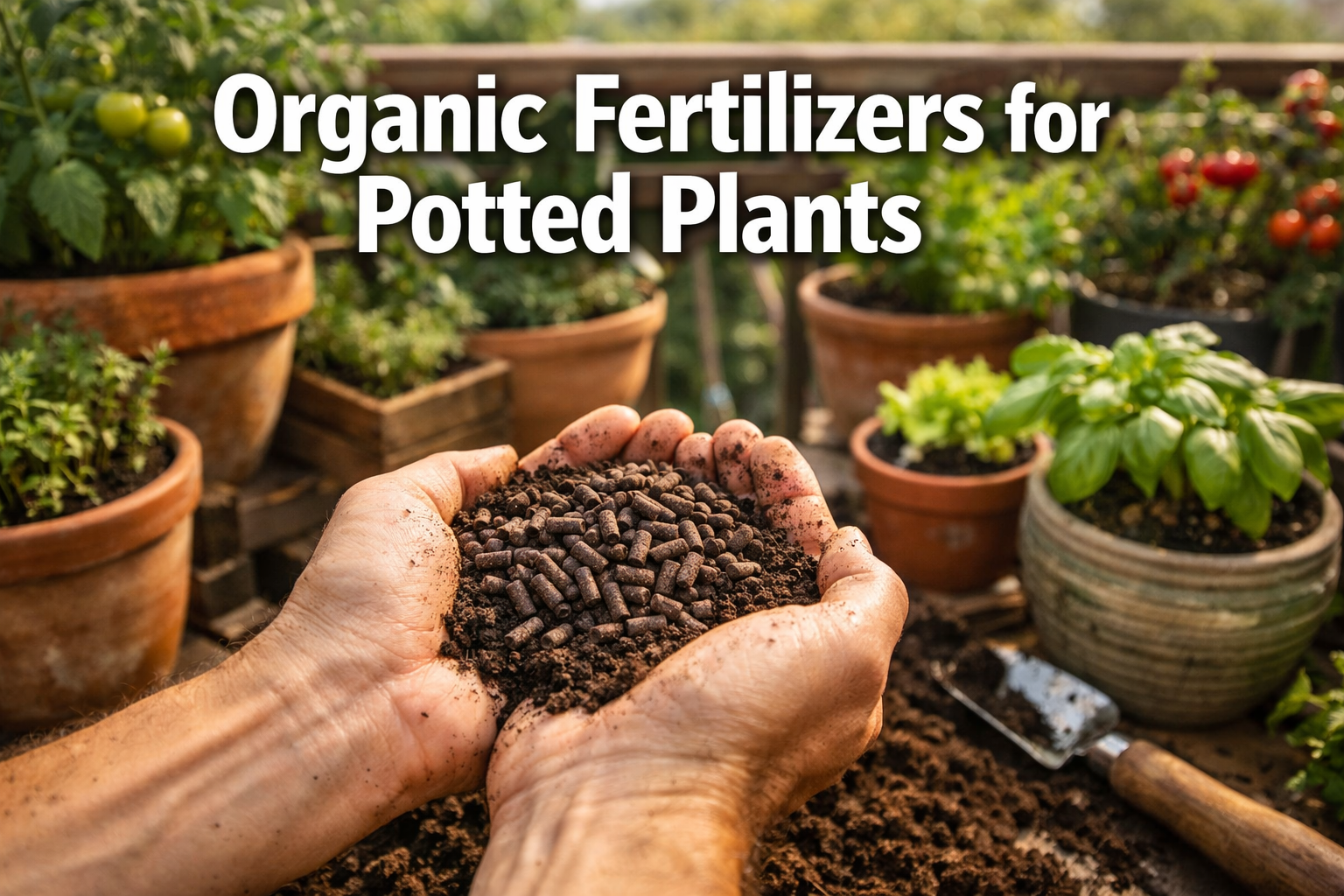
Growing thriving plants in containers doesn't have to be complicated, but it does require the right nutrition. Organic fertilizers for potted plants provide gentle, sustainable nutrition that feeds both your plants and the soil ecosystem, making them perfect for apartment dwellers and small-space gardeners who want to nurture healthy, productive container gardens.
Key Takeaways
• Liquid organic fertilizers offer faster nutrient absorption and are ideal for frequent feeding of potted plants
• Slow-release granular options like compost and worm castings provide steady nutrition over 2-3 months
• Container plants need more frequent feeding than ground plants due to limited soil volume and drainage
• Amino acid-based fertilizers are emerging as top choices for 2026, offering direct absorption without soil conversion
• Start with half-strength applications to prevent nutrient burn in the confined space of containers
• Organic options improve soil structure and water retention while supporting beneficial microorganisms
• Fish emulsion and kelp meal provide complete nutrition profiles perfect for vegetables and herbs
• Timing matters — feed actively growing plants every 2-4 weeks during growing season
Quick Answer
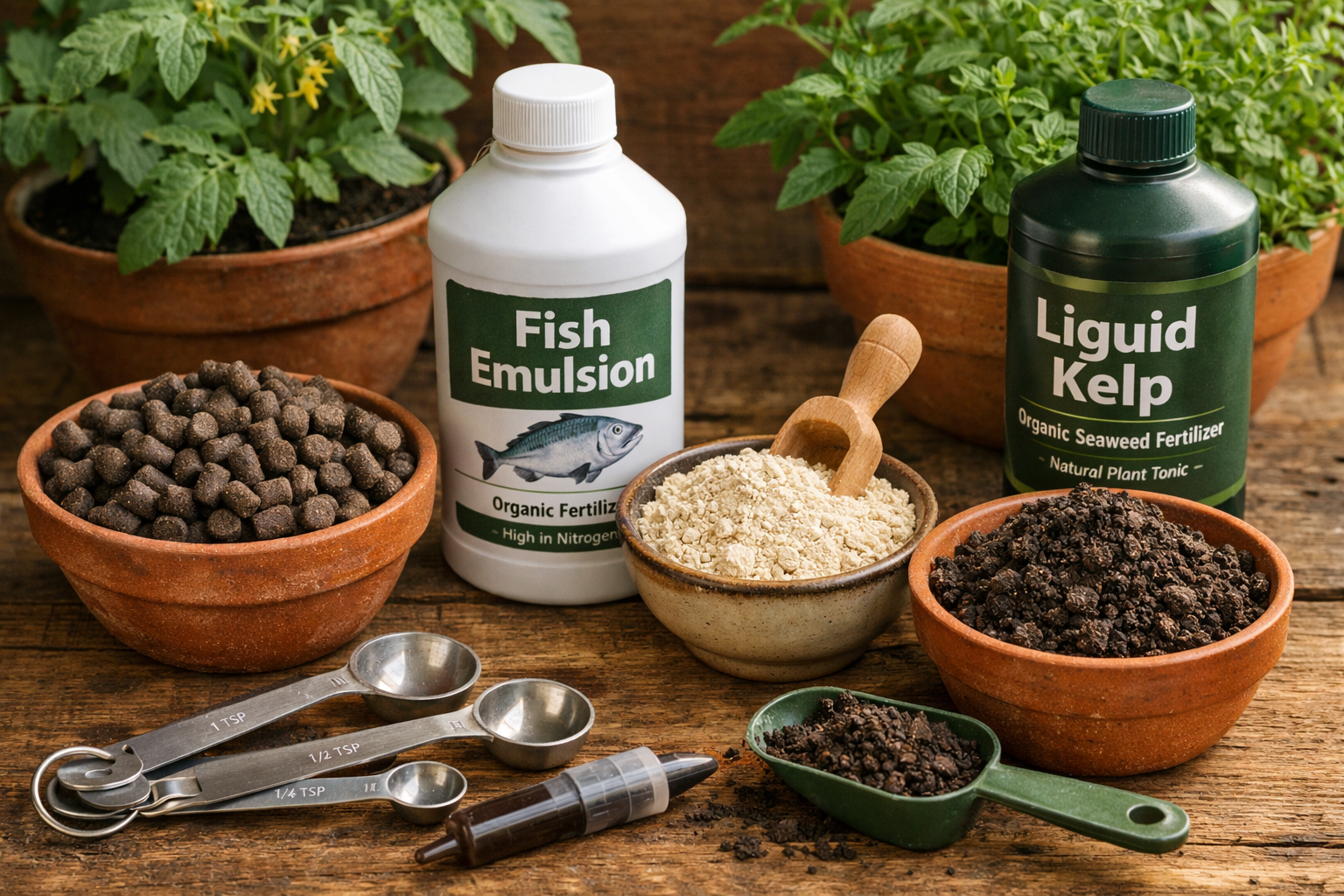
Organic fertilizers for potted plants work by providing slow-release nutrition through natural materials like compost, fish emulsion, and worm castings. Unlike synthetic fertilizers, organic options feed the soil microorganisms that help plants absorb nutrients more efficiently. For containers, liquid organic fertilizers offer the best results because they're easily absorbed and won't build up salts that can damage roots in confined spaces.
What Are Organic Fertilizers and Why Choose Them for Containers?
Organic fertilizers are made from natural materials like composted plant matter, animal manures, fish byproducts, and mineral deposits that provide plant nutrition through biological processes rather than synthetic chemicals.
For container gardening, organic fertilizers offer several key advantages:
• Gentle, slow-release nutrition that won't burn sensitive roots in confined spaces
• Improved soil structure that helps retain moisture in fast-draining potting mixes
• Support for beneficial microorganisms that enhance nutrient availability
• Reduced salt buildup compared to synthetic fertilizers that can accumulate in containers
• Environmental safety for indoor use and around families
Choose organic fertilizers if you're growing edible plants, want to avoid synthetic chemicals, or notice your potting soil becoming compacted over time. The global organic fertilizer market is projected to reach $15.6 billion by 2033, driven by increased adoption in urban gardening and container applications [2].
Common mistake: Assuming organic fertilizers work immediately like synthetic options. Organic fertilizers need 1-2 weeks to become available to plants as soil microorganisms break them down.
Which Types of Organic Fertilizers Work Best for Potted Plants?
Liquid organic fertilizers and slow-release granular options are the most effective choices for container gardening, each serving different feeding schedules and plant needs.
Top Liquid Options
• Fish emulsion — provides balanced NPK with trace minerals, ideal for vegetables
• Liquid kelp — high in potassium and growth hormones, perfect for flowering plants
• Compost tea — gentle, well-balanced nutrition for all container plants
• Amino acid fertilizers — emerging as top choices for 2026 due to direct absorption without soil conversion [1]
Best Granular Choices
• Worm castings — gentle, slow-release with excellent water retention properties
• Composted chicken manure — higher nitrogen content for leafy greens
• Bone meal — phosphorus-rich for root development and flowering
• Kelp meal — provides trace minerals and natural growth stimulants
Choose liquid fertilizers if you want quick results and prefer frequent, light feeding. Choose granular options if you want low-maintenance, long-term nutrition that lasts 2-3 months.
Edge case: For herbs in containers, use diluted fish emulsion at quarter strength to prevent over-fertilization that can reduce essential oil production.
How Do You Apply Organic Fertilizers to Container Plants?
Start with half the recommended strength and apply every 2-4 weeks during the growing season, adjusting frequency based on plant response and container size.
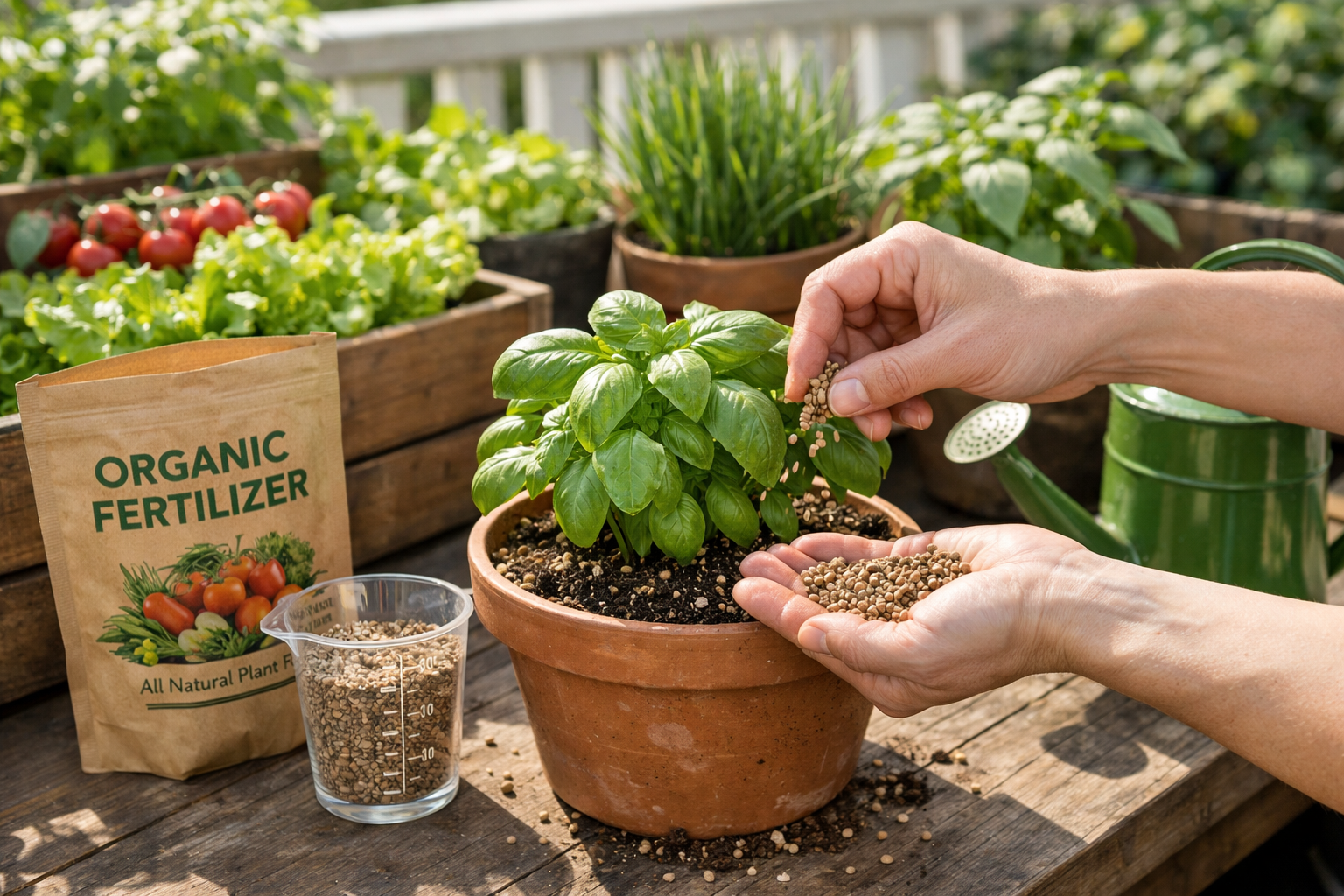
Application Steps for Liquid Fertilizers
- Mix at half strength — dilute according to package directions, then dilute again by 50%
- Water plants first — apply to moist soil to prevent root shock
- Apply slowly — pour around the base, avoiding leaves to prevent burning
- Water again lightly — helps distribute nutrients throughout the root zone
Granular Application Method
- Scratch into top inch of soil around plants, avoiding stems
- Water thoroughly to begin nutrient release process
- Reapply every 6-8 weeks or according to package directions
- Monitor plant response and adjust timing based on growth rate
Decision rule: Use liquid fertilizers for plants in containers smaller than 5 gallons, and granular options for larger containers where you want longer-lasting nutrition.
Common mistake: Applying fertilizer to dry soil, which can burn roots. Always water first, especially in containers where roots are more concentrated.
When Should You Fertilize Potted Plants with Organic Options?
Feed container plants every 2-4 weeks during active growing season (spring through early fall), reducing to monthly or stopping completely during winter dormancy periods.
Seasonal Feeding Schedule
Spring (March-May)
• Start feeding when new growth appears
• Use balanced fertilizers to support overall development
• Increase frequency as temperatures warm
Summer (June-August)
• Peak feeding season — every 2 weeks for heavy feeders
• Focus on potassium-rich options for flowering and fruiting plants
• Monitor for nutrient deficiency signs in hot weather
Fall (September-November)
• Reduce nitrogen to help plants prepare for dormancy
• Continue potassium and phosphorus for root development
• Stop feeding 6-8 weeks before first expected frost
Winter (December-February)
• Minimal or no feeding for most plants
• Exception: actively growing houseplants may need monthly feeding
Choose more frequent feeding if your containers drain quickly, you're growing heavy feeders like tomatoes, or you notice pale, slow growth.
Edge case: For organic vegetable container gardening, fruiting plants like peppers and tomatoes need feeding every 2 weeks once flowering begins.
What Are the Benefits and Drawbacks of Organic Fertilizers for Containers?
Organic fertilizers provide sustainable nutrition with improved soil health, but require more planning and patience compared to synthetic alternatives.
Key Benefits
• Soil improvement — organic matter enhances water retention and soil structure
• Microbial support — feeds beneficial bacteria and fungi that help nutrient uptake
• Reduced salt buildup — lower risk of fertilizer burn in confined container spaces
• Environmental safety — safe for indoor use and around children and pets
• Long-term nutrition — slow release provides steady feeding over weeks or months
• Cost effectiveness — amino acid fertilizers minimize nutrient runoff, making them economical for container use [1]
Potential Drawbacks
• Slower initial response — takes 1-2 weeks to see results vs. immediate synthetic effects
• Higher upfront cost — quality organic fertilizers typically cost more per application
• Storage considerations — some organic fertilizers have odors or attract pests
• Variable nutrient content — natural products may have inconsistent NPK ratios
• Weather dependency — organic breakdown slows in cool temperatures
Choose organic fertilizers if you prioritize soil health, grow edible plants, or want sustainable gardening practices. Consider synthetic options if you need immediate results or have budget constraints.
How Do Organic Fertilizers Compare to Synthetic Options for Pots?
Organic fertilizers provide gentler, longer-lasting nutrition while synthetic fertilizers offer immediate results but higher risk of root burn in container environments.
| Factor | Organic Fertilizers | Synthetic Fertilizers |
|---|---|---|
| Speed of Results | 1-2 weeks | Immediate (24-48 hours) |
| Duration | 6-12 weeks | 2-4 weeks |
| Soil Health | Improves over time | No soil benefit |
| Root Burn Risk | Very low | Higher in containers |
| Cost per Application | Higher upfront | Lower upfront |
| Environmental Impact | Minimal | Potential runoff issues |
| Ease of Use | Requires planning | Simple, immediate |
Key advantage of organic: Modern organic fertilizers now incorporate microbial inoculants and precision-delivery technologies with nutrient release profiles comparable to conventional options [2].
Choose organic if you're growing food, want to improve your potting soil over time, or prefer sustainable practices. Choose synthetic if you need to correct deficiencies quickly or want predictable, immediate results.
What Common Mistakes Should You Avoid with Organic Fertilizers?
Over-fertilizing and applying to dry soil are the most common errors that can damage container plants, even with gentle organic options.
Critical Mistakes to Avoid
Over-application
• Using full-strength fertilizers in small containers
• Feeding during plant dormancy periods
• Not adjusting for container size and drainage
Timing Errors
• Applying fertilizer to drought-stressed plants
• Feeding newly transplanted plants before they're established
• Continuing high-nitrogen feeding late in season
Storage and Handling Issues
• Storing liquid fertilizers in freezing temperatures
• Using expired or contaminated organic fertilizers
• Mixing different fertilizer types without understanding interactions
Application Problems
• Applying granular fertilizers to dry soil
• Getting liquid fertilizer on leaves during hot, sunny periods
• Not watering thoroughly after granular applications
Prevention strategy: Start with quarter-strength applications for new plants and gradually increase based on response. For container gardening beginners, keeping a simple feeding log helps track what works best for each plant type.
Edge case: Gradual acclimation is recommended for sensitive potted plants when moving from indoor to outdoor conditions, as this prevents stress that can make fertilizer burn more likely [4].
FAQ
Q: How often should I fertilize my potted plants with organic fertilizer?
Feed container plants every 2-4 weeks during growing season with liquid organic fertilizers, or every 6-8 weeks with slow-release granular options. Reduce frequency in winter when plants grow slowly.
Q: Can I make my own organic fertilizer for containers?
Yes, compost tea made from finished compost provides excellent nutrition. Steep 1 cup compost in 1 gallon water for 24-48 hours, strain, and dilute 1:1 before applying to containers.
Q: Will organic fertilizers attract pests to my balcony garden?
Quality, properly processed organic fertilizers shouldn't attract pests. Avoid fresh manures or poorly composted materials. Fish emulsion may have odor but dissipates quickly when watered in thoroughly.
Q: Are organic fertilizers safe for indoor plants?
Yes, organic fertilizers are generally safer for indoor use than synthetics. Choose odorless options like worm castings or liquid kelp for houseplants to avoid any smell issues indoors.
Q: How do I know if my container plants need fertilizer?
Look for pale or yellowing leaves, slow growth, poor flowering, or reduced fruit production. Healthy container plants in quality organic potting soil typically need feeding every 3-4 weeks during growing season.
Q: Can I use the same organic fertilizer for vegetables and flowers?
Balanced organic fertilizers work for both, but adjust application rates. Vegetables often need more frequent feeding, while flowers may need higher phosphorus for blooming. Read plant-specific requirements.
Q: What's the best organic fertilizer for tomatoes in containers?
Fish emulsion provides excellent balanced nutrition for container tomatoes. Apply every 2 weeks once flowering begins, and supplement with calcium to prevent blossom end rot in confined growing spaces.
Q: Do organic fertilizers expire?
Dry organic fertilizers last 2-3 years if stored properly in cool, dry conditions. Liquid organic fertilizers typically last 1-2 years unopened, 6 months once opened. Check for off odors or mold before using.
Q: Why are my container plants still struggling despite regular organic feeding?
Check drainage, container size, and soil quality first. Poor drainage or compacted soil prevents nutrient uptake regardless of fertilizer quality. Container plants also need adequate space for root development.
Q: Can I combine different organic fertilizers?
Yes, combining complementary organic fertilizers often provides better nutrition. For example, use fish emulsion for nitrogen and kelp meal for potassium and trace minerals. Start with reduced rates when combining products.
Q: How do amino acid fertilizers work differently from traditional organic options?
Amino acid fertilizers are absorbed directly by roots or leaves without requiring soil microorganism breakdown, providing faster results while maintaining organic principles. They're particularly effective for container plants with limited soil volume [1].
Q: Should I stop fertilizing container plants in winter?
Most container plants need little to no fertilizer during winter dormancy. Exceptions include actively growing houseplants and winter vegetables, which may benefit from monthly feeding at half strength during their growing periods.
Conclusion
Choosing the right organic fertilizers for potted plants transforms your container garden from surviving to thriving. Whether you're nurturing herbs on your balcony or growing vegetables in patio containers, organic options provide the gentle, sustainable nutrition your plants need while building healthier soil for long-term success.
The key is starting with proven options like fish emulsion for quick nutrition or worm castings for steady, long-term feeding. Remember to begin with half-strength applications, feed during active growing seasons, and adjust your approach based on your plants' responses.
Your next steps: Choose one liquid and one granular organic fertilizer to start with, create a simple feeding schedule for your growing season, and begin building the foundation for a more sustainable container garden. For comprehensive guidance on getting started, check out our ultimate guide to container gardening for beginners to build your confidence and knowledge.
With organic fertilizers, you're not just feeding your plants — you're nurturing the love for the earth and creating a green paradise that brings the joy of sustainable living right to your doorstep.
References
[1] 2026 Organic Fertilizer Guide - https://diesel-additive.com/2026-organic-fertilizer-guide/
[2] Organic Fertilizer Market Set To Surge To Usd 15 6 Billion By 2033 On Sustainable Agriculture Boom Study By Market Minds - https://www.globenewswire.com/news-release/2026/02/23/3242451/0/en/Organic-Fertilizer-Market-Set-to-Surge-to-USD-15-6-Billion-by-2033-on-Sustainable-Agriculture-Boom-Study-by-Market-Minds.html
[4] Organic Fertilizer Problem Gardeners Reporting 180015362 - https://www.aol.com/articles/organic-fertilizer-problem-gardeners-reporting-180015362.html

0 Comments